Drone Careers

Discover real-world drone careers in Australia. From real estate to cinematography, explore licensed drone jobs and how to start with your RePL today.

Pressure washing drone cleaning silo in Australia

Across Australia, building maintenance and exterior cleaning are entering a new era with the arrival of the pressure washing drone. Once limited to experimental use, this technology is now proving its worth in real-world jobs, from cleaning high-rise facades in Sydney to maintaining solar panels on rural properties. The combination of aerial mobility, high-pressure water systems, and precision controls offers a safer, faster, and more cost-effective way to tackle jobs that once required ladders, scaffolding, or rope access.

What is a Pressure Washing Drone?

A pressure washing drone is a remotely piloted aircraft equipped with a high-pressure water delivery system, typically either tethered to a water source on the ground or carrying a smaller onboard tank for light cleaning tasks. These drones can spray water at pressures of up to 240 bar (3,500 psi), enabling them to clean surfaces like building facades, roofs, signage, and even large vehicles. Unlike traditional pressure washing methods, the drone operator stays safely on the ground, significantly reducing fall risks.

Some units, like the Apellix Power Wash Drone and Lucid Bots’ models, have been specifically engineered for industrial cleaning, with corrosion-resistant frames, precise stabilisation systems, and GPS-based flight automation. Others are DIY adaptations of consumer drones, often referred to as pressure washing drone diy builds, which are used for lighter cleaning tasks.

Why Australia is Ready for Drone Cleaning

Australian cities are filled with high-rise buildings, glass facades, and hard-to-reach structures. In coastal areas, salt spray causes faster surface degradation, while in the bush, dust, pollen, and insects can quickly build up. A pressure washing drone offers an efficient way to handle these challenges without disrupting foot traffic or requiring costly scaffolding. The technology is already gaining traction in drone cleaning Sydney services, where building managers are keen to adopt safer, faster, and more sustainable cleaning solutions.

What is the Best Drone for Pressure Washing?

Choosing the best pressure washing drone depends on the job requirements and budget. The Apellix Power Wash Drone is considered a top-tier option for industrial and commercial use, offering tethered operation for continuous water supply and high-pressure output. Lucid Bots also produce well-regarded models with robust safety features and easy maintenance access.

For those searching for a DJI pressure washing drone, it is important to note that DJI does not currently produce a dedicated cleaning model. However, some operators adapt DJI airframes for light cleaning by adding spray systems. While these modifications may be suitable for low-pressure rinsing or applying cleaning agents, they cannot match the power and durability of purpose-built units like the Apellix Power Wash Drone.

Do Wash Drones Work?

One of the most common questions from building owners is simply, “Do wash drones work?” The answer is yes, provided they are used in the right conditions and with the correct setup. Drones excel at cleaning vertical or sloped surfaces that are difficult to reach manually. They can deliver consistent water pressure, even coverage, and precise targeting. In many cases, they complete jobs in half the time of conventional methods, while also improving worker safety.

However, results depend heavily on the drone model, the operator’s skill, and the water pressure available. For heavily soiled surfaces or those requiring hot water, a drone may need to be paired with a specialised pressure washer system.

How Much Does a Lucid Cleaning Drone Cost?

The price of a Lucid cleaning drone varies depending on the model and accessories, but most units start at around AUD $30,000 to $40,000 before adding the cost of a suitable pressure washing system. While this is a significant investment, commercial cleaning companies often recoup the cost within a year by reducing labour hours, equipment hire fees, and insurance premiums.

Is Drone Cleaning Profitable?

For established cleaning companies and entrepreneurs, the question “Is drone cleaning profitable?” has a clear answer. Yes, it can be. Profitability comes from reduced labour costs, the ability to take on higher-value jobs, and faster turnaround times. A drone can complete multiple high-rise jobs in a single day, something that would be impossible with traditional scaffolding. The reduced risk of injury also means lower workers’ compensation costs and fewer lost workdays.

For more insights into aerial cleaning services, see our article on drone window cleaning, which covers similar technology used for glass maintenance.

How to Start a Drone Cleaning Business?

If you are wondering how to start a drone cleaning business in Australia, the process begins with obtaining your Remote Pilot Licence (RePL) and an Operator’s Certificate (OC) from CASA. These are essential for commercial drone operations. You will also need to invest in the right cleaning drone and equipment, secure appropriate insurance, and market your services to commercial property managers, councils, and industrial clients.

Specialisation is key. Some businesses focus on solar panel cleaning, others on building facades, while some combine multiple aerial cleaning services. Networking within the facilities management sector can open up lucrative contracts, especially in cities like Sydney, Melbourne, and Brisbane.

Pressure Washing Drone for Sale: What to Look For

If you are searching for a pressure washing drone for sale, focus on models that meet your operational needs. Important factors include maximum water pressure, flight time, stability in high winds, ease of maintenance, and after-sales support. Brands like Apellix and Lucid Bots are proven performers, while the DIY market offers budget options for smaller-scale jobs. Always check that the drone complies with Australian aviation regulations before purchasing.

Applications in the Australian Market

The uses for a pressure washing drone in Australia are wide-ranging. In urban areas, they can clean multi-storey buildings without blocking footpaths or needing street closures. In industrial zones, they can wash silos, storage tanks, and equipment. In agriculture, they can be adapted to clean sheds, machinery, and large water tanks. Even luxury yachts can be washed at dock without moving them to a shipyard.

Pressure washing drone cleaning silo in Australia

Apellix Power Wash Drone

The Apellix Power Wash Drone is one of the most recognised names in the industry. This tethered drone is capable of operating at up to 240 bar pressure, with a continuous water feed from the ground. Its precision flight systems allow operators to target specific areas with minimal overspray, making it ideal for work in populated areas or near sensitive surfaces.

Best Practices for Operating a Pressure Washing Drone

Safe operation starts with thorough pre-flight checks, including inspecting the water delivery system, confirming GPS lock, and testing all controls. Pilots should be trained not only in drone operation but also in pressure washing techniques, as incorrect water pressure can damage surfaces. Weather is another key consideration, with wind and rain impacting flight stability and cleaning efficiency.

Best Pressure Washing Drone Options in 2025

When it comes to the best pressure washing drone for Australian operators, the decision often comes down to balancing cost, performance, and availability. Apellix remains the gold standard for industrial work, while Lucid Bots’ offerings provide a balance of power and mobility. DIY builds appeal to hobbyists or those serving niche cleaning markets, but lack the durability needed for high-frequency commercial use.

Pressure Washing Drone DIY: Is It Worth It?

Building a pressure washing drone diy system can be an attractive option for those with technical skills and a limited budget. While it can work for smaller jobs, there are trade-offs. DIY systems may have limited water pressure, shorter flight times, and less stability. Commercial clients often prefer contractors with professional-grade equipment, making a factory-built model a better investment for serious operators.

The Future of Pressure Washing Drones in Australia

The adoption of cleaning drones is expected to grow rapidly over the next five years. As more case studies demonstrate their safety, efficiency, and environmental benefits, councils, building managers, and industrial clients are likely to make them a standard part of maintenance contracts. For drone operators, this opens up new revenue streams, whether through direct cleaning services or leasing equipment to other companies.

With the right licensing, training, and equipment, Australian operators can position themselves at the forefront of this emerging sector. From heritage building preservation to solar panel maintenance, the pressure washing drone is set to play a major role in keeping Australia’s built environment clean, safe, and visually appealing.

how to make money with aerial photography

Australia’s vast and varied terrain, booming property market, and demand for compelling visual media make it an ideal place to launch a drone photography business. If you’ve ever asked yourself how to make money with aerial photography, you’re not alone. Many aspiring drone pilots see the potential but don’t know where to begin. This comprehensive guide will walk you through the essentials – including CASA regulations, niche opportunities, pricing strategies and legal training options – so you can turn your drone into a reliable income stream.

Is There a Demand for Aerial Photography?

The short answer is yes. Aerial photography is no longer a niche service. It has become an integral part of marketing, surveillance, inspection and documentation across numerous Australian industries. Real estate listings now expect elevated shots as standard. Builders and architects want overhead visuals to monitor site progress. Even tourism operators, local councils and sporting venues seek out drone footage for their websites and social media.

Drone photography is in high demand for:

  • Residential and commercial real estate advertising
  • Infrastructure and civil construction documentation
  • Agricultural land surveys and crop health monitoring
  • Environmental reporting and conservation
  • Event and wedding coverage
  • Brand promotion and digital content creation

This demand shows no signs of slowing. As drone tech improves, more industries are discovering the value of capturing the world from above.

How Profitable is Drone Photography?

Drone photography can be highly profitable when approached with the right mindset and structure. While entry-level pilots may start with basic packages at $200 per shoot, experienced operators can earn $1,000 or more per job. If you can edit footage, fly advanced missions, or offer thermal and mapping services, your income potential grows exponentially. Some Australian drone operators earn over $150,000 annually, particularly when working with enterprise clients or in specialised niches like inspection or cinematography.

Your profitability will be influenced by several factors:

  • Your location and access to urban or commercial markets
  • The quality of your equipment and post-production
  • Your licensing (more on this below)
  • Marketing skills and online visibility
  • Your ability to solve problems and deliver value

Keep in mind that while drone operation may seem straightforward, it requires a professional approach if you want to build a sustainable business.

Are Drone Pilots in Demand in Australia?

Absolutely. Businesses and government agencies across Australia are increasingly outsourcing drone work to save time, reduce risk, and capture better data. From agriculture and surveying to filmmaking and asset inspection, skilled pilots are in demand. But it’s not just about having a drone – clients prefer working with operators who are fully licensed, insured, and compliant with CASA laws.

Having your Remote Pilot Licence (RePL) and operating under an Operator’s Certificate (OC) significantly boosts your credibility and opens the door to larger, higher-paying contracts. Companies often require proof of RePL and public liability insurance before engaging drone service providers. If you’re serious about growing your career, getting qualified is essential.

Understanding CASA Rules and Legal Requirements

To legally fly a drone commercially in Australia, you must follow the rules set out by the Civil Aviation Safety Authority (CASA). These rules exist to protect both people on the ground and other aircraft in the sky. Operating outside these regulations can result in significant fines, and worse, damage to your reputation.

To operate legally and earn money with your drone, you should:

  • Hold a Remote Pilot Licence (RePL) if your drone weighs more than 2kg
  • Operate under a business that has an Operator’s Certificate (OC)
  • Avoid flying over people without permission
  • Stay 30 metres from individuals not involved in the flight
  • Only fly during daylight, within line of sight and below 120 metres

For aspiring drone professionals, the best first step is to complete the Remote Pilot Licence (RePL) course. This CASA-approved course not only ensures compliance but also teaches you essential flight and safety skills that will make you a better operator. It’s an investment in both your future and your professional credibility.

How Much Should I Charge for Aerial Photography?

Pricing your services can feel tricky at first, but understanding the value you provide helps guide your rates. Here’s a breakdown based on typical Australian market rates:

  • Residential real estate shoot: $250 to $450
  • Construction site updates: $300 to $800 per visit
  • Surveying or mapping: $800+ per project
  • Wedding or event coverage: $1,000 to $2,000 depending on hours and editing
  • Social media package (stills and video): $500+

Clients are paying for more than just drone time – they’re hiring your expertise, your ability to assess risk, deliver edited content, and operate safely under CASA regulations. Don’t undervalue your work. As your skillset improves, so should your rates.

How to Sell Aerial Photography

Once you have a portfolio and your CASA qualifications, the next step is finding clients. Here are proven ways to sell your aerial photography:

  • Direct outreach: Contact real estate agents, local councils and construction firms directly with a sample reel
  • Networking: Join property investor groups or tourism associations to find warm leads
  • Stock sites: Upload footage to Pond5, Shutterstock, or Adobe Stock for passive income
  • Social proof: Post your best work consistently on Instagram, LinkedIn and YouTube

Make it easy for potential clients to contact you, view your pricing, and see past work. A strong online presence paired with exceptional customer service can help build your reputation and drive referrals.

What is the Highest Paying Drone Job?

The highest paying drone jobs often require advanced equipment and licensing, but they’re well worth the investment. These include:

  • Film production: High-end FPV or Inspire 3 shoots for TV and film
  • Mining and infrastructure inspection: Monitoring assets in remote areas
  • Thermal imaging for insurance or energy: Roof inspections and leak detection
  • Precision agriculture: Providing NDVI and crop analysis for farms
  • Emergency services: Search and rescue, bushfire support and disaster response

These jobs often require clients to pay a premium for expertise, reliability and risk mitigation. Working in these sectors can be competitive, but it’s also extremely lucrative if you bring the right mix of skills, gear, and professionalism.

how to make money with aerial photography

Is It Hard to Do Drone Photography?

Drone photography is relatively easy to begin but takes time to master. Many beginners start by shooting scenic landscapes or their own property, then gradually build skills in composition, flight technique, and editing. The real challenge lies in managing business responsibilities and ensuring compliance with aviation law.

Here are a few areas new operators often struggle with:

  • Flying confidently in wind or tricky terrain
  • Editing footage to a professional standard
  • Marketing their services and building client trust
  • Understanding CASA regulations and site-specific risks
  • Learning to price and negotiate effectively

Training, practice and mentorship make all the difference. If you treat it like a serious profession and continue learning, you’ll be surprised how fast your skills grow.

What is the Most Lucrative Drone Business?

The most lucrative drone businesses in Australia tend to combine technical expertise, strong branding, and the ability to solve problems for niche clients. Consider these high-value options:

  • Drone cinematography: Work with creative agencies, TV productions and tourism boards
  • Inspection and reporting: Provide detailed reports for insurance, property managers and engineering firms
  • Training and consultancy: Deliver CASA RePL courses or help businesses integrate drone programs
  • Data and analytics: Offer drone-captured data that adds measurable value to clients

The most profitable businesses are not always the flashiest. Often, repeatable, B2B services with fewer competitors provide the most consistent income.

Final Thoughts: Turning a Drone Hobby into a Profitable Career

Knowing how to make money with aerial photography is just the beginning. The real success comes from building a reputation, investing in professional training, and finding your niche in a growing industry. With drone demand booming across Australia, now is the perfect time to level up your skills and launch a sustainable business that you enjoy.

If you’re ready to take that next step, enrol in the Remote Pilot Licence (RePL) course and start operating legally and professionally. The sky, quite literally, is the limit.

Best drone for real estate flying over a luxury home in Australia

Whether you’re a real estate agent, a property developer, or a drone operator, choosing the best drone for real estate can transform your marketing strategy. With aerial views becoming a key element in property listings, it’s essential to invest in the right gear for the job. This guide explores top choices available in Australia and explains how to stay compliant with CASA regulations while delivering top-tier results.

Why Drones Are Essential in Real Estate Photography

Drones provide unique aerial perspectives that ground cameras simply can’t capture. Aerial photography for real estate enhances listings by showing layout, scale, neighbourhood context, and features like pools, gardens, or nearby amenities. In a competitive market, stunning aerial visuals can increase engagement and drive quicker sales.

Beyond just photography, drones are also used for video walk-throughs, mapping for development, and even 3D modelling. As a result, real estate professionals are increasingly relying on drone operators to tell the full story of a property from every angle. The question of “what drone is best for real estate photography” becomes more than just a spec sheet comparison — it’s about use case, skill level, and legal compliance too.

Top Recommendations: Best Drone for Real Estate

Below are our top picks for the best drone for real estate photography in Australia, with options to suit all experience levels and budgets.

1. DJI Air 3S

This mid-range drone is ideal for real estate. It boasts dual cameras (wide-angle and 3x telephoto), 4K 100fps video, and excellent low-light performance. Its intelligent flight modes like Spotlight and Waypoint make it great for repeatable cinematic movements. So, is the DJI Air 3S good for real estate photography? Absolutely — it’s one of the most balanced choices for value and performance.

It also has subject tracking features that let you orbit or follow key features on a property, making it perfect for dynamic shoots. If you’re a licensed operator looking to scale up from entry-level gear, the Air 3S is an outstanding choice. Check out the DJI Air 3S drone here.

2. DJI Mini 4 Pro

For lightweight portability and intelligent features, the DJI Mini 4 Pro is hard to beat. Weighing under 249g, it avoids some regulatory hurdles and still offers 4K/60fps video, omnidirectional obstacle sensing, and vertical shooting. If you’re working in tight suburban areas or need a lightweight travel setup, this is a solid pick. Is the DJI Mini 4 Pro good for real estate photography? Yes — for most listings, especially residential homes, it will more than suffice.

The vertical video mode also makes it easier to create social media content for platforms like Instagram and TikTok. If you’re a real estate agent managing your own content, this drone is simple to fly and great for DIY property shoots. Check out the DJI Mini 4 Pro drone here.

3. DJI Mini 2

Looking for the most budget-friendly option? Is the DJI Mini 2 good for real estate photography? It can be — but only in the right conditions. With 12MP stills and 4K video, it’s suitable for basic aerial imagery. However, it lacks obstacle avoidance and advanced tracking. Great for entry-level agents or trialling aerials before upgrading.

It’s important to note that the DJI Mini 2 is better suited to wide-open properties without many trees or power lines. Consider it a stepping stone rather than a long-term solution if you plan to scale your video production. Check out the DJI Mini 2 drone here.

4. DJI Mavic 3 Pro

If you need premium-quality real estate videos for high-end listings, the Mavic 3 Pro is the gold standard. With a 4/3 CMOS Hasselblad sensor, adjustable aperture, and up to 5.1K video, it’s built for professionals. It’s also ideal for post-production workflows. Best drone camera for real estate? For quality, yes — but it comes at a higher price point.

This drone is popular with production houses and experienced pilots. If you’re marketing multi-million-dollar estates or producing agency showreels, the Mavic 3 Pro will handle it with ease. It also integrates well with editing suites like DaVinci Resolve or Premiere Pro. Check out the DJI Mavic 3 Pro drone here.

Best FPV Drone for Real Estate

FPV drones offer an immersive fly-through experience perfect for property walk-throughs. Think of soaring down hallways, through open doors, or flying from street to backyard. If you’re after the best FPV drone for real estate, look for a lightweight cinewhoop-style drone with a GoPro or DJI O3 Air Unit. These are used by experienced pilots for dynamic interior and exterior footage.

FPV drone for real estate isn’t just a gimmick — it can make a listing feel like a video game walkthrough, especially for architecturally interesting homes. These drones require manual flying and specialised training, so they’re best operated by professionals.

Check out our services for real estate drone photography if you’re not ready to fly FPV yourself — it’s a high-skill style that takes practice to master.

Best drone for real estate flying over a luxury home in Australia

How Are Drones Used in the Real Estate Industry?

  • Exterior flyovers showing roof, land size, and neighbouring homes
  • Neighbourhood and lifestyle shots
  • FPV fly-throughs inside the property
  • Highlighting features like pools, patios, or proximity to the beach
  • Progress shots for developments and construction updates
  • Showcasing acreage, farmland, and large estates in one frame
  • Live streaming auctions and open homes for remote buyers

Do I Need a Licence to Fly a Drone for Real Estate?

Yes — if you’re flying commercially in Australia, even for free, you must comply with CASA regulations. That includes registering your drone and holding the appropriate licence.

For drones under 2kg, the excluded category applies, but for repeat or advanced operations, we strongly recommend obtaining your Remote Pilot Licence (RePL). It allows for greater flexibility, safer operations, and more clients will expect it as a basic qualification.

You also must not fly over people, near emergency operations, or higher than 120 metres without specific approvals. If you’re unsure about these limits, training through a licensed school like SkyMedia Training is the best next step.

Final Thoughts

Real estate listings with high-quality drone footage stand out. Whether you’re investing in your first drone or upgrading to capture better footage, knowing the best drone for real estate can give you an edge in a competitive market. Don’t forget to fly legally, and if you’re not sure where to begin, consider getting your RePL or hiring a licensed operator like us at Flying Glass.

To learn more or enquire about filming your next property, visit our real estate drone photography page.

FPV drone jobs in Australia showcasing a professional pilot

With the rise of high-speed, precision cinematography and immersive experiences, FPV drone jobs are rapidly gaining popularity across Australia. Whether you’re an experienced pilot or just getting started, the opportunities for skilled FPV drone operators are expanding faster than ever before. In this guide, we’ll explore what FPV drone jobs involve, how to become a professional pilot, and how much you can expect to earn.

What is an FPV Drone Pilot?

An FPV (First Person View) drone pilot controls a drone from the drone’s perspective using live video feed via goggles. This allows for dynamic, agile flight paths ideal for capturing thrilling footage in commercials, films, TV shows, and even live events. FPV drone pilot jobs often require split-second reflexes and extensive technical knowledge of drone systems and maintenance.

Types of FPV Drone Jobs

FPV drone jobs in Australia span a wide range of industries. Here are some of the most common job types:

  • FPV Cinematography: Used in film, television, and commercials for unique and fast-paced aerial shots.
  • FPV Drone Racing: Competitive racing events or professional leagues both online and in-person.
  • Marketing and Content Creation: FPV drones are used to capture engaging footage for tourism campaigns, brand activations, and influencer content.
  • Real Estate: FPV drones can highlight unique property features or create walkthroughs with flair.
  • Inspections and Surveillance: In some cases, FPV drones are used in hard-to-reach environments for close-up views.

FPV Drone Pilot Jobs Near Me: Local Opportunities

Searches for “FPV drone jobs near me” have surged as more people realise the potential of flying drones professionally. Across major cities like Sydney, Melbourne, and Brisbane, production companies and agencies are actively seeking freelance and full-time FPV drone operators. Regional opportunities are also growing as remote shoots and destination marketing expand post-COVID. Event coverage and lifestyle brand campaigns are increasingly turning to FPV footage to stand out, leading to a higher demand for skilled pilots who understand how to navigate tight spaces and shoot dynamic footage.

FPV Drone Operator vs FPV Drone Pilot

While both terms are often used interchangeably, an FPV drone operator typically refers to someone managing flight operations and compliance on set, whereas an FPV drone pilot is the one physically flying the drone. In practice, many FPV professionals perform both roles, particularly on smaller shoots. Larger productions may separate the responsibilities to ensure both performance and compliance are optimised. Understanding both sides of the job can significantly increase your hireability in the industry.

How Much Do FPV Drone Pilots Make?

One of the top questions we hear is: how much do FPV drone pilots make? In Australia, FPV drone pilot salary ranges vary based on experience, type of work, and whether you’re freelance or employed by a production company. Here’s a breakdown:

  • Entry-level FPV drone jobs: AU$350–AU$500 per day
  • Experienced FPV drone operators: AU$800–AU$1,500 per day
  • Specialist FPV drone pilot jobs for film or high-end TVCs: AU$2,000+ per day

Freelancers may also charge extra for equipment hire, editing, or CASA approvals. Keep in mind that salaries fluctuate depending on demand and the client’s budget. Your location and reputation also play a major role. In areas where there are fewer experienced pilots, or for jobs that require unique technical capabilities such as indoor flying or single-shot takes, rates can be significantly higher.

FPV Drone Operator Salary Insights

The average FPV drone operator salary in Australia sits between AU$90,000 and AU$130,000 annually for full-time professionals working across TV, film, and commercial sectors. High-level operators with CASA accreditation and experience in premium productions can earn significantly more. Some operators combine flying with editing or post-production services, increasing their value to clients. Others work seasonally or internationally, following film productions to different countries and enjoying both creative freedom and lucrative contracts.

How Much Do FPV Drone Racers Make?

Drone racing offers a niche career path with growing potential. Competitive FPV drone racers can earn prize money, sponsorships, and appearance fees. While few make a full-time living solely from racing, it can be a valuable stepping stone or side income stream. Earnings range from a few hundred to several thousand dollars per race depending on placement and profile. Sponsorships from drone and tech companies can provide additional income, and many top racers supplement their earnings through YouTube channels or online training courses.

Can I Make Money With an FPV Drone?

Absolutely. Many Australians are turning their FPV hobby into a profitable side hustle or full-time career. Aside from racing and cinematography, drone pilots can monetise through:

  • Stock footage sales
  • YouTube or social media monetisation
  • FPV product reviews
  • Conducting workshops or demo events at drone expos and conferences

The key is to diversify your income streams and build a strong brand presence online. A compelling showreel, good networking, and client testimonials can help you stand out from the crowd.

FPV drone jobs in Australia showcasing a professional pilot

How to Become an FPV Pilot

Getting started in FPV drone pilot jobs involves several steps:

  1. Get your RePL (Remote Pilot Licence): Essential for commercial work in Australia.
  2. Practice extensively: FPV flying requires precision and confidence. Many use simulators to hone skills.
  3. Invest in quality gear: Start with a reliable FPV drone, goggles, controller, and tools for maintenance.
  4. Create a showreel: Build a portfolio of dynamic footage to pitch to clients or agencies.
  5. Understand CASA regulations: Stay compliant with Australia’s drone laws, especially for close-proximity or populous area flights.
  6. Get insured: Public liability insurance is critical when operating commercially.
  7. Network with professionals: Attend industry events, film festivals, and join online communities to stay up to date and gain referrals.
  8. Stay consistent: Like any creative career, consistency and ongoing learning are key to long-term success.

FPV Drone Jobs in Australia: The Future Looks Bright

As drone technology becomes more advanced and accessible, FPV drone jobs in Australia are becoming more prominent and better paid. The Australian market is ideal for this kind of work, with open spaces, thriving media industries, and a strong appetite for visually exciting content. Flying Glass works on FPV projects across the country and internationally, and we’re always watching the growth in this space with interest.

Whether you’re researching fpv drone pilot jobs, considering a career change, or looking to level up your freelance business, the FPV space is one of the most exciting drone niches around. With the right skills, gear, and business mindset, it’s possible to build a rewarding, creative, and high-paying career as a professional FPV drone pilot in Australia.

High-Rise Drone Window Cleaning Jobs in Australia. Industrial drone performing window cleaning on a high-rise building.

Cleaning high-rise windows has traditionally been a dangerous, time-consuming, and labour-intensive task. But a new era is emerging, led by technology: drone window cleaning jobs are revolutionising the way we keep skyscrapers and hard-to-reach residential glass surfaces spotless. With advancements in drone capability and automation, a specialised niche within the drone industry is rapidly gaining ground in Australia. Whether you’re an aspiring drone operator or an established pilot exploring new services, this guide breaks down everything you need to know about this innovative career path.

What does a Drone Window Cleaner do?

A drone window cleaner operates a drone designed specifically to clean windows, usually on tall buildings where traditional cleaning methods are risky or costly. These drones are fitted with water tanks, cleaning nozzles, brushes, and stabilisation systems that allow them to scrub, spray, and rinse windows. Tasks often include pre-flight checks, assessing weather conditions, coordinating with building management, and ensuring the cleaning drone completes its job safely and thoroughly. This role combines technical drone skills with practical cleaning outcomes, making it both high-tech and hands-on. Operators are also responsible for planning the cleaning route, avoiding obstacles such as balconies and ledges, and working closely with building managers to minimise disruption to tenants. In some cases, drones are tethered to ground-based systems for a constant water supply and drainage, while others rely on onboard tanks for smaller jobs. The window cleaner drone must be precisely manoeuvred to avoid damaging the glass or building façade, which requires a high level of piloting finesse and concentration.

What skills and equipment do you need?

To succeed in drone window cleaning jobs, you need both flying expertise and a strong understanding of cleaning mechanics. Essential skills include:

  • Excellent drone piloting abilities in tight urban spaces
  • Familiarity with window cleaning systems and detergents
  • Strong problem-solving and hazard assessment skills
  • Technical knowledge of drone maintenance and calibration
  • An understanding of aerodynamic stability and payload management

Typical drones used in this field include heavy-lift models with payload capacity for water tanks and cleaning attachments. These might include:

  • Lucid Drone Technologies’ C1: Designed for commercial cleaning tasks
  • DJI Matrice 300 RTK: A popular platform adapted with custom cleaning rigs
  • Custom-built drones with hose attachments connected to ground-based water supplies
  • Window washing drone prototypes from emerging tech start-ups

Additional accessories include gimbals for stabilisation, camera systems for real-time monitoring, and automated nozzles that adjust spray patterns for efficiency.

What qualifications are required in Australia?

In Australia, drone window cleaning operators must meet legal and regulatory requirements as outlined by CASA (Civil Aviation Safety Authority). These include:

  • A Remote Pilot Licence (RePL) for any commercial drone operation
  • Operating under an Operator’s Certificate (OC) if conducting commercial work outside the excluded category
  • Adhering to all regulations relating to flying near people, buildings, and in controlled airspace
  • Ongoing record-keeping, including maintenance logs and safety audits
  • Flight planning with respect to nearby helipads or airports using tools like AvPlan or CASA’s ‘Can I Fly There?’ app

Drone window cleaning typically occurs within close proximity to people and structures, which may fall under CASA’s “Operations Over or Near People” (OONP) requirements. Operators may also need to submit a risk assessment using the SORA methodology or apply for specific authorisations through CASA’s ReOC framework.

Where do you find work in this field?

Drone window cleaning jobs are typically offered by facilities management companies, commercial cleaning firms, drone service providers, and property maintenance contractors. Opportunities exist in major cities such as Sydney, Melbourne, and Brisbane, where there are large concentrations of high-rise buildings. Independent drone operators can also offer services to property developers, shopping centres, and strata management companies. Some companies are beginning to subcontract window cleaning drones for once-off cleans during property staging or renovation completion, particularly in the luxury apartment market. Other job sources include:

  • Government tenders for public infrastructure cleaning
  • Corporate campuses and hospitals with glass atriums
  • Hotels and casinos
  • Universities and business parks

There’s also an emerging opportunity in drone window cleaning Australia-wide for solar panel farms, greenhouses, and other glass-based infrastructure located in remote or regional areas, where manual cleaning is unviable.

How much can you earn as a Drone Window Cleaner?

Earnings in drone window cleaning jobs vary based on experience, location, and the type of clients served. In Australia, average rates range from:

  • $250–$500+ AUD per job for small commercial jobs
  • $1,000+ AUD per day for high-rise or multi-site contracts
  • $120,000+ AUD per year for full-time operators with ongoing contracts

Those offering specialised or emergency services – such as rapid-response drone cleaning for VIP events or glass structures affected by construction dust – can charge premium rates. Operating a fleet or subcontracting work can further scale your income.

Career progression & related paths

Drone window cleaning can lead to other high-demand drone careers such as:

  • Drone inspections for infrastructure and utilities
  • Facade mapping and photogrammetry
  • Drone-based exterior building maintenance
  • Urban drone deliveries and courier services
  • Industrial drone cleaning including graffiti removal and solar panel washing

Experienced operators may also transition into consultancy, training others on operating window cleaning drones, or become dealers for the cleaning drone hardware itself. The market is still young, offering scope to innovate and lead.

Pros and cons of the job

Pros:

  • Growing demand in urban centres
  • Low physical risk compared to traditional abseiling methods
  • High day rates and potential for recurring clients
  • Technology-driven and innovative field
  • Opportunity to scale into a business or franchise

Cons:

  • Weather-dependent work – wind and rain can ground operations
  • Complex airspace and CASA regulatory compliance can slow growth
  • Requires significant upfront investment in training and equipment
  • Market awareness is still developing – may need to educate clients on benefits

High-Rise Drone Window Cleaning Jobs in Australia. Industrial drone performing window cleaning on a high-rise building.

How to get started as a Drone Window Cleaner today

To break into the world of drone window cleaning jobs, follow these steps:

  1. Get certified: Get your RePL with Flying Glass
  2. Understand CASA regulations: Familiarise yourself with OONP and controlled airspace rules
  3. Choose your gear: Select a drone suitable for window washing, such as a heavy-lift custom drone or retrofit a commercial model
  4. Start networking: Reach out to facilities managers, developers, and property service firms
  5. Register your business: Set up your ABN, obtain public liability insurance, and draft your standard operating procedures
  6. Begin with demo projects: Offer discounted or free trial cleans to showcase value and generate testimonials
  7. Create a portfolio: Film your cleans, create before-and-after videos, and use them to attract larger contracts

Testimonials

“We used to hire rope access teams and shut off public access for days. Now we book a drone window cleaner, and the whole job is done in hours without any scaffolding. It’s changed the game.” – Property Manager, Brisbane CBD “I added a window cleaning drone to my existing RPA business. Within three months, I’d landed two high-rise buildings on monthly retainers. It’s the most profitable service I offer now.” – Independent Operator, Melbourne

Part of our Drone Jobs Series

This article is part of our Drone Jobs Series, where we explore emerging opportunities for drone operators across Australia.

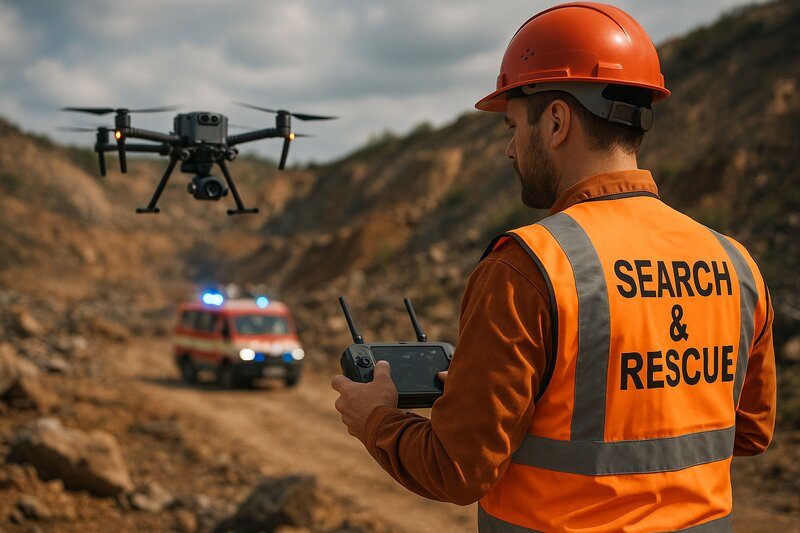
Search & Rescue Drone Jobs during emergency response operations in Australia

When disaster strikes, time is critical. Search & rescue drone jobs are becoming increasingly vital across Australia, providing rapid aerial support during emergency response operations. From locating lost bushwalkers to identifying flood-stranded residents, drones offer a game-changing perspective. But what does a career in this life-saving field really involve? Here’s everything you need to know.

What does a Search & Rescue Drone Operator do?

A search and rescue (SAR) drone operator plays a frontline role in emergency situations. These professionals pilot drones to locate missing persons, assess disaster zones, deliver supplies, and relay critical visual data to on-ground rescue teams. Operators may work alongside police, fire brigades, SES, surf lifesavers, and private emergency response teams. Drone operators might be deployed in bushfires, floods, missing person searches, maritime rescues, and even urban disasters. Their real-time aerial footage helps inform decisions that can mean the difference between life and death. In many cases, drones are used to scan areas too dangerous or remote for human teams, helping reduce risk to rescuers. Additionally, drones equipped with speakers and lights can assist in communication and signalling in hard-to-reach areas. In larger operations, SAR drone pilots may be coordinating with helicopters, boats, and emergency vehicles to triangulate locations and deliver accurate intel quickly.

What skills and equipment do you need?

Strong situational awareness, calm under pressure, and excellent piloting skills are essential for this career. You’ll often fly in poor conditions, over tricky terrain, and in high-pressure environments. Good communication with ground teams is crucial, as is quick decision-making. A solid understanding of weather patterns, terrain analysis, and airspace regulations is also necessary. Key equipment includes:

  • DJI M30T or DJI Matrice 300 RTK: Both equipped with thermal sensors and zoom cameras, ideal for spotting heat signatures and long-range searches. They also offer weather-resistant features and are commonly used by emergency services.
  • DJI Mavic 3 Thermal: A lighter, more mobile option for rapid deployment with thermal and visual imaging. It is often favoured by small emergency teams or volunteer groups due to its portability and cost-effectiveness.
  • Little Ripper drone: An Australian innovation, used in ocean rescues and capable of dropping flotation devices. Wondering how much the Little Ripper drone costs? Prices can vary depending on configuration, but reports suggest they can cost upwards of AUD $50,000. The drone has been credited with saving lives off Australia’s coastline.

Other useful equipment includes thermal imaging payloads, searchlights, spotlights, loudspeakers, and high-capacity batteries for extended flight time. Some drones are also equipped with payload drop systems, allowing life jackets, radios, or medical kits to be delivered to stranded individuals.

What qualifications are required in Australia?

To fly drones commercially in Australia, including for SAR missions, you’ll need a Remote Pilot Licence (RePL). This is issued by CASA and requires both theoretical training and flight assessments. You’ll be trained in aviation law, meteorology, human factors, and operational planning. If operating under an organisation, they must also hold an Operator’s Certificate (OC). This certificate ensures that operations are carried out safely and legally under CASA oversight. In addition to these, missions that involve flying over or near people (OONP), at night, or in controlled airspace may require additional permissions and risk assessments. Operators need to be familiar with CASA regulations around controlled airspace, restricted zones, and emergency declaration areas. It is strongly recommended that SAR drone operators stay current with CASA regulations, as rules may change based on advancements in drone technology and public safety concerns. Some SAR teams also require their drone pilots to be trained in first aid, incident command systems, or emergency operations.

Where do you find work in this field?

Search & rescue drone jobs exist in both the public and private sectors. Opportunities include:

  • State Emergency Services (SES)
  • Surf Life Saving Australia
  • Fire and Rescue NSW and equivalents in other states
  • Australian Federal Police and local law enforcement
  • Private security and emergency contractors
  • Local councils with disaster preparedness teams
  • Volunteer and non-profit rescue organisations
  • Environmental and wildlife monitoring agencies responding to natural disasters

Many drone operators also work freelance, subcontracting during emergency events or partnering with media and insurance companies to assess disaster damage. Networking with industry bodies such as ARPAS or joining search and rescue networks can also help uncover job leads.

How much can you earn as a Search & Rescue Drone Operator?

Rates vary widely depending on experience, deployment type, and employer. Experienced contractors may earn AUD $1000+ per day during large-scale emergency events, particularly if they own and operate their own high-end equipment. Salaried roles in government departments or not-for-profits may be closer to AUD $70,000–$100,000 annually. Some operators also supplement their income with drone training, consultancy, or post-processing services (such as orthomosaic mapping or video editing for news media). Those who specialise in thermal drone operation or have additional skills (like paramedic or emergency response training) can command premium rates.

Career progression & related paths

Many SAR drone operators branch into:

  • Disaster mapping and aerial surveying
  • Emergency management and coordination
  • Media and news drone coverage of crisis zones
  • Training others in drone SAR operations
  • Developing drone-based emergency response technology and apps
  • Search and rescue logistics and planning roles

Some also move into airspace coordination, drone fleet management, or consulting for organisations needing drone integration for safety and surveillance. Opportunities for career advancement grow with cross-training, equipment upgrades, and participation in multi-agency response drills.

Search & Rescue Drone Jobs during emergency response operations in Australia

Pros and cons of the job

Pros:

  • Highly rewarding, life-saving work
  • Opportunity to work in high-stakes, real-world scenarios
  • Variety in job locations and missions
  • Rapidly growing field with new tech emerging

Cons:

  • Irregular work depending on emergencies
  • Emotionally taxing situations
  • Must operate under strict safety and legal protocols
  • Requires ongoing investment in training and equipment

How to get started as a Search & Rescue Drone Operator today

Your first step is to get your RePL with Flying Glass. From there, seek out volunteer or training opportunities with local emergency groups or SES. Build hours on your thermal-capable drone, and document real-world flying conditions in your logbook. Create a portfolio of past missions or practice flights that show your capability in search and rescue environments. Consider also upskilling in first aid, emergency response protocols, and mapping software like Pix4D or DroneDeploy. Joining drone or SAR communities online and offline can open doors to future deployments. Attending emergency response expos or CASA safety seminars can also help with networking and industry knowledge.

Case study: Drones in Queensland Flood Rescue

During the 2022 Queensland floods, thermal drones were deployed by both government agencies and private drone teams to identify trapped individuals and deliver supplies. The use of drones dramatically reduced response time and ensured safer, quicker rescues in areas unreachable by road. In one instance, a DJI Matrice drone located a family stranded on a roof in Gympie, directing boats to the exact location. In another case, volunteers flying search and rescue drones in Lismore helped SES coordinate rescue missions when phone reception and traditional comms were down. Their ability to upload live feeds directly to command centres transformed how resources were allocated in real time. This Post is part of our Drone Jobs Series

Real Estate Drone Photographer capturing waterfront property in Australia

High-quality property imagery can make or break a real estate sale. In today’s competitive property market, a Real Estate Drone Photographer plays a critical role in showcasing homes, commercial buildings, and holiday rentals in their best light – literally from above. If you’re a licensed drone pilot in Australia or thinking of becoming one, this is one of the most lucrative and in-demand fields you can enter. Australia’s diverse landscapes and growing property market present endless opportunities for drone operators. From luxury coastal homes along Sydney’s Northern Beaches to rural acreages in regional New South Wales or off-grid retreats in Queensland’s hinterland, aerial photography enables real estate agents to tell a story that ground-level images simply cannot. Waterfront properties in particular benefit immensely from drone photography, as the elevated perspective captures the full relationship between the home and its surroundings – beaches, rivers, bushland, or skyline. Drone footage also plays a crucial role in property marketing across regional towns, where large blocks, sprawling estates, or views of nearby natural assets like lakes or mountains are major selling points. In the Airbnb and short-stay market, drone shots help listings stand out and generate more clicks – especially for holiday homes near the coast or attractions. Aerial photography shows proximity to the beach, walking tracks, cafés, or wineries, painting a lifestyle picture that resonates with holidaymakers.

What does a Real Estate Drone Photographer do?

A Real Estate Drone Photographer captures aerial photos and videos that highlight a property’s layout, features, and surroundings. They work closely with real estate agents or property owners to determine what aspects to highlight – be it the architectural design, the outdoor entertaining space, or proximity to key amenities. Deliverables often include a gallery of high-resolution stills, a short cinematic video edit, and sometimes overlays such as distance markers or labelled features. Shoots are typically scheduled around weather, sun position, and property availability, and pilots must often work quickly and discreetly during open home windows or tenanted bookings.

What skills and equipment do you need?

You’ll need both creative and technical skills. Composition, lighting, and shot planning are just as important as safe and precise drone flying. You should also be comfortable working to tight timelines, occasionally in challenging weather or lighting conditions. Having a good eye for detail, understanding what buyers look for, and tailoring your work to each client’s preferences is key to building repeat business. Some real estate professionals prefer wide shots that capture the neighbourhood, while others want a hero angle that highlights the home’s best elevation or features. Essential skills:

  • Understanding of real estate marketing and buyer psychology
  • Experience in drone piloting and aerial photography composition
  • Proficiency in editing software such as Lightroom, Final Cut Pro or Premiere Pro
  • Strong grasp of CASA regulations and airspace planning tools
  • Ability to communicate professionally with agents, owners, and property managers

Typical drones used for real estate photography:

  • DJI Mavic 3 Pro Cine – top-tier image quality and dynamic range
  • DJI Air 3 – an excellent mid-range option with versatile lensing
  • DJI Mini 4 Pro – ideal for tight urban jobs and weight-limited areas

If you’re asking, What is the best drone for real estate?, the answer depends on your client base and level of service. For high-end property or real estate campaigns, the Mavic 3 Pro Cine gives you the cinematic polish you need. For quick-turnaround suburban listings, the Air 3 hits the sweet spot between performance and portability.

What qualifications are required in Australia?

In Australia, anyone flying a drone for commercial gain must hold a Remote Pilot Licence (RePL) and either work under an existing Operator’s Certificate (OC) or apply for one themselves. This applies whether you’re shooting a million-dollar waterfront mansion or a suburban Airbnb rental. The only exception is the excluded category, which permits operators of drones under 2kg to fly commercially under strict limitations and after notifying CASA. However, these jobs:

  • Must remain below 120 metres AGL
  • Must keep 30m clear from people not involved in the operation
  • Cannot fly over people, beaches, parks, or near schools during events
  • Cannot operate in controlled airspace without permission

Given the nature of real estate photography – often in built-up areas or near roads, schools or open homes – these restrictions can severely limit your ability to perform the job legally. That’s why most serious professionals in the industry obtain their RePL and operate under an OC. Get your RePL with Flying Glass

Where do you find work in this field?

Work opportunities are spread across metro areas, regional towns, and tourism hubs. You might work directly with:

  • Real estate agencies (residential and commercial)
  • Property developers and builders
  • Holiday rental managers and Airbnb hosts
  • Architects and design studios producing marketing collateral

Many successful drone photographers start by networking with local agents, offering a few introductory shoots, or partnering with real estate photographers who need drone content as part of their packages. Suburbs experiencing new housing growth or premium coastal markets tend to offer consistent work.

How much can you earn as a Real Estate Drone Photographer?

Rates typically range from $250 to $750 AUD per shoot, depending on the inclusions. If you bundle drone video with interior stills, floorplans, or marketing assets, you can earn $1,000+ per property. Some pilots work on volume – doing multiple listings a day for busy agencies – while others specialise in prestige homes and tourism-linked accommodation. How profitable is drone photography? Very, especially when you build a streamlined process and earn repeat business. With low overheads and the ability to reuse gear across jobs, profit margins can be excellent.

Career progression & related paths

Once established, you could:

  • Expand into video production and full listing media packages
  • Offer editing and content strategy services to agents
  • Teach workshops or mentor new drone pilots
  • Move into architecture or developer marketing roles

Pros and cons of the job

Pros:

  • High demand in both cities and regional areas
  • Flexible schedule and great income potential
  • Creative, varied, and often visually stunning locations

Cons:

  • Weather and airspace limitations can disrupt plans
  • CASA compliance can be complex, especially near water or towns
  • Property shoots can be rushed or poorly staged

Real Estate Drone Photographer capturing waterfront property in Australia

How to get started as a Real Estate Drone Photographer today

  1. Get your Remote Pilot Licence (RePL)
  2. Operate under an OC or start the application process
  3. Buy a quality drone suitable for real estate work
  4. Create a portfolio including both video and stills
  5. Reach out to local agencies, developers, and rental hosts

Make sure you’re also covered by appropriate insurance, and consider creating client-friendly information about your CASA compliance and safety protocols – it builds trust and sets you apart from casual operators.

Part of our Drone Careers Series

This post is part of our Drone Careers Series, where we explore real jobs you can pursue with a drone licence in Australia. Curious about other career paths? Browse the full series here.

Police drone hovering in NSW with flashing siren

Police drones are becoming an increasingly common sight across Australia, particularly in states like New South Wales and Victoria. These remotely piloted aircraft (RPAs) provide law enforcement with a versatile tool for surveillance, search and rescue, crime scene analysis, and crowd control. In this article, we take a closer look at what police drones are, how they operate, and what the public should know about them. For a glimpse of where police aviation may be heading next, our guide to flock drones explains how docked aircraft can launch automatically and reach emergency scenes before patrol officers.

Use of Drones in the NSW Police Force

The use of police drones by the NSW Police Force has expanded rapidly over the past few years. These RPAs are deployed for a range of law enforcement operations, particularly in situations where human access is limited, visibility is poor, or real-time aerial footage can enhance operational awareness. Examples of common police drone applications in NSW include:

  • Monitoring large public events
  • Investigating traffic incidents
  • Covert surveillance in criminal investigations
  • Assisting in missing person searches
  • Mapping crime scenes or accident sites

The NSW Police Air Wing, which oversees these operations, follows strict Civil Aviation Safety Authority (CASA) guidelines and internal policies to ensure all flights are legal, necessary, and proportionate.

Do NSW Police Use Drones?

Yes, NSW Police actively use drones as part of their operational toolkit. The Air Wing operates a growing fleet of RPAs, with specially trained officers holding a Remote Pilot Licence (RePL) and operating under an Operator’s Certificate (OC). These trained pilots conduct flights in both urban and rural environments. Drone operations by NSW Police are not conducted casually. Officers must follow CASA regulations, obtain permissions for certain areas, and log all flights. While most operations are publicly justifiable, police drones can sometimes raise questions about privacy and oversight.

What Kind of Drones Do the Police Use?

Police forces in Australia use a variety of commercial and specialised drones depending on the task at hand. The most common platforms include:

  • DJI Matrice series: Equipped with high-resolution cameras, thermal imaging, and zoom capabilities.
  • DJI Mavic Enterprise: A compact yet powerful drone suitable for quick deployment and discrete operations.
  • Parrot Anafi USA: A secure and rugged option often used in tactical operations.
  • Fixed-wing drones: Used for covering large rural areas or coastline surveillance.

Each unit is chosen for its ability to deliver stability, clarity, and performance across varying light conditions and terrain.

Police Drones at Night

One of the most common questions people ask is: What does a police drone look like at night in Australia? At night, police drones are typically equipped with low-light or thermal imaging cameras. These features allow officers to observe from a distance without visible lights revealing the drone’s position. However, CASA regulations often require some form of navigation lighting for collision avoidance. If you are wondering how to spot a police drone at night, it is worth noting:

  • They may emit a quiet buzzing noise depending on altitude.
  • They could display a steady or flashing white, green, or red light — required by CASA for safe flight.
  • They are often flown at higher altitudes than recreational drones.

Spotting a police drone at night can be difficult, especially if the operator is using visual line-of-sight techniques from a distance and flying at heights over 120 metres.

How Far Can Police Drones See?

Police drones in Australia are equipped with cameras that have impressive zoom capabilities. While exact specifications vary, many law enforcement drones can identify people or number plates from several hundred metres away. With the assistance of thermal and infrared sensors, visibility can even extend into poorly lit or obscured areas. However, CASA regulations, along with departmental policy, limit how drones are used. Operators must follow rules regarding altitude, proximity to buildings, and flight over populated areas. These constraints help maintain a balance between safety and public privacy.

Can Police Drones See in Your House?

A common concern among the public is whether police drones can see inside your house. In general, the answer is no. While high-resolution and thermal cameras can pick up body heat or detect movement behind thin materials, drones cannot see through solid walls or rooftops. Furthermore, Australian privacy laws and the Surveillance Devices Act restrict police from using drones for unjustified or warrantless surveillance inside private dwellings. In most cases, any such use would require a court-issued warrant.

What Are Police Drones Used For?

Police drones are not used solely for surveillance. In fact, they serve many purposes, including:

  • Search and rescue operations in bushland, cliffs, or remote terrain
  • Investigating illegal dumping sites
  • Crime scene mapping and evidence collection
  • High-risk warrant deliveries
  • Public safety management at concerts, protests, and major events

This technology offers faster deployment, real-time intelligence, and increased safety for officers and civilians alike.

Police Drone Australia: Regulations and Oversight

In Australia, police drone operations are regulated by CASA, just like all commercial drone flights. NSW Police and other law enforcement agencies must adhere to strict protocols, including:

  • Holding a valid Operator’s Certificate (OC)
  • Employing only RePL-certified pilots
  • Conducting risk assessments before each flight
  • Maintaining detailed flight logs

In addition to CASA oversight, some police departments voluntarily work with privacy commissioners to ensure community concerns are addressed.

Drone Police Programs in Victoria and Beyond

Police drone Victoria programs have also grown significantly. Victoria Police has invested in drone technology across several divisions, with applications in traffic monitoring, search and rescue, and counter-terrorism exercises. Similar programs exist in Queensland, South Australia, and Western Australia. The term drone police is increasingly used to refer to units specifically trained in remote piloting and drone deployment. These officers often work in tandem with ground teams to enhance situational awareness.

Police drone hovering in NSW with flashing siren

How Can You Spot a Police Drone?

If you’re curious about how to spot a police drone, especially during night operations, here are some indicators:

  • Listen for a low hum or buzzing sound above you
  • Look for steady lights (usually green or red)
  • Watch for slow, deliberate movements that suggest surveillance rather than casual flying
  • Check flight patterns — police drones often hover or move in straight lines, rather than the erratic flying of hobby drones

If you’re still uncertain or concerned, you can contact your local police station and ask if a drone operation is in progress.

Need Aerial Shots But Can’t Get Permission?

If you’re a business, media producer, or property developer who needs drone footage but can’t get the necessary permissions — we can do the shoot for you. Flying Glass is fully certified with an Operator’s Certificate and all our pilots are CASA-accredited. We understand the regulations and can capture the footage you need legally and professionally. We also offer drone training courses through our partner site, SkyMedia Training. Our courses prepare you for your Remote Pilot Licence (RePL), allowing you to operate commercially and understand your obligations under Australian drone law.

Conclusion

Police drones are here to stay — and they’re playing a growing role in public safety across Australia. From law enforcement to search and rescue, these machines offer unparalleled aerial visibility. For civilians and commercial operators, it’s important to understand their capabilities, your rights, and how to legally operate drones yourself. Whether you’re curious about what drone the police use or looking to get your own shots without legal hassle, Flying Glass is here to help you navigate the skies.

How to become a drone surveyor operating drone at Australian construction site

With rapid advancements in drone technology, the world of surveying is undergoing a revolution. Traditional surveying techniques are being enhanced, and often replaced, by efficient, cost-effective, and safer drone-based solutions. In Australia, the demand for drone surveyors is growing fast, opening doors to diverse and rewarding career opportunities. This guide explores everything you need to know about how to become a drone surveyor, including required training, equipment, and job pathways.

What is Drone Surveying?

Drone surveying refers to the use of remotely piloted aircraft (drones) to capture aerial data that can be processed into detailed maps, models, or measurements. These aerial surveys are commonly used in civil construction, mining, agriculture, environmental studies, and infrastructure monitoring. Drone surveyors use GPS, LiDAR, photogrammetry, and other geospatial technologies to ensure accuracy and consistency.

What Do You Need for Drone Surveying?

To start drone surveying, you’ll need a combination of certifications, equipment, and software. Here’s a breakdown:

  • Remote Pilot Licence (RePL) – Required by CASA for anyone operating drones commercially.
  • Operator’s Certificate (OC) – For those managing their own drone business or operation.
  • Survey-grade drone – Typically equipped with RTK/PPK GPS, a high-resolution camera or LiDAR sensor.
  • Mapping and processing software – Such as Pix4D, DroneDeploy, or Agisoft Metashape.
  • Strong understanding of airspace regulations – Including how to obtain approvals where necessary.

Drone Surveying Jobs in Australia

Drone surveying jobs span multiple industries across Australia. Whether working in-house with civil contractors, mining firms, or environmental agencies, or running your own operation as a contractor, drone surveyors are in high demand. The role may include tasks such as site inspections, progress monitoring, volumetric analysis, boundary mapping, and asset documentation. Positions range from field technicians to GIS analysts and survey project leads.

Drone Surveying from Scratch

If you’re new to the world of drones or surveying, don’t worry. Many professionals transition into drone surveying from photography, IT, engineering, or construction. The best place to start is with a certified Remote Pilot Licence (RePL) course, which we offer at Flying Glass. From there, you can build your experience with mapping tools and flight hours, eventually taking on more complex survey tasks. Mentorship and hands-on projects are essential to develop skills and confidence.

What Are Two Industries That Benefit from Drone Surveying?

Drone surveying plays a crucial role in:

  • Construction: Drones are used for site planning, volume measurement, and progress tracking, reducing manual labour and increasing safety.
  • Mining: Aerial surveys help with stockpile analysis, terrain modelling, and monitoring hazardous zones with precision and speed.

What is the Purpose of Drone Mapping?

The primary purpose of drone mapping is to collect accurate, up-to-date spatial data from above. This data is used to generate orthophotos, digital surface models (DSMs), digital terrain models (DTMs), and 3D reconstructions. These outputs allow decision-makers to plan, analyse, and manage projects more effectively. Whether it’s tracking erosion, assessing roadworks, or measuring crop health, drone mapping provides insights that are otherwise expensive or time-consuming to acquire.

How to become a drone surveyor operating drone at Australian construction site

Which Drone is Best for Survey?

Choosing the best drone for surveying depends on the job. Popular models include:

  • DJI Mavic 3 Enterprise: Compact and RTK-capable, great for small-to-medium mapping projects.
  • DJI Matrice 350 RTK: Designed for rugged field conditions and compatible with multiple sensors including LiDAR.
  • WingtraOne Gen II: A fixed-wing VTOL drone ideal for covering large areas with high precision.

At Flying Glass, we fly a range of drones suitable for survey-grade mapping and can provide guidance on selecting the right platform.

Drone Mapping and Surveying in Australia

Drone mapping and surveying in Australia must comply with CASA regulations. This includes holding the appropriate RePL and following strict operational guidelines. Surveying companies often employ pilots who are experienced in both drone flight and geospatial data processing. Australia’s vast landscapes, mining sites, and infrastructure projects make it an ideal environment for drone mapping technologies to thrive.

Drone Surveyor Course Options

To become a professional drone surveyor, training is essential. At Flying Glass, we offer comprehensive RePL training that equips you with the legal and practical skills required for commercial drone work. We also provide mentorship for those wanting to specialise in aerial surveying, including how to interpret mapping outputs, conduct safe operations, and manage data workflows. When choosing a drone surveyor course, look for those that include real-world flying, CASA-approved content, and instructors with industry experience. You’ll benefit from learning in small groups with hands-on field training, ensuring you’re job-ready from day one.

If you’re looking to commission aerial survey data rather than train as a pilot, Flying Glass also provides professional drone surveying services for projects across Australia, working alongside qualified surveying professionals where required.

How to Become a Drone Surveyor – Step-by-Step

  1. Get your RePL: Enrol in a certified Remote Pilot Licence course. This is the legal minimum for commercial drone work in Australia.
  2. Gain flying experience: Log hours with a variety of drone types and payloads.
  3. Learn mapping software: Tools like DroneDeploy, Pix4D, and Metashape are essential.
  4. Understand surveying principles: Learn about georeferencing, ground control points (GCPs), and photogrammetry basics.
  5. Invest in equipment: Choose a drone setup tailored to your surveying niche (e.g. construction, mining, agriculture).
  6. Get your OC (Operator’s Certificate): If you’re starting your own drone surveying business.
  7. Find work or freelance: Apply for roles in engineering firms, councils, construction companies, or start your own survey operation.

Drone Surveying: Future Outlook

Drone surveying is a rapidly growing profession. With the rise of smart cities, precision agriculture, and renewable infrastructure, the need for accurate spatial data will only increase. Becoming a drone surveyor puts you at the forefront of this technological evolution. Australia’s regulatory environment supports safe drone growth, and skilled professionals are increasingly sought-after. If you’re ready to launch your career in drone surveying Australia, there’s never been a better time to start. At Flying Glass, we provide expert training, guidance, and opportunities for aspiring drone professionals. Whether you want to join a company or fly solo, the journey begins with learning the rules and building your skillset from the ground up. Interested in getting your RePL and starting a new career in drone mapping? Check out our RePL drone training course.

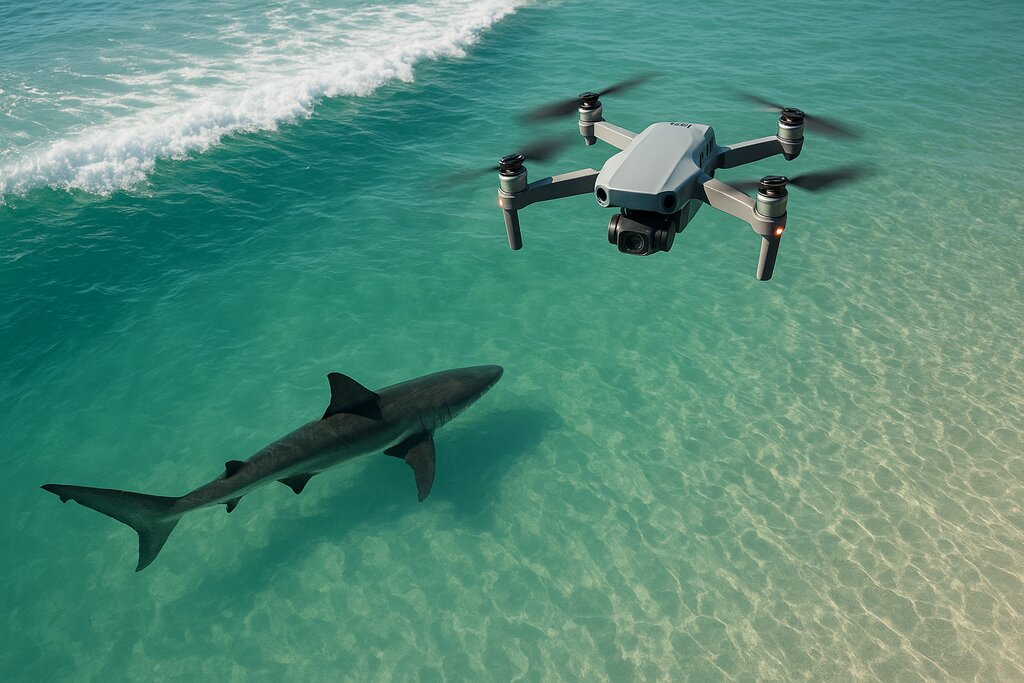
Drone shark detection using aerial drone over Australian beach with visible shark below

Australia’s beaches are some of the most beautiful and popular in the world, but they are also home to some of the ocean’s most formidable predators. In recent years, technology has come to the aid of beachgoers and surf lifesaving services through drone shark detection. These smart aerial tools are helping prevent incidents and save lives, giving real-time updates and alerts about sharks in the vicinity. With the rise of drone technology, shark spotting has entered a new era of safety and efficiency.

How Drone Shark Detection Works

Drone shark detection uses high-resolution cameras, AI-powered image recognition, and live feeds to monitor coastal waters. Drones fly regularly over the ocean and along beaches, scanning the ocean surface and transmitting footage to trained operators on land. Some systems integrate AI that can detect and identify the shape, movement, and size of marine creatures – distinguishing sharks from dolphins, rays, or surfers. When a shark is detected, the operator can issue warnings, alert emergency services, or even deploy drones with audio systems to advise swimmers and surfers to exit the water. These proactive responses have proven effective at several locations across Australia.

Is There a Drone That Detects Sharks?

Yes, there are multiple commercial drones being used in drone shark detection programs across Australia. These drones are typically equipped with 4K or higher-resolution cameras, real-time video streaming capabilities, and GPS tracking. More sophisticated versions integrate machine learning to automatically flag the presence of sharks. DJI drones, such as the Mavic 4 and Matrice series, are commonly used due to their flight stability, payload options, and high-quality imaging. While off-the-shelf drones can be adapted for shark detection, some systems are custom-built for surf lifesaving purposes. These include thermal imaging, floatation drop mechanisms, and integration with public alert systems.

Drone Shark Sightings Are on the Rise

With greater deployment of drones, drone shark sightings have increased significantly. This does not necessarily mean there are more sharks, but rather, we are now better at seeing them. From Byron Bay to Esperance, drones are spotting sharks that would have otherwise gone unnoticed. Drone footage provides authorities with precise shark location data, allowing them to make informed decisions about beach closures or safety warnings. It also provides valuable behavioural data for marine researchers studying shark movement and population trends along the coast.

The Drone Shark App: Public Awareness in Real Time

The Drone Shark App allows beachgoers to receive live alerts, footage, and updates about local shark sightings captured by drone patrols. This app has grown in popularity among Australian coastal communities, offering a sense of security and transparency. Users can receive real-time video of shark activity, allowing them to make safe decisions about entering the water. It also offers updates about drone patrols, weather conditions, and beach closures – making it a go-to tool for both surfers and families alike.

Australian Surf Lifesavers Using Drones to Spot Sharks

Australian surf lifesavers using drones to spot sharks is no longer a pilot program – it’s standard practice in many states. Surf Life Saving NSW and Surf Life Saving WA have integrated drone patrols into their daily operations, particularly during peak beach seasons. Drones provide a bird’s eye view that no tower or jet ski can replicate. By covering larger areas in less time and offering immediate transmission of data, drones have become essential for improving water safety. They also offer quicker response times in emergencies, including dropping inflatable buoys to swimmers in distress.

Esperance Shark Attack Drone Response

The tragic Esperance shark attack drone incident in Western Australia was one of the key moments that sparked a nationwide push for drone-based shark detection. Following several fatal attacks in the region, local councils and emergency services began incorporating drone surveillance to enhance early warning capabilities. Since implementation, multiple sightings have been captured on drone footage, allowing local authorities to close beaches before any harm could occur. These proactive measures have been widely supported by the community and are being adopted across more coastal regions in response.

Drone Footage of Shark Attacks: Educating and Preventing

Unfortunately, drone footage of shark attacks has surfaced in some coastal incidents, including shark interactions with surfers and swimmers. While these videos can be confronting, they have become vital teaching tools in both public awareness campaigns and professional training courses. At Flying Glass, we support responsible footage use and believe that drone footage – when used ethically – can help reduce risks. Our training programs also include situational awareness, coastal surveillance techniques, and risk mitigation strategies.

Drone Shark Attack Response and Prevention

The term drone shark attack might conjure up a dramatic image, but in practice, drones are being used to reduce attacks, not cause them. Timely drone surveillance can mean the difference between a quiet beach day and a critical incident. Australia’s proactive stance on integrating drones into shark prevention efforts is saving lives. The technology continues to evolve, and so do our capabilities in protecting the public through efficient aerial monitoring.

Drones for Shark Spotting: Capabilities and Limitations

Drones for shark spotting excel in clear, sunny conditions when water visibility is high. However, they are less effective during cloudy days, rough surf, or turbid water. This is where pairing human interpretation with AI technology comes in – blending the strengths of machine learning with experienced lifeguards who know local water conditions. Despite some limitations, drones offer far more than visual identification. They can relay GPS coordinates, capture evidence for scientific research, and provide operational support for lifeguards in real time.

Drone shark detection using aerial drone over Australian beach with visible shark below

Drone Shark Spotting: What You Need to Know

Drone shark spotting is expanding across Australia, especially in high-risk areas. Councils, surf clubs, and government bodies are investing in drone fleets and operator training to ensure maximum safety and efficiency. For those wanting to get involved in drone shark detection, training and licensing are essential. At Flying Glass, we offer accredited drone training courses that equip you with the skills and legal permissions required to fly drones for commercial use, including coastal monitoring roles. From beach patrols to marine research, the opportunities for certified drone operators are growing rapidly. Whether you’re a professional looking to enhance your credentials or an organisation seeking safer beach monitoring methods, drone shark detection training is a valuable step forward.

Commercial Drone Services and Support

If you’re a council, surf lifesaving organisation, or production company without the necessary permissions or experience to carry out drone shark detection safely and legally, we can help. At Flying Glass, we offer expert drone services, including coastal surveillance and high-resolution aerial videography tailored to your needs. All operations are carried out by fully licensed drone pilots with extensive experience in high-risk and coastal environments. We understand the legal landscape and can ensure all work is conducted safely, ethically, and in full compliance with CASA regulations.

Learn the Rules: Enrol in Drone Training

If you’d prefer to gain the skills yourself, we also run certified drone training courses across Australia. Whether you’re an individual keen to join the growing field of drone shark spotting or a business looking to upskill your staff, our RePL course will give you the edge. Our training covers everything from safety and weather assessment to coastal risk operations and emergency response procedures – ideal for those aiming to enter the field of drone shark detection.

FLYING GLASS - Copyright © 2026