Advanced and complex drone operations including consultancy, BVLOS, OONP, autonomous drone systems, drone-in-a-box, remote monitoring, custom payload integration, heavy-lift operations and drone logistics.

Outsourced Chief Remote Pilot and drone program management for ReOC compliance, pilot oversight, audits and enterprise drone operations.
Flying Glass provides outsourced Chief Remote Pilot and drone program management services for Australian organisations operating professional drone programs under a ReOC. We can support businesses that need experienced aviation oversight without building every specialist drone-management function internally.

An outsourced Chief Remote Pilot can be particularly valuable when an organisation has strong technical, engineering, inspection or operational capability but does not want the day-to-day management of its drone program to become another full-time internal discipline.

Flying Glass can help manage the aviation side of the operation: procedures, pilots, flight planning, operational records, compliance, approvals, risk, training, documentation and the continued development of the organisation’s drone capability.

Depending on the engagement, this may involve Flying Glass supporting your existing Chief Remote Pilot, providing wider drone program management, or providing an appropriately qualified person for nomination as Chief Remote Pilot subject to the applicable organisational and CASA requirements.

YOUR DRONE PROGRAM. PROFESSIONALLY MANAGED.

You don’t necessarily need to build an entire aviation department to operate a serious enterprise drone program. Flying Glass can provide experienced operational, regulatory and program-management support around your ReOC.

Discuss Outsourced CRP Support

What Is an Outsourced Chief Remote Pilot?

The Chief Remote Pilot is a key operational position within a ReOC organisation.

An outsourced Chief Remote Pilot arrangement allows an organisation to access experienced RPAS management capability without necessarily employing a dedicated full-time aviation specialist.

This can make sense for organisations where drones support the core business rather than being the core business itself.

For example, a company may primarily operate in:

  • Mining
  • Engineering
  • Infrastructure
  • Energy
  • Utilities
  • Telecommunications
  • Construction
  • Surveying
  • Environmental management
  • Government
  • Emergency response
  • Technology development

The organisation may need a sophisticated drone capability, but it may not make commercial sense to build all of the required aviation expertise internally.

Outsourced Chief Remote Pilot and drone program management for ReOC compliance, pilot oversight, audits and enterprise drone operations.

What Can Flying Glass Manage?

An outsourced Chief Remote Pilot or wider drone program management engagement can be tailored to the organisation and its ReOC.

Support can include:

  • Operational oversight
  • ReOC compliance management
  • Operations manual maintenance
  • Standard operating procedures
  • Remote pilot onboarding and oversight
  • Pilot competency and recency
  • Flight authorisation processes
  • Risk assessments
  • Operational flight planning
  • Aircraft and pilot records
  • Internal training
  • CASA correspondence and submissions
  • ReOC variations and significant changes
  • Complex operation planning
  • Audit preparation
  • Incident and operational review
  • New aircraft and payload integration
  • Expansion into new drone capabilities
  • Ongoing program improvement

The objective is not simply to make the organisation appear compliant on paper. Flying Glass’s approach to outsourced Chief Remote Pilot support is to help develop an operational system that people can actually use.

Chief Remote Pilot Responsibilities & Oversight

A Chief Remote Pilot is not simply a name placed on a ReOC.

The position carries significant responsibility for the organisation’s RPAS operations, including the implementation and oversight of operational procedures.

Flying Glass can help organisations establish practical systems around areas such as:

  • Authorising operations
  • Ensuring pilots are appropriately qualified and competent
  • Managing operational risk
  • Maintaining required records
  • Implementing operations manual procedures
  • Managing changes to operational capability
  • Maintaining pilot training and recency
  • Reviewing non-standard operations
  • Managing applicable regulatory approvals

For organisations considering an outsourced Chief Remote Pilot, we first need to understand the structure, operational scope and requirements of the ReOC so the appropriate arrangement can be determined.

Outsourced Drone Program Management

Some clients need more than an outsourced Chief Remote Pilot.

They need someone to help manage the drone program as a whole.

Flying Glass can provide broader drone program management encompassing the operational, regulatory and technical elements required to keep an enterprise drone capability functioning.

This can include:

  • Program strategy
  • Operational governance
  • Aircraft fleet planning
  • Software selection
  • Remote pilot resources
  • Training frameworks
  • Approval pathways
  • Compliance systems
  • Data-capture workflows
  • Supplier management
  • Internal stakeholder coordination
  • Continuous improvement

This can be particularly useful where responsibility for the drone program would otherwise be divided between operations, safety, engineering, procurement and individual remote pilots without anyone having an effective view of the entire system.

Support for an Existing Internal Chief Remote Pilot

You may already have a capable Chief Remote Pilot and still benefit from external support.

In that situation, Flying Glass does not need to replace the internal CRP.

Instead, our outsourced Chief Remote Pilot expertise can support them with specialist tasks such as:

  • Complex regulatory questions
  • Operations manual changes
  • New operational procedures
  • Approval applications
  • OONP
  • EVLOS
  • BVLOS
  • AusSORA
  • Audit preparation
  • New aircraft introduction
  • Risk assessments
  • Internal compliance reviews
  • Temporary workload peaks

This can give an internal CRP access to another experienced operational perspective without the organisation needing to recruit another permanent aviation specialist.

Temporary Chief Remote Pilot Support

Organisations can also encounter temporary CRP capacity problems.

For example:

  • An existing CRP resigns
  • A replacement is being recruited
  • A CRP takes extended leave
  • The organisation restructures
  • A major new project creates a temporary workload increase
  • A tender requires additional RPAS management capability
  • A new operational capability is being established

Flying Glass can discuss whether an outsourced Chief Remote Pilot or temporary drone-management arrangement is appropriate and what CASA processes may be required.

ReOC Compliance Management

Holding a ReOC creates ongoing organisational responsibilities.

An outsourced Chief Remote Pilot engagement can help establish systems to manage these obligations consistently rather than addressing compliance only when an audit, incident or application occurs.

Areas may include:

  • Operational documentation
  • Pilot qualifications
  • Training records
  • Recency
  • Operational flight records
  • Job safety assessments
  • Risk-management plans
  • Aircraft records
  • Operational approvals
  • Manual amendments
  • Internal reporting

CASA requires ReOC holders to maintain operational procedures, train pilots in those procedures, conduct operations within applicable laws and certificate conditions and retain required operational records.

Operations Manual Management

An operations manual should evolve with the organisation.

As aircraft, personnel, procedures and operational capability change, documentation can quickly become disconnected from what is actually happening in the field.

As part of our outsourced Chief Remote Pilot and drone program management services, Flying Glass can assist with:

  • Operations manual reviews
  • Manual amendments
  • New procedures
  • Removal of obsolete procedures
  • Aircraft changes
  • Organisational changes
  • Staff responsibility changes
  • Complex operations
  • Risk-management procedures
  • Approval-related documentation

For broader regulatory and program-development support, see our drone consultancy services.

Remote Pilot Management

A professional drone program requires more than employing people who hold a RePL.

An outsourced Chief Remote Pilot can help establish an operational framework for managing remote pilots across the organisation.

This may include:

  • Pilot onboarding
  • Internal induction
  • Procedure training
  • Competency requirements
  • Aircraft-specific requirements
  • Recency monitoring
  • Operational authorisations
  • Record keeping
  • Ongoing performance review

This becomes increasingly important for businesses operating multiple aircraft, multiple pilots or geographically distributed teams.

Operational Flight Review & Approval

Not every proposed flight carries the same level of operational complexity.

Flying Glass can help develop a proportionate system in which routine operations can proceed efficiently while higher-risk or unusual missions receive appropriate review.

Depending on the client’s procedures, outsourced Chief Remote Pilot support may involve reviewing factors such as:

  • Airspace
  • Site conditions
  • Ground risk
  • People
  • Aircraft capability
  • Pilot competency
  • Weather
  • Operational approvals
  • Client requirements
  • Emergency procedures

CASA Approvals & Complex Operations

A significant advantage of professional drone program management is being able to grow beyond routine operations.

Flying Glass can combine outsourced Chief Remote Pilot support with specialist consultancy for operations involving:

  • Operations Over or Near People
  • Extended Visual Line of Sight
  • Beyond Visual Line of Sight
  • AusSORA safety cases
  • Controlled airspace
  • Restricted airspace
  • Operations above 400 ft
  • Complex urban environments
  • Non-standard payloads
  • Autonomous systems

For operational work around people, see our OONP capability.

ReOC Variations & Significant Changes

A growing drone program may require changes to the ReOC organisation, procedures or operating scope.

CASA distinguishes between significant and non-significant changes, and certain significant changes require approval before they can be introduced into daily operations.

An outsourced Chief Remote Pilot engagement can support changes involving:

  • Key personnel
  • Organisational structure
  • Reporting lines
  • Staff responsibilities
  • Operations manual amendment procedures
  • New operational capability
  • Procedures affecting aviation safety

Flying Glass can assess the proposed change and help determine the documentation and approval pathway required.

CASA Audit Preparation

Waiting until an audit is announced before reviewing the drone program can create unnecessary pressure.

Our outsourced Chief Remote Pilot services can incorporate periodic internal reviews covering areas such as:

  • Operations manuals
  • Pilot records
  • Training records
  • Operational records
  • Aircraft documentation
  • Approvals
  • Risk assessments
  • Operational procedures
  • Internal compliance

Where gaps are identified, Flying Glass can help develop and implement a remediation plan before they become larger operational issues.

Incident & Operational Review Support

An incident, near miss or unexpected operational event should produce more than an entry in a register.

Flying Glass can support the internal CRP or organisation with an independent operational review to understand:

  • What happened
  • Why it happened
  • Whether procedures were followed
  • Whether existing controls were adequate
  • Whether documentation needs to change
  • Whether further training is required
  • Whether similar operations should be modified

The purpose is to improve the program rather than create paperwork for its own sake.

Managing a Growing Enterprise Drone Fleet

An organisation may start with one drone and one pilot and gradually develop into a much more complicated aviation operation.

An outsourced Chief Remote Pilot or drone program manager can help manage growth involving:

  • Additional aircraft
  • New sensors
  • More remote pilots
  • Multiple locations
  • New operating environments
  • More complex approvals
  • Recurring missions
  • Remote monitoring
  • Autonomous operations

Flying Glass can help ensure that operational systems develop alongside the technology rather than trying to repair the governance framework after the program has already expanded.

Autonomous & Remote Drone Programs

Drone-in-a-box and remotely supervised operations introduce a different set of considerations from conventional pilot-on-site flights.

Flying Glass can integrate outsourced Chief Remote Pilot support with the planning of autonomous and remote operations, including:

  • Operational concepts
  • Site assessment
  • Docking systems
  • Communications
  • Remote supervision
  • BVLOS considerations
  • Operational procedures
  • Emergency response
  • Data workflows
  • Regulatory pathways

For background on the technology, see our guide to drone-in-a-box systems.

Who Is Outsourced Chief Remote Pilot Support For?

An outsourced Chief Remote Pilot arrangement may suit:

  • Companies establishing an internal drone program
  • Existing ReOC holders requiring stronger operational oversight
  • Businesses whose internal CRP needs specialist support
  • Organisations experiencing temporary CRP capacity issues
  • Companies expanding into complex drone operations
  • Businesses with geographically distributed pilots
  • Enterprise operators scaling their fleet
  • Organisations preparing for audits
  • Technology companies trialling drone systems
  • International organisations establishing Australian operations

Industries We Can Support

Flying Glass can provide outsourced Chief Remote Pilot and program-management support to organisations operating across sectors including:

  • Mining
  • Oil and gas
  • Utilities
  • Telecommunications
  • Infrastructure
  • Construction
  • Engineering
  • Property
  • Government
  • Environmental management
  • Technology
  • Film and television

For organisations that also require operational delivery, Flying Glass provides industrial drone services across Australia.

Outsource the Program or Build Internal Capability?

Outsourcing does not have to be permanent.

An outsourced Chief Remote Pilot model can be used while an organisation develops internal capability.

For example, Flying Glass could help:

  1. Establish the operating framework
  2. Manage the initial program
  3. Develop internal personnel
  4. Introduce more advanced capability
  5. Prepare an internal CRP candidate
  6. Support transition to an internally managed model
  7. Remain available for specialist consultancy when required

Alternatively, organisations that prefer not to build a dedicated aviation-management function can retain ongoing external support.

Why Flying Glass?

Flying Glass approaches outsourced Chief Remote Pilot work from the perspective of an active commercial drone operator.

We understand that documentation and compliance systems need to function in real operations — not just look good during an audit.

  • Operational experience: Flying Glass manages real commercial drone operations in demanding environments.
  • Complex operations: Experience with specialist operating environments and advanced approvals.
  • Enterprise understanding: We can work with operational, engineering, safety and management stakeholders.
  • Regulatory capability: Extensive experience navigating CASA processes and professional ReOC operations.
  • Technical capability: Experience across aircraft, sensors, custom payloads and specialist systems.
  • Scalable support: Engagements can range from specialist advice to ongoing drone program management.
  • Operational delivery: Where required, Flying Glass can also provide pilots and specialist operational capability.

Outsourced Chief Remote Pilot Service Options

Ongoing CRP & Drone Program Management

For organisations that want continuing outsourced Chief Remote Pilot support and active oversight of the aviation program.

Chief Remote Pilot Advisory Support

For organisations that already have an internal CRP but want experienced external support with compliance, procedures and complex operations.

Temporary CRP & Transition Support

For organisations navigating personnel changes, restructuring or temporary gaps in internal aviation-management capability, subject to applicable CASA requirements.

Drone Program Health Check

An independent review of the current operational framework, documentation, pilots, records and compliance position.

Complex Operations Support

Specialist assistance for organisations expanding into OONP, EVLOS, BVLOS, autonomous or other advanced operations.

Need Help Managing Your ReOC?

Tell us how your drone program operates today, where it is heading and where the pressure points are. Flying Glass can determine whether outsourced CRP support, program management or specialist consultancy is the best fit.

Discuss Your Drone Program

Frequently Asked Questions

Can a Chief Remote Pilot be outsourced?

An organisation can nominate an appropriately qualified external person for a key-personnel role where the applicable ReOC and CASA requirements are met. A change to the Chief Remote Pilot is a significant ReOC change requiring the applicable approval process. Flying Glass can discuss the proposed structure and help determine the appropriate pathway.

What does an outsourced Chief Remote Pilot do?

An outsourced Chief Remote Pilot can provide operational oversight around pilots, procedures, flight planning, records, risk, compliance and the continued safe operation of the organisation’s drone program. The exact duties depend on the organisation and its approved operating structure.

Do we need to replace our current Chief Remote Pilot?

No. Flying Glass can also support an existing internal CRP with complex approvals, documentation, audits, operational reviews and specialist advice without replacing them.

Can Flying Glass manage our entire drone program?

Potentially, yes. Beyond outsourced Chief Remote Pilot support, Flying Glass can provide broader drone program management covering operations, compliance, aircraft, pilots, procedures, technology, approvals and program development.

Can you help us prepare for a CASA audit?

Yes. Flying Glass can review operational documentation, records, pilots, procedures and other elements of the ReOC framework and help address identified gaps.

Can you help us add new drone capabilities?

Yes. Flying Glass can support organisations expanding into new aircraft, payloads, operating environments and complex operations including OONP, EVLOS, BVLOS and autonomous systems.

Can you help with our operations manual?

Yes. Operations manual development, review and amendment can form part of an outsourced Chief Remote Pilot engagement or a separate drone consultancy project.

Can outsourced support be temporary?

Yes. Depending on the client’s needs and applicable regulatory requirements, support can be structured around a particular project, organisational transition or period of increased workload rather than an indefinite engagement.

Can you support drone programs across multiple Australian sites?

Yes. Flying Glass can provide consultancy and program-management support for organisations operating across geographically distributed sites and can also provide operational resources where required.

How much does outsourced Chief Remote Pilot support cost?

The cost depends on the size, complexity and level of management required. A small ReOC with occasional operations requires a very different level of involvement from a multi-site enterprise drone program. Flying Glass can review the requirement and propose an appropriate engagement structure.

Talk to Flying Glass About Your Drone Program

If your organisation holds or is establishing a ReOC and needs experienced aviation-management capability, Flying Glass can help.

Our outsourced Chief Remote Pilot and drone program management services can support day-to-day operations, compliance, documentation, remote pilots, CASA approvals, audits and the expansion of your organisation’s drone capability.

Discuss Outsourced Chief Remote Pilot Support

Custom drone payload integration across Australia for fabrication, release systems, sensors, prototyping and specialist drone R&D.

Some drone projects do not fit neatly into an off-the-shelf aircraft or standard payload. A client may need to carry, release, spray, measure, display, deliver or interact with something that the aircraft was never originally designed to handle. That is where professional custom drone payload integration becomes valuable.

Flying Glass provides custom drone payload integration and R&D support for specialist commercial projects across Australia. We work with brands, production companies, industrial clients, technology businesses and other organisations that need a bespoke aerial solution rather than a standard drone service.

Depending on the brief, this can involve concept development, payload assessment, custom fabrication, mounting systems, release mechanisms, sensors, communications, power, control interfaces, prototyping, test flights and operational planning.

This capability forms part of our broader drone consultancy services and enterprise drone operations, where Flying Glass can help take an unusual idea from early feasibility through to a practical flight-ready system.

Have a Drone Concept That Does Not Exist Yet?

Send Flying Glass the objective, payload, approximate dimensions and weight, required function, operating environment and desired outcome. We can assess whether custom drone payload integration is practical and identify the likely development, testing and operational requirements.

Discuss Your Custom Drone Project

What Is Custom Drone Payload Integration?

Custom drone payload integration is the process of adapting a drone to carry, operate or interact with equipment that is not part of its standard manufacturer configuration.

A payload may be relatively simple, such as a lightweight release mechanism, or significantly more complex, involving sensors, pumps, electronics, communications, actuators or autonomous control.

Possible payloads can include:

  • Release mechanisms
  • Product-delivery systems
  • Specialist cameras
  • Sensors
  • Spray or dispensing systems
  • Environmental monitoring equipment
  • Lighting or display systems
  • Communications equipment
  • Custom mounts and brackets
  • Measurement devices
  • Scientific instruments
  • Brand activation payloads
  • Prototype technology

The challenge is not simply attaching something to the aircraft. A successful system must consider weight, balance, aerodynamics, electrical requirements, control, redundancy, safety and the effect the payload has on the wider aircraft operation.

Custom drone payload integration across Australia for fabrication, release systems, sensors, prototyping and specialist drone R&D.

Custom Drone R&D and Prototyping

Many specialist concepts begin with a sentence such as, “Could a drone do this?”

Flying Glass can help explore that question through practical R&D and custom drone payload integration.

An early development process may include:

  • Clarifying the intended outcome
  • Understanding the payload
  • Estimating weight and dimensions
  • Assessing suitable aircraft
  • Identifying mounting options
  • Considering power and control requirements
  • Designing or fabricating prototype components
  • Ground testing
  • Incremental flight testing
  • Reviewing operational and CASA implications

Not every concept will be technically or operationally viable, and that is an important part of R&D. Sometimes the most useful outcome of the early phase is identifying that a particular idea needs to be redesigned before significant money is spent building it.

Custom Drone Release Systems

Release mechanisms are one of the most common forms of custom drone payload integration.

A drone may need to carry an object to a nominated position and release it in a controlled way. Depending on the application, that may involve:

  • Product drops
  • Event activations
  • Sports or entertainment concepts
  • Marketing stunts
  • Payload deployment
  • Testing and demonstration projects
  • Specialist industrial applications

The design needs to consider not only whether the mechanism releases reliably, but also how the payload behaves while attached to the aircraft and immediately after release.

Flying Glass has experience developing purpose-built release solutions for real commercial projects, including custom systems used in major brand activations and event environments.

Custom Payloads for Brand Activations and PR Stunts

Some of the most creative applications for custom drone payload integration come from advertising, PR and experiential campaigns.

The drone itself may become part of the activation rather than simply filming it.

Examples can include:

  • Product delivery
  • Custom drops
  • Branded aircraft
  • Flying props
  • Interactive campaign concepts
  • Sports activations
  • Publicity stunts
  • Custom aerial displays

Flying Glass has delivered bespoke drone concepts for major brands, including purpose-built product-delivery and release systems.

For campaigns where the aerial system forms part of the public-facing idea, see our dedicated drone brand activation services.

Product Delivery and Drone Payload Systems

Delivery projects often appear simple conceptually: carry an item from one place to another. In practice, the payload system can be one of the most important parts of the project.

Custom drone payload integration for delivery may need to account for:

  • Payload weight
  • Dimensions
  • Centre of gravity
  • Movement during flight
  • Release or handover method
  • Attachment redundancy
  • Weather exposure
  • Landing versus suspended delivery
  • Control and confirmation of release
  • Public and ground risk

For broader commercial delivery concepts, Flying Glass also provides specialist delivery drone consultancy and operational support.

Sensor and Instrument Integration

Industrial and technical projects may require custom drone payload integration for equipment that collects data rather than delivering or releasing something.

This might involve specialist:

  • Environmental sensors
  • Imaging systems
  • Measurement instruments
  • Monitoring equipment
  • Communications devices
  • Scientific payloads
  • Prototype sensors

Each sensor has different requirements around weight, vibration, orientation, field of view, power, data storage and communications.

For some projects the aircraft simply needs to carry the sensor reliably. Others may require real-time data, remote triggering or integration with a separate control system.

Custom Mounting and Fabrication

A large part of custom drone payload integration is mechanical rather than electronic.

Even a simple payload needs an attachment method that is secure, balanced and appropriate for the aircraft.

Depending on the project, Flying Glass can help develop or coordinate:

  • Custom brackets
  • Mounting plates
  • Payload cradles
  • Release assemblies
  • Protective housings
  • Lightweight structural components
  • Temporary prototype mounts
  • Production-ready fabricated components

Materials, attachment points and fabrication methods are selected around the payload, aircraft, test requirements and intended duration of use.

Payload Weight, Balance and Flight Performance

Adding a payload changes the way an aircraft performs.

Professional custom drone payload integration therefore requires more than checking that the total payload sits below a headline maximum lift figure.

Important considerations can include:

  • Total take-off weight
  • Centre of gravity
  • Payload position
  • Aerodynamic drag
  • Flight endurance
  • Motor loading
  • Battery consumption
  • Wind performance
  • Stability
  • Emergency performance
  • Landing configuration

A payload that is technically liftable may still make the aircraft impractical for the intended mission.

Testing needs to reflect the real operating environment rather than only proving that the drone can hover with the payload attached.

Electrical Power and Control Integration

Some payloads are passive. Others require power, switching, communication or active control.

More advanced custom drone payload integration may therefore involve questions such as:

  • Does the payload require its own battery?
  • Can power be safely supplied from the aircraft?
  • How will the payload be armed?
  • How is release or activation commanded?
  • Is visual confirmation required?
  • What happens if communications fail?
  • Does the system need telemetry?
  • Can the payload operate independently of the flight controller?

For safety-critical functions, fail-safe behaviour is considered from the beginning rather than added after the system has already been built.

Testing a Custom Drone Payload

Testing is a critical part of custom drone payload integration.

A new system should generally progress through increasingly realistic stages rather than moving immediately from the workshop to a full operational flight.

A development pathway may include:

  • Bench testing
  • Static load testing
  • Ground activation tests
  • Low-risk hover tests
  • Payload retention tests
  • Controlled release testing
  • Flight-performance testing
  • Operational rehearsal
  • Final production testing

The exact sequence depends on the complexity and risk of the system.

Where appropriate, Flying Glass can document test outcomes and refine the system between iterations before the intended deployment.

CASA and Regulatory Considerations

Building a working payload does not automatically mean it can legally be used in the intended operation.

Custom drone payload integration can alter the aircraft configuration, mass, operating characteristics and risk profile, while the mission itself may introduce additional aviation requirements.

Potential considerations include:

  • Aircraft category
  • Operating weight
  • ReOC permissions
  • Dropping or releasing objects
  • Operations near people
  • Controlled airspace
  • BVLOS operations
  • Autonomous functions
  • Site-specific operating conditions
  • Risk assessments

Flying Glass combines the technical development of the system with aviation experience, helping clients understand whether the proposed concept is operationally achievable as well as technically possible.

Custom Payloads and Operations Over or Near People

Some brand, event and production concepts involve payload-carrying drones operating around controlled groups of people or talent.

These projects require particularly careful planning because both the aircraft and payload can influence the overall risk.

Flying Glass holds specialist Operations Over or Near People (OONP) capability for eligible projects, but every custom drone payload integration project involving people must be assessed according to the actual aircraft, payload, flight path and operating environment.

Custom Drone Payload Integration for Autonomous Operations

Payload development can also form part of a wider autonomous or remotely managed drone system.

For example, a project may require the aircraft to carry a sensor, collect data automatically and return to a docking station without a crew manually configuring the payload on every flight.

In these environments, custom drone payload integration may need to account for:

  • Automated power management
  • Remote activation
  • Data transfer
  • Dock compatibility
  • Environmental protection
  • Autonomous workflows
  • Remote health monitoring

Flying Glass can support these concepts through our broader enterprise and autonomous drone capability, including drone-in-a-box systems and BVLOS operations.

R&D for Industrial and Enterprise Drone Projects

Enterprise clients may have a problem that existing drone products do not quite solve.

Rather than forcing the project into an unsuitable commercial platform, custom drone payload integration can be used to explore a purpose-built solution.

Applications may include:

  • Inspection payloads
  • Environmental monitoring
  • Specialist industrial sensing
  • Site automation
  • Remote operations
  • Proof-of-concept demonstrations
  • Prototype commercial applications
  • Technology trials

Flying Glass can work alongside engineering teams, technology providers and client specialists rather than attempting to replace the subject-matter expertise already inside the organisation.

From Concept to Operational Drone System

A successful custom drone payload integration project usually moves through several distinct stages.

A typical process may include:

  1. Concept assessment – understanding what the client wants the drone to achieve.
  2. Feasibility – assessing payload, aircraft, regulatory and operational constraints.
  3. Prototype design – creating an initial mechanical or electronic solution.
  4. Ground testing – checking functionality before flight.
  5. Flight testing – progressively validating the system in the air.
  6. Refinement – modifying the design based on test results.
  7. Operational planning – establishing how the system will be used safely and legally.
  8. Deployment – delivering the final project or operational trial.

Not every project requires all of these stages, but a structured process is usually more efficient than trying to build the final system in one attempt.

Why Choose Flying Glass for Custom Drone Payload Integration?

Flying Glass combines practical aviation experience, commercial drone operations and hands-on problem solving for custom drone payload integration projects.

  • Real commercial R&D experience rather than theoretical drone consulting alone
  • Custom release-system experience for major commercial activations
  • Payload and aircraft assessment around real operating requirements
  • Prototype and test capability for bespoke concepts
  • Advanced CASA operational experience
  • OONP capability for eligible projects
  • BVLOS and autonomous-drone knowledge for advanced enterprise concepts
  • Brand activation experience where the drone itself forms part of the campaign
  • Industrial and enterprise capability for technical applications
  • Australia-wide operations for development, testing and deployment

Frequently Asked Questions About Custom Drone Payload Integration

Can you build a custom payload for a drone?

Potentially. Flying Glass provides custom drone payload integration for suitable commercial projects, including custom mounts, release mechanisms, sensors, delivery systems and other bespoke equipment.

Can you design a drone release mechanism?

Yes. Flying Glass has experience developing purpose-built release systems for commercial and brand projects. The design depends on the payload weight, shape, release method, aircraft and operating environment.

Can you integrate a sensor onto a drone?

Potentially. Sensor integration depends on weight, mounting, power, orientation, data requirements and compatibility with the selected aircraft. We can assess the proposed sensor and intended application.

Can you help us prototype a completely new drone concept?

Yes. Custom drone payload integration can form part of a wider R&D process involving concept assessment, prototyping, testing and operational planning.

Can a drone drop an object legally?

Potentially, but the legality depends on the operation, location, aircraft, payload and applicable aviation requirements. The release mechanism is only one part of the overall operational assessment.

Can you work with our engineers or technology team?

Yes. Flying Glass can work collaboratively with internal engineering, product, technology and specialist teams where the client already has expertise in the payload or application.

Do you provide custom drone payload integration for brand activations?

Yes. Flying Glass has developed custom payload and release concepts for commercial activations. Our dedicated brand activation service covers broader campaign planning and aerial execution.

Can you integrate custom payloads with autonomous drones?

Potentially. Custom drone payload integration for autonomous systems may require additional work around remote control, power management, data transfer, docking and automated workflows.

Do you provide custom drone R&D outside Sydney?

Yes. Flying Glass supports specialist drone projects across Australia and can develop, test and deploy systems according to the requirements of the project.

Discuss Your Custom Drone Project

If your organisation needs custom drone payload integration, send Flying Glass the concept, payload details, required function, intended location and desired outcome.

We can assess whether the idea is technically and operationally practical, identify the likely development pathway and determine whether an existing aircraft can be adapted or a more specialised solution is required.

Whether the project involves a release system, sensor, delivery mechanism, industrial tool, brand activation or entirely new aerial concept, Flying Glass can help turn the idea into a practical drone system.

Contact Flying Glass to discuss your custom drone payload project.

BVLOS drone flying in Australia outback with operator from Flying Glass

Flying Glass is an Australian drone consultancy and training provider specialising in advanced drone operations. One of the most complex and rewarding authorisations to achieve is BVLOS — Beyond Visual Line of Sight. If you’re asking, “Can you fly a drone BVLOS?” or wondering “What is BVLOS in drone operations?”, this comprehensive guide will walk you through everything you need to know about BVLOS in Australia, including costs, licences, training, and approval pathways.

What is BVLOS in Drone Operations?

BVLOS stands for Beyond Visual Line of Sight. It refers to flying a drone outside the operator’s direct visual line of sight. This is different from VLOS (Visual Line of Sight) and EVLOS (Extended Visual Line of Sight), where the operator or observer maintains visual contact with the RPA. BVLOS is essential for scaling commercial operations such as mapping, agriculture, delivery services, infrastructure inspections, and emergency response.

Still wondering, “What is the difference between BLOS and BVLOS?” In essence, they refer to the same concept. However, BVLOS is the more widely accepted term in Australia and is used consistently in CASA documentation.

Can You Fly a Drone BVLOS in Australia?

Yes — but only under specific conditions. In Australia, drone BVLOS operations are regulated by CASA (the Civil Aviation Safety Authority), and you must hold an Operator’s Certificate (OC) and gain specific BVLOS approval for each operation. Unlike standard flights, BVLOS requires a higher level of planning, documentation, risk assessment, and often the use of detect-and-avoid technologies.

What is Required for a BVLOS Flight Operation?

To conduct a BVLOS drone mission, you must meet several strict requirements, including:

  • A valid Operator’s Certificate (OC)
  • A Remote Pilot Licence (RePL) for all operating crew
  • A detailed BVLOS Operational Safety Case (OSC)
  • CASA approval for the specific BVLOS mission or area
  • Appropriate airspace access permissions and communication procedures
  • Detect and Avoid (DAA) capabilities or mitigations
  • Redundant systems and robust risk controls

How to Get BVLOS Approval

BVLOS approval is one of the most advanced and time-consuming authorisations to obtain from CASA. You’ll need to submit a detailed application, often including a SORA-based risk assessment, standard operating procedures, emergency response plans, and hardware specifications. CASA evaluates these thoroughly before issuing a letter of approval for your mission or operational area.

Wondering “How hard is it to get a BVLOS waiver?” It can be quite complex without guidance. Our consultancy has helped multiple clients navigate the BVLOS waiver process by building a strong safety case and addressing CASA’s requirements clearly and professionally.

What is a BVLOS Waiver?

A BVLOS waiver is a formal authorisation from CASA permitting the operator to fly drones beyond the pilot’s visual line of sight. It’s granted based on a risk-based assessment and usually includes operational conditions. In some cases, CASA may issue a standing area approval (such as a permanent BVLOS area) or approve missions on a per-operation basis.

Drone BVLOS in Australia: A Growing Sector

Drone BVLOS operations are rapidly growing in Australia. Industries adopting BVLOS include mining, energy, emergency services, surveying, and delivery logistics. These operations offer more efficiency, safety, and cost-effectiveness when compared to traditional methods.

If you’re searching for “Drone BVLOS Australia” services, Flying Glass can assist with approvals, documentation, hardware setup, and training.

Drone BVLOS Training

Flying BVLOS requires advanced training beyond the standard RePL course. At Flying Glass, we offer tailored BVLOS training for pilots and organisations preparing to operate under BVLOS conditions. Our training includes:

  • BVLOS theory and regulatory requirements
  • Risk management and SORA methodology
  • Technical systems and DAA tools
  • Emergency procedures and fail-safe strategies
  • Flight planning and mission rehearsal

Drone BVLOS Cost: What to Expect

The cost of achieving BVLOS capability depends on several factors:

  • Training costs (approx. AUD $2,000–$5,000 per pilot)
  • Consultancy fees for OSC and application support
  • CASA processing fees
  • Technology upgrades for compliant hardware
  • Detect-and-avoid equipment (if required)

If you’re searching for “Drone BVLOS cost”, it’s important to budget for both initial approvals and ongoing compliance requirements. We can provide a quote tailored to your operations.

BVLOS Drone Requirements

Not all drones are BVLOS-capable. Your platform must meet the following requirements:

  • Reliable long-range communication (often 4G/LTE or satellite)
  • Redundant systems (power, navigation, communication)
  • Detect-and-avoid solutions (ADS-B, radar, visual observers)
  • Telemetry data logging
  • Fail-safe modes including return-to-home or land-now protocols

BVLOS Drone for Sale: What Does It Actually Mean?

If you’re searching for a BVLOS drone for sale, it’s worth clarifying that there’s no such thing as a drone that is “BVLOS approved” by default. Any drone can potentially be used for BVLOS operations — the key factor is whether your organisation has CASA approval to fly that drone Beyond Visual Line of Sight under an Operator’s Certificate (OC).

At Flying Glass, we can help you determine whether your existing drone is suitable for BVLOS operations, and what additional documentation or systems might be required to make it compliant — such as detect-and-avoid strategies, communication links, or fail-safe protocols.

BVLOS Drone Price in Australia: What You’re Really Paying For

When people ask about BVLOS drone price, they’re often referring to the cost of becoming BVLOS operational — not the drone itself. Here’s what that typically includes:

  • Developing and submitting a BVLOS Operational Safety Case (OSC)
  • Consultancy support to guide your application
  • Training and pilot readiness for BVLOS conditions
  • Upgrading existing drone systems (if necessary)
  • CASA application and processing fees

In total, you should budget anywhere from AUD $8,000 to $25,000+ depending on the complexity of your operations and how much support you need. We offer tailored packages to suit single pilots, corporate teams, and enterprise operators looking to add BVLOS to their OC.

BVLOS drone flying in Australia outback with operator from Flying Glass

BVLOS Drone Licence and Authorisation

A BVLOS drone licence is not a separate credential but an operational authorisation attached to your Operator’s Certificate. Pilots must hold a standard RePL. However, the organisation must demonstrate airworthiness, capability, and compliance to conduct BVLOS flights. We can guide you through every step of this licensing process.

EVLOS vs BVLOS

EVLOS drone operations involve one or more visual observers strategically positioned to extend the drone’s visibility range. It’s often considered a stepping stone to BVLOS and is easier to gain CASA approval for. EVLOS does not require the same level of risk mitigation or technical redundancy as BVLOS. However, it still allows for broader use cases compared to standard VLOS missions.

What Are the Benefits of BVLOS?

Wondering “What are the benefits of BVLOS?” The advantages are substantial:

  • Cover larger areas in a single flight
  • Improve operational efficiency
  • Reduce costs over time
  • Enable applications like corridor mapping and delivery
  • Enhance safety by avoiding high-risk areas
  • Gather data in remote or hazardous environments

BVLOS capability is also a key enabler for many autonomous and remote operations. For organisations considering unattended or scheduled aerial data capture, see our guide to drone-in-a-box systems and how they can support automated inspection, mapping and monitoring workflows.

We Can Help You Fly BVLOS

Flying Glass has years of experience assisting clients with drone BVLOS Australia approvals. Whether you’re starting from scratch or looking to expand your OC into BVLOS operations, we offer tailored consultancy, training, documentation, and systems integration to help you fly further, safer, and smarter.

Contact us today to find out how we can help you achieve your BVLOS goals.

Drone in a box launching autonomously in remote Australia during sunset

The world of unmanned aerial vehicles is evolving rapidly, and the concept of the drone in a box is leading that charge. These systems are transforming how drones are deployed, charged, and managed — all without the need for on-site human intervention. For industries across Australia, including mining, security, and infrastructure, this innovation offers cost savings, safety, and unmatched efficiency.

Implementing an autonomous drone system involves far more than selecting the hardware. Flying Glass provides drone consultancy services to help organisations assess operational requirements, CASA pathways, technology integration, risk management and the practical implementation of advanced drone programs.

What Is the Meaning of Drone in a Box?

So, what is the meaning of drone in a box? Simply put, it refers to an autonomous drone system housed in a weatherproof charging station or docking box. This setup allows the drone to be remotely deployed, complete its mission, return, land, and recharge — all automatically. Operators can control and monitor the drone from virtually anywhere, using cloud-based software and real-time data feeds.

Most systems include a protective enclosure, charging pad, cooling system, and robust connectivity solutions. This makes them perfect for repeated use in remote or high-risk environments where traditional drone operations might be difficult or costly.

Drone in a Box Australia: Local Use Cases and Growth

Across Australia, drone in a box systems are being adopted by sectors that demand regular aerial data collection. These include:

  • Mining and Resources: Automated site inspections, blast monitoring, and stockpile volume measurement.
  • Agriculture: Crop health monitoring, water management, and livestock tracking.
  • Construction: Progress tracking, safety inspections, and 3D mapping.
  • Security: Intrusion detection, remote perimeter patrols, and after-hours monitoring.
  • Emergency Response: Rapid damage assessment and thermal imaging during bushfires or floods.

As drone regulations in Australia mature, especially regarding Beyond Visual Line of Sight (BVLOS) operations, these autonomous systems are likely to become more common across both regional and urban projects. Government bodies and councils are also starting to explore the technology for monitoring public infrastructure such as bridges, roads, and waterways. This further reinforces how flexible and scalable the drone in a box model can be across Australian terrain.

In addition, Indigenous ranger groups in remote Northern Territory regions are piloting the use of drone-in-a-box systems to monitor bushfire outbreaks, waterway changes, and illegal land activity. This allows environmental custodians to gather crucial data with minimal risk and cost.

The future might also see councils or private developers integrate drone-in-a-box solutions into smart cities initiatives. These systems could be placed on rooftops of buildings or transport hubs and programmed to run automated safety and infrastructure checks daily — all without human involvement.

Educational institutions and research organisations are also beginning to explore the use of drone-in-a-box systems. These tools are proving particularly valuable in long-term environmental monitoring projects. By scheduling flights across months or seasons, researchers can gather consistent data on erosion, wildlife patterns, and vegetation growth without repeated manual intervention or field visits.

As AI and machine learning are integrated into drone management platforms, we may also see drone-in-a-box systems evolve from being reactive tools to predictive ones — capable of forecasting maintenance needs, spotting risks before they escalate, and automatically adjusting mission parameters based on incoming data. With Australia’s vast and often difficult-to-access geography, the potential for this kind of intelligent automation is particularly powerful.

What Is Drone in a Box Mining?

Drone in a box mining refers to the use of automated drone systems in mining operations. These systems perform critical tasks like surveying, mapping, tailings dam inspections, and environmental monitoring. With no need for on-site operators, mines can schedule regular drone flights – even daily – to collect consistent data with minimal downtime or safety risk. For fly-in fly-out mining sites in Western Australia or Queensland, this can offer massive operational savings.

For mine operators considering autonomous systems as part of a broader aerial program, our mining drone services cover inspection, mapping, monitoring and specialist drone operations across complex resources environments.

How Does a Drone in a Box Work?

These systems rely on a few key components working together:

  • The Drone: Often a high-end multirotor with GPS, obstacle avoidance, and data capture sensors.
  • The Box: A rugged, weatherproof station that serves as a charging hub and landing pad.
  • Software: Cloud-based flight planning and data management tools.

Once a mission is scheduled, the drone launches, performs its task, and returns. The station recharges the drone and stores collected data for remote access.

Can a Drone Fly in a Box?

You might wonder, can a drone fly in a box? The term doesn’t mean the drone operates inside a literal box while flying. Instead, the “box” refers to the storage and charging station. The drone flies freely in open air and returns to the box when its mission is complete. Some boxes even feature robotic arms or motorised doors for launching and receiving the drone safely.

Drone in a Box Price: What to Expect

The drone in a box price varies depending on the features and intended application. In Australia, you can expect basic units to start from around AUD $25,000 to over $300,000 for advanced, industrial-grade systems. Costs depend on drone model, automation level, data integration features, and CASA compliance add-ons for BVLOS operations.

Some providers offer subscription-based models, reducing upfront costs. As adoption increases and manufacturing scales, prices are expected to come down slightly over the next five years.

Drone in a Box DJI: Are There Consumer Options?

Drone in a box DJI searches are common, but DJI doesn’t officially offer a complete autonomous box system. However, some third-party companies build smart docking stations compatible with DJI drones like the Mavic 3 Enterprise or Matrice 300. These can integrate with DJI’s FlightHub or third-party fleet management software. It’s crucial to ensure compatibility and CASA compliance if planning to use them for commercial or industrial purposes in Australia.

Drone in a box launching autonomously in remote Australia during sunset

Drone-in-a-Box Companies

Several international and Australian drone-in-a-box companies are innovating in this space. Some leading names include:

  • Percepto: Offers industrial-grade drone-in-a-box solutions with AI-powered inspections.
  • Airobotics: Pioneers in fully autonomous drone boxes, used extensively in mining and security.
  • Azuwi and Sunflower Labs: Focused more on perimeter security and smart property monitoring.
  • H3 Dynamics: Known for modular box systems and smart AI integrations.

Australian providers are beginning to emerge, especially in sectors like mining, infrastructure, and agriculture. Some integrate solar power and cellular/Starlink for remote ops.

Drone-in-a-Box Solar Options

With Australia’s abundance of sun, drone-in-a-box solar units are becoming increasingly popular. These systems use solar panels to charge the drone box, making them perfect for remote properties, farms, or outback mining sites with no grid access. This reduces long-term energy costs and supports eco-friendly operations.

Many solar units are modular, allowing additional panels or batteries for higher output. If you’re operating in regional NSW, the NT, or WA, solar-powered drone boxes can be the difference between daily automated patrols and expensive manual inspections.

Getting Started with Drone in a Box in Australia

Launching a drone in a box Australia setup involves a few key steps:

  • Site Evaluation: Check if the location is suitable for autonomous operations.
  • CASA Compliance: Ensure you have a valid Operator’s Certificate (OC) and consider applying for BVLOS approvals if needed.
  • Software Setup: Choose software compatible with your drone and automation needs.
  • Installation and Testing: Conduct live tests, data validation, and safety protocols.

Flying Glass can assist with advanced drone operations, CASA approvals, and even training your team with a Remote Pilot Licence (RePL). Our experience in film, mining, and infrastructure makes us a valuable partner for any autonomous drone project in Australia.

Organisations bringing autonomous systems into an existing ReOC may also require outsourced Chief Remote Pilot support to integrate new procedures, pilots, approvals and operational governance into the wider drone program.

Where an autonomous system requires a non-standard sensor, attachment or operational payload, Flying Glass can also provide custom drone payload integration for specialist enterprise applications.

For organisations considering autonomous systems as part of a wider inspection or monitoring program, Flying Glass can also support the project through our industrial drone services and advanced operations capability.

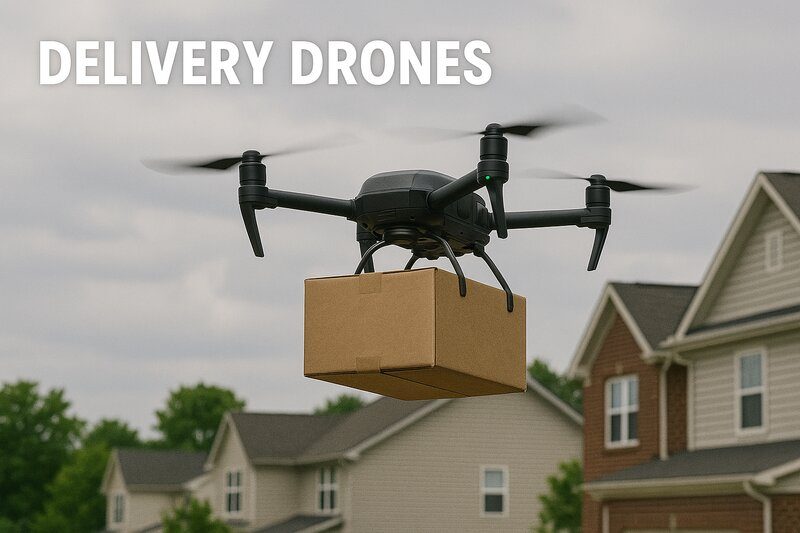
Delivery Drones Australia

There’s no denying it – delivery drones are changing the face of logistics, transport, and customer service across Australia and beyond. What once felt like sci-fi is now a viable, efficient, and often faster way to deliver everything from coffee to medical supplies. But what does it actually take to launch a delivery drone operation in Australia?

That’s where we come in.

At Flying Glass, we offer drone consultancy services for businesses and government agencies exploring drone delivery – backed by over 30 years of aviation experience and a deep understanding of CASA requirements. Whether you’re designing a drone drop stunt, piloting a prototype delivery drone fleet, or just figuring out where to start, this guide explains everything you need to know—and how we can help.


What Are Delivery Drones?

A delivery drone is a type of remotely piloted aircraft system (RPAS) used to transport goods from one location to another – usually within a 10 km radius. They’re typically lightweight, battery-powered multirotor drones equipped with GPS, collision-avoidance sensors, and a payload delivery system.

Applications include:

  • Medical deliveries (e.g., blood samples, vaccines)
  • Food delivery (coffee, meals, groceries)
  • Retail (e-commerce packages, fast fulfilment)
  • Event stunts and promotional drops
  • Emergency supplies in disaster zones
  • Remote location deliveries (islands, national parks)

Why Use Delivery Drones in Australia?

Australia’s geography makes it uniquely suited to drone deliveries. Our vast distances, urban congestion, and remote communities create logistical challenges that drones are primed to solve. Early adopters like Wing (a Google company) and Swoop Aero have already proven this in suburbs like Logan, QLD and Canberra, ACT, while Europe is seeing rapid suburban scaling with Manna drone delivery.

Key benefits:

  • Faster last-mile delivery
  • Lower carbon emissions
  • Less road congestion
  • Access to remote or isolated communities
  • Contactless delivery (especially useful during pandemics)
  • Incredible PR and marketing potential

What’s Stopping Most Companies from Getting Started?

Despite the hype, very few companies are flying delivery drones at scale – and for good reason. It’s not as simple as buying a drone and hitting ‘go’.

Here’s where it gets complex:

1. CASA Regulations Are Strict

Australia’s drone laws are among the most detailed in the world, especially for delivery drones. CASA requires:

  • An Operator’s Certificate (OC)
  • At least one licensed Remote Pilot (RePL)
  • A detailed Operations Manual
  • Approval to fly over populated areas
  • Approval for dropping objects from drones
  • BVLOS (Beyond Visual Line of Sight) approvals
  • A Safety Management System

2. Liability and Insurance

You’ll need comprehensive public liability insurance, plus plans to handle accidents, privacy breaches, or damage caused by your aircraft or payload.

3. Public Safety and Perception

Even if you’re legal, the public still needs to feel safe. Issues such as drones dropping boxes onto homes or buzzing overhead in quiet suburbs can lead to backlash or police attention.

Read our detailed guide on dropping from a drone for a breakdown of the legalities and risks involved in aerial delivery.


Flying Glass: Your Drone Delivery Partner

We’re not just drone pilots – we’re aviation consultants. At Flying Glass, we help businesses plan, test, and launch drone delivery operations from the ground up.

Here’s how we support you:

Regulatory Guidance

We help you understand what’s required to run a drone delivery operation, assist with RePL and OC pathways, and guide you through SORA and BVLOS applications.

Safety & Airspace Planning

We’ll map your flight zones, identify risk factors, and propose mitigation strategies that actually get CASA approval.

Drop Payload Design & Testing

We help develop your drop-release systems to meet CASA’s ‘safe release’ criteria – and conduct test flights that prove safety and accuracy.

Where an off-the-shelf delivery mechanism does not meet the project requirements, Flying Glass can also provide custom drone payload integration for specialist carrying, mounting, release and delivery systems.

Permits and Documentation

We prepare the technical documentation required for CASA – including your risk assessment, job safety analysis, and mission profiles.

Marketing and Media Integration

Thinking of using a delivery drone in your campaign or event? We’ve supported everything from TV ads to influencer drops and cinematic PR stunts. Watch our showreel to see our work in action.


Use Cases for Delivery Drones in Australia

Wondering if drone delivery could work for your industry? Here are a few applications we’ve supported or consulted on.

Retail & E-Commerce

Brands are looking for ways to get closer to same-day and even same-hour delivery. Drones offer ultra-fast service with zero road congestion – ideal for urban ‘last mile’ logistics or remote-area drops.

Healthcare

Delivery drones are already being used to transport critical medical items in Africa and rural Australia. We’re working with health providers to ensure compliance with CASA when transporting temperature-sensitive or high-value cargo.

Events & Promotions

Want to deliver a product sample onto a beach, launch a product from the air or create an unexpected promotional moment? We have delivered exactly this type of work for major campaigns. For creative and promotional applications, see our drone brand activation services.

Construction & Mining

Remote project sites often suffer from equipment or supply delays. Delivery drones can drop small components or tools on demand.

Food Delivery

Flying burritos? It’s already happening. But it requires creative packaging, accurate drop systems, and delivery within a small radius.

Delivery Drones Australia


Legal Considerations for Delivery Drones

As exciting as delivery drones are, there are strict boundaries you need to work within.

Here are just some of the legal concerns:

Dropping from a Drone

Any time you’re releasing a payload mid-air, CASA considers it “dropping of an object,” which is heavily regulated.

  • Must be authorised in your OC and operational documentation
  • Must not pose a risk to people or property
  • May require parachutes or soft-release systems
  • CASA may require flight testing and detailed safety reports

See our full post: Dropping from a Drone: Legal Guide for Australia

Flying Over Populous Areas

This includes suburbs, beaches, or anywhere people gather. CASA generally does not allow RPA flights over populous areas without a complex application and significant safety evidence.

Flying Glass can help prepare these approvals through SORA or other risk-based frameworks.

Where a delivery or promotional operation also requires the aircraft to operate over or near people, Flying Glass holds specialist OONP capability and can advise on the appropriate operational pathway for the proposed flight.

BVLOS Operations

To fly your delivery drone beyond visual line of sight, you’ll need special CASA authorisation, robust detect-and-avoid systems, and a proven track record of safe flight ops.


Delivery Drone Technology: What’s Available?

We work with clients to evaluate and deploy the best delivery drone solutions based on their use case.

Current tech includes:

  • VTOL drones that can launch and land vertically but cruise like planes
  • Multirotor drones with fixed payload arms or drop-release mechanisms
  • AI-enhanced routing for real-time adjustments based on wind, traffic, and airspace
  • Mobile ground stations with automated loading
  • Weatherproof enclosures for temperature-sensitive items

For organisations planning unattended launch, landing, charging and scheduled missions, drone-in-a-box systems can provide the infrastructure required to support more automated delivery and remote-operation models.

We help clients compare off-the-shelf drones like DJI Matrice or Flytrex with custom-built platforms for scalability.

Featured Delivery Drone: DJI FlyCart 30

The DJI FlyCart 30 is purpose-built for logistics, with a 30kg payload, 16km range, and parachute integration. It’s ideal for BVLOS delivery operations in Australia and fully compatible with CASA compliance pathways.

DJI FlyCart 30 – Enterprise Delivery Drone

A high-performance delivery drone built for commercial logistics and emergency supply missions. Features 30kg payload, BVLOS support, and integrated parachute recovery.

Price: AUD $26,830

View Product


Why Flying Glass?

There are a lot of drone companies in Australia. But here’s what sets us apart:

  • Australian-owned and CASA-certified
  • Proven work across film, TV, and government sectors
  • 30+ years of manned and unmanned aviation experience
  • Consultancy, not just pilot hire—we do strategy, compliance, and execution
  • Specialists in high-complexity operations
  • Direct access to experienced RePL/AROC/OC professionals

Whether you’re building an internal drone delivery service or need a one-time promotional drop, we’re your first call.


Frequently Asked Questions

Can I just buy a drone and start delivering?

No. Not legally. You need a Remote Pilot Licence, and any commercial drone ops (especially delivery) require an Operator’s Certificate, approved documentation, and proper insurance.

Do I need CASA approval for a one-time product drop?

Yes – especially if you’re flying over people or built-up areas. We can help get these approvals and even operate the flight on your behalf under our OC.

What’s the range of a delivery drone?

Usually 2–10 km depending on drone type, weight, battery capacity, and CASA restrictions.

Can Flying Glass supply the pilot and drone?

Absolutely. We offer turnkey operations with equipment, crew, permits, and delivery execution included.


Let’s Talk

If you’re considering launching – or even testing – a delivery drone solution in Australia, don’t guess. Let us help you do it safely, legally, and creatively.

Contact us today
Watch our showreel
Explore our drone consultancy services

OONP Operations Over or Near People Drones CASA Australia

Need help with OONP approval in Australia?

Flying Glass helps Australian drone operators navigate OONP, or Operations Over or Near People. We hold CASA-approved OONP capability ourselves, and we help other ReOC holders submit their own OONP applications, involving building practical safety cases, selecting suitable aircraft and parachute systems, and understanding what CASA expects before they apply.

Whether you need Flying Glass to carry out an OONP flight for you, or you want help securing your own OONP approval, we can guide you through the process with real-world operational experience.

Book a Free OONP Consultation

OONP Approval Australia: Fly Over or Near People Safely and Legally

OONP stands for Operations Over or Near People. In Australia, OONP is one of the most tightly controlled areas of commercial drone operation. That is because flying near people, or directly over people, creates a very different risk profile from a normal drone job in an empty paddock, closed site or controlled area.

For many drone operators, OONP approval is the difference between turning down valuable work and being able to take on higher-value commercial jobs. Events, television productions, public activations, city filming, construction sites, emergency response work and busy commercial environments often involve people on the ground. Without the right approval, those jobs can become difficult, restricted or impossible.

Flying Glass was among the early Australian commercial drone operators to obtain OONP approval. We have used that experience on real productions, real sites and real risk assessments. We now support other operators through our drone consultancy services, helping them understand whether OONP is achievable, what evidence they may need, and how to present a stronger application to CASA.

What Does OONP Mean?

OONP means Operations Over or Near People. In practical terms, it covers drone operations where the aircraft may be flown close to, or over, people who are not protected from the risk of the aircraft.

This can include people who are:

  • Members of the public at an event, activation or public location.
  • Workers on an active site who are not directly involved in controlling the drone.
  • Talent, athletes or performers being filmed.
  • People who have given consent but are still exposed to operational risk.
  • People who have not given consent and are simply present in the operating area.

CASA’s public guidance makes it clear that, in general, you must not fly a drone closer than 30 metres to people who are not essential to controlling or navigating the drone. CASA also states that you must not fly over a person unless an exception or approval applies. This is why OONP approval matters so much for commercial drone operators working in real-world environments.

Why OONP Is So Important for Commercial Drone Operators

Many drone businesses reach a point where standard permissions are not enough. You might have a ReOC, experienced pilots, good procedures and strong clients, but still find yourself limited by the 30 metre rule, consent requirements or the inability to fly over people.

OONP approval can open the door to work such as:

    • Film and television: filming talent, crowds, public streets, event sites and urban locations.
    • Commercial campaigns: capturing brand activations, launches, public spaces and promotional shoots.
    • Live events: filming festivals, races, ceremonies, concerts, sporting events and crowd environments.
    • Construction and infrastructure: operating near workers, active machinery and busy sites without shutting everything down.
    • Emergency response and disaster work: supporting teams where people may be present in complex operating areas.
    • Surveying and inspection: working in urban or semi-public environments where exclusion zones are difficult.

OONP is not just a compliance upgrade. It can be a commercial advantage. Operators who can legally and safely fly where others cannot are often more useful to producers, agencies, government clients, infrastructure teams and event organisers.

Two Ways Flying Glass Can Help With OONP

Flying Glass supports OONP work in two practical ways:

  • We can complete the OONP flight for you, using our own approved capability, experienced crew and compliant procedures.
  • We can help you apply for your own OONP approval, including safety case support, parachute guidance, application preparation and CASA liaison.

This means you can either solve an immediate job requirement or build long-term OONP capability inside your own drone business.

Discuss Your OONP Requirements

Flying Glass: Real OONP Experience, Not Just Theory

OONP is not an area where you want generic advice. A weak application, poor documentation or unrealistic operating concept can waste time, trigger further CASA questions, or result in an approval that does not actually support the jobs you want to do.

Flying Glass has practical OONP experience from both sides. We understand the operational realities of flying near people, and we understand the documentation burden required to support a higher-risk application. That combination matters.

Our background includes high-end drone cinematography for television, film, commercials, events and complex public environments. We are used to working around producers, directors, safety teams, public land managers, government stakeholders and aviation regulators. That experience helps us build OONP strategies that are practical, defensible and commercially useful.

What an OONP Approval May Allow

Every OONP approval is specific. It is not a blank cheque to fly anywhere, over anyone, in any conditions. CASA may approve particular aircraft, operating scenarios, height limits, crew procedures, parachute systems, emergency procedures and risk controls.

Depending on your application and CASA’s assessment, an OONP approval may address:

  • The specific drones or RPAS you are permitted to use.
  • The operating conditions attached to the approval.
  • Whether a parachute recovery system is required.
  • Minimum operating heights or separation distances.
  • Requirements for crew briefing, consent, exclusion zones or spotters.
  • Emergency procedures and post-incident response.
  • Maintenance, testing and documentation obligations.

This is why the planning stage matters. Before applying for OONP approval, you need to understand what you actually want to do. A vague application for “flying over people” is much weaker than a specific, well-supported operating concept with a clear risk case.

OONP and the 30 Metre Rule

The 30 metre rule is one of the key reasons operators search for OONP help. In Australia, drone operators generally need to keep at least 30 metres away from people who are not essential to controlling or navigating the drone. CASA measures this from the point on the ground directly below the drone, not simply from the aircraft in the air.

There are some circumstances where ReOC holders may operate closer than 30 metres, but no closer than 15 metres, if the relevant conditions are met and the person provides consent. However, if you want to operate closer than those limits, or operate near people without consent, you may need CASA approval.

For many commercial jobs, this distinction is crucial. A film shoot with performers, a public event, a construction site, a footpath, a beach, a harbour location or a CBD environment may quickly push a normal drone operation into OONP territory.

Do You Need OONP Approval?

You may need OONP approval if your drone operation involves flying:

  • Over people.
  • Within 30 metres of people who are not essential to the operation.
  • Closer than 15 metres to people, even with consent.
  • Near members of the public where consent cannot realistically be obtained.
  • At events, activations, streets, beaches, parks, construction sites or busy commercial areas.
  • In a way that could create an unreasonable risk to people or property.

If you are unsure, it is worth getting advice before quoting the job, accepting the brief or submitting an application. OONP questions are often easier to solve early than after a client has locked dates, locations and expectations.

Need an OONP Flight Done Now?

Flying Glass can help. If you do not yet hold OONP approval, we may be able to complete the flight for you using our own approved capability, compliant procedures and experienced crew.

This can be ideal for urgent TV shoots, commercial campaigns, public events, activations, government projects or complex filming jobs where waiting for your own OONP application is not practical.

Hire Flying Glass for an OONP Flight

What Is Involved in Getting OONP Approval?

OONP approval is not a simple form-filling exercise. CASA needs to understand the risk, the aircraft, the safety systems, the crew, the operating environment and the procedures that will keep people on the ground safe.

A strong OONP application may include:

  1. Operational concept: a clear explanation of what you want to do, where you want to do it and why OONP approval is required.
  2. Aircraft selection: evidence that the drone is suitable for the proposed OONP operation.
  3. Parachute or risk mitigation strategy: details of any parachute system, containment measure, procedures or other safety controls.
  4. Operational Safety Case: a structured explanation of hazards, risks, mitigations, residual risk and emergency response.
  5. Procedures: crew roles, briefings, pre-flight checks, maintenance, incident response and site controls.
  6. Evidence: supporting documentation, testing records, manuals, specifications, training records and other material.
  7. CASA submission: a complete application that gives CASA enough information to assess the proposed operation.

Flying Glass helps operators make sense of this process. We can support the whole OONP application or provide targeted assistance with the areas causing the most difficulty.

Parachutes and OONP Compliance

Parachutes are a major part of many OONP conversations, but they need to be considered properly. A parachute system is not just an accessory. It must be suitable for the aircraft, the operation and the safety case.

For OONP applications, parachute considerations may include:

  • Whether a parachute is required for the proposed operation.
  • Whether a suitable system exists for the drone you want to use.
  • Installation requirements and compatibility.
  • Manufacturer documentation and system limitations.
  • Deployment height and effectiveness.
  • Maintenance, inspection and testing requirements.
  • How the parachute fits into the wider Operational Safety Case.

Flying Glass can help you assess parachute options for your OONP application. We can also help you understand the operational implications before you spend money on hardware that may not suit your approval pathway.

OONP Operations Over or Near People Drones CASA Australia

OONP for Film, TV and Commercial Shoots

Film and television work is one of the clearest use cases for OONP approval. Productions often need drones to operate around cast, crew, vehicles, public spaces, roads, event sites or active locations. Standard separation rules can make the shot difficult or impossible.

Flying Glass has extensive experience in drone cinematography for television, film and commercials. We understand that the shot matters, but so does the approval, safety plan, crew briefing and production workflow. OONP capability can help productions capture more dynamic shots while still working within a compliant safety framework.

If your production needs aerial filming near people, Flying Glass can either provide the drone crew or advise your team on the OONP requirements for the job.

Our specialist OONP capability supports suitable live-event and production work, including FPV drone Melbourne projects where close-proximity filming around performers, athletes or controlled event environments is central to the creative brief.

OONP for Events and Public Activations

Events are another common reason operators need OONP support. Public events are rarely empty, predictable or easy to fully control. Even with good planning, there may be attendees, performers, staff, contractors, media teams and members of the public within the operating environment.

OONP planning for events may need to consider:

  • Crowd layout and movement.
  • Take-off and landing areas.
  • Emergency landing options.
  • Spotters and ground crew.
  • Barriers, exclusion zones and signage.
  • Consent and communication.
  • Coordination with event organisers, security and site managers.

Flying Glass can help event organisers and drone operators understand whether OONP approval is needed, what risk controls may be required and how to plan the operation safely.

Flying Glass also designs and operates complete drone brand activations and PR stunts, combining complex aviation approvals with custom payload systems, branded aircraft and live event execution.

For complex projects where the drone also carries a purpose-built payload, release system or specialist equipment, Flying Glass can combine OONP planning with custom drone payload integration and project-specific R&D.

Our OONP capability is particularly valuable for drone live broadcast projects at concerts, sporting events and other environments where the best aerial perspectives may be close to controlled participants or event personnel.

OONP for Construction, Infrastructure and Urban Sites

Construction and infrastructure sites often involve workers, contractors, vehicles, machinery and nearby public areas. A normal drone flight can quickly become an OONP issue if workers are present, access cannot be fully controlled or the drone needs to operate close to people.

For construction and infrastructure work, OONP approval may support:

  • Progress filming on active sites.
  • Inspection work near workers or public boundaries.
  • Urban surveying where separation is difficult.
  • Infrastructure documentation around roads, bridges or public spaces.
  • Emergency or incident response where people may remain nearby.

Flying Glass can help operators and project teams assess the site, identify risks and decide whether OONP approval or an approved external operator is the best path.

Flying Glass OONP Consultancy Services

Our OONP consultancy services are designed for Australian drone operators who want practical, experienced support. We do not simply hand you a generic template and leave you to work it out. We help you understand the operational logic behind the application.

Flying Glass can assist with:

  • Initial OONP assessment: understanding what you want to do and whether OONP approval is likely to be required.
  • Application strategy: deciding what type of operation, aircraft and safety controls to present.
  • Operational Safety Case support: building a structured, practical and defensible safety case.
  • Parachute guidance: helping you understand suitable systems, limitations and documentation needs.
  • Procedure development: crew roles, emergency procedures, site controls and operating practices.
  • CASA liaison support: helping you respond to questions and prepare stronger supporting material.
  • Audit and renewal preparation: reviewing your OONP documentation after approval is granted.
  • Operational mentoring: helping your crew understand how OONP work differs from standard drone operations.

For operators expanding into other advanced operating models, Flying Glass also provides support for BVLOS operations and approvals, including operational planning, documentation and pathways for Beyond Visual Line of Sight capability.

Why OONP Applications Fail or Stall

Many OONP applications run into trouble because the operator underestimates the level of detail required. CASA is assessing risk to people on the ground, so the application needs to do more than say the pilot is experienced or the drone is reliable.

Common OONP problems include:

  • The proposed operation is too vague.
  • The drone is not suitable for the intended risk profile.
  • The parachute evidence is incomplete or poorly explained.
  • The Operational Safety Case is generic.
  • The operator has not explained how people will be protected.
  • The procedures do not match the proposed real-world operation.
  • The application does not clearly address emergency scenarios.
  • The operator asks for broad approval without enough supporting evidence.

Flying Glass helps you avoid these problems by approaching OONP from an operational perspective first. We look at what you need to achieve, what risk that creates and what evidence is needed to support the application.

Should You Apply for OONP Approval or Hire an Approved Operator?

Not every business needs its own OONP approval immediately. In some cases, hiring an approved operator is faster, simpler and more cost-effective. In other cases, building your own OONP capability makes commercial sense.

You may be better off hiring Flying Glass for the OONP flight if:

  • The job is urgent.
  • You only need OONP capability occasionally.
  • The client needs a compliant result quickly.
  • You do not yet have the right aircraft, parachute or procedures.
  • You want to avoid delaying the shoot while an application is assessed.

You may be better off applying for your own OONP approval if:

  • You regularly turn down work because of people on site.
  • You want to offer higher-value drone services.
  • You have a ReOC and want to expand your operational capability.
  • You are investing in compliant aircraft and safety systems.
  • You want a long-term competitive advantage.

If you are not sure which option is right, Flying Glass can help you make a practical decision before you invest time or money in the wrong direction.

We Make OONP Easier to Understand

OONP approval can feel overwhelming, especially when you are dealing with CASA terminology, parachute documentation, safety cases and client deadlines at the same time.

Flying Glass gives you clear, practical guidance from people who understand both commercial drone work and the reality of operating near people.

Start Your OONP Approval Today

OONP Approval and CASA Documentation

CASA’s approach to OONP is risk-based. Your application needs to show that you understand the hazards and have suitable controls in place. That usually means your documentation needs to be clear, specific and consistent.

Useful OONP documentation may include:

  • Operational Safety Case.
  • Risk assessment.
  • Aircraft specifications.
  • Parachute documentation, where applicable.
  • Operations manual updates.
  • Emergency procedures.
  • Crew training records.
  • Maintenance and inspection procedures.
  • Site assessment process.
  • Consent and briefing process, where relevant.

Flying Glass can help you identify documentation gaps before your application goes in. This can reduce rework and make your OONP submission easier for CASA to assess.

ReOC holders wanting to develop their own advanced capability can also engage Flying Glass for outsourced Chief Remote Pilot support, including operational governance and assistance introducing complex operations into an existing drone program.

What Makes a Strong OONP Safety Case?

A strong OONP safety case does not simply list risks. It explains how the operation works, what can go wrong, what controls are in place and why the remaining risk is acceptable.

For OONP, your safety case should usually consider:

  • Aircraft failure.
  • Loss of control link.
  • Navigation or positioning error.
  • Battery or power failure.
  • Parachute deployment limitations.
  • People entering the operating area.
  • Weather and wind effects.
  • Pilot workload.
  • Crew communication.
  • Emergency landing or containment options.

Flying Glass can help turn these issues into a practical, readable OONP safety case that reflects the way your team actually operates.

OONP FAQs

What does OONP stand for?

OONP stands for Operations Over or Near People. It refers to drone operations where the aircraft may be flown close to, or over, people on the ground.

Do I always need CASA approval for OONP?

Not always. Some operations between 30 metres and 15 metres from people may be possible for ReOC holders when the required conditions are met. However, operations closer than those limits, over people, or near people without consent may require CASA approval.

Can Flying Glass complete an OONP flight for us?

Yes. Flying Glass may be able to complete the flight for you using our own approved OONP capability, depending on the location, aircraft, risk profile and client requirements.

Can Flying Glass help us get our own OONP approval?

Yes. Flying Glass helps Australian drone operators prepare for OONP approval, including application strategy, Operational Safety Case support, parachute guidance, documentation review and CASA liaison support.

Do I need a parachute for OONP?

A parachute is often an important part of an OONP approval pathway, but the requirement depends on the aircraft, operation and safety case. Flying Glass can help you assess whether a parachute system is suitable and what documentation may be needed.

Is OONP only for large drone companies?

No. OONP approval can be relevant to solo operators, small drone businesses, production companies, enterprise teams and specialist operators. The key issue is whether the operation can be supported by a strong safety case and appropriate controls.

Ready to Discuss OONP?

If you are serious about flying drones over or near people, the best next step is to get advice before you apply, quote or commit to a client. OONP can unlock valuable work, but it needs to be approached carefully.

Flying Glass can help you decide whether to apply for your own OONP approval, hire us for a specific OONP flight, or prepare your documentation before speaking with CASA. We bring real-world experience, practical safety thinking and a commercial understanding of what drone operators actually need.

You can also visit our Drone Consultancy page or watch the Flying Glass Showreel to see the type of high-end work our team supports.

Let’s Get Your OONP Problem Solved

Flying Glass helps Australian operators understand, prepare for and deliver OONP work. Whether you need an approved crew for an urgent job or support with your own CASA application, we can help you move forward with confidence.

Speak to us about your aircraft, location, client requirement, timeline and operating concept. We will help you work out the most practical path.

Contact Our OONP Consultants

OONP FAQs

What does OONP stand for?

OONP stands for Operations Over or Near People. It refers to drone operations where the aircraft may be flown close to, or over, people on the ground.

Do I always need CASA approval for OONP?

Not always. Some operations between 30 metres and 15 metres from people may be possible for ReOC holders when the required conditions are met, including consent. Operations closer than those limits, over people, or near people without consent may require CASA approval.

Can Flying Glass complete an OONP flight for us?

Yes. Flying Glass may be able to complete the flight using its own approved OONP capability, depending on the location, aircraft, risk profile and client requirements.

Can Flying Glass help us get our own OONP approval?

Yes. Flying Glass helps Australian drone operators prepare for OONP approval, including application strategy, Operational Safety Case support, parachute guidance, documentation review and CASA liaison support.

Do I need a parachute for OONP?

A parachute is often an important part of an OONP approval pathway, but the requirement depends on the aircraft, operation and safety case.