Australian Drone Laws

Stay up-to-date with Australian drone laws and regulations. Learn how to fly legally and safely with expert insights and the latest CASA guidelines.

Australia’s drone laws are among the most comprehensive in the world, ensuring both the safety of the public and the responsible use of airspace. The Civil Aviation Safety Authority (CASA) oversees these regulations, and they apply to both recreational and commercial drone pilots. Whether you’re flying for fun or for business, it’s crucial to understand your legal obligations under Australian law.

Recreational vs. Commercial Flying

For recreational pilots, you must follow basic safety rules, such as keeping your drone within line of sight and not flying higher than 120 metres. You also need to avoid flying within 5.5 kilometres of controlled airports and never fly over people or populous areas such as beaches or sports events.

For commercial operators, the rules are stricter, and you are required to have a Remote Pilot Licence (RePL) and possibly an Operator’s Certificate (REOC) depending on your operations. Commercial flights often involve greater responsibility, including risk management and flight planning, and the penalties for non-compliance can be severe, including fines and legal repercussions.

Recent Changes in Drone Laws

Over time, CASA has made several updates to drone laws in response to technological advancements and the growing number of drones in Australian skies. It’s important to stay current with these regulations, as they frequently change. For example, CASA introduced the mandatory registration of drones weighing more than 250 grams for both commercial and recreational use. Additionally, all operators are required to obtain an Aviation Reference Number (ARN) as part of their registration process.

What Happens If You Violate Drone Laws?

Failure to comply with Australian drone laws can result in fines and legal action. CASA has the authority to impose penalties for dangerous or illegal drone activity, and with the increasing use of technology such as drone detection systems, it’s easier than ever for authorities to identify non-compliant pilots.

At Flying Glass, we make sure that you’re not just flying with creativity but also with responsibility. Our drone training courses ensure you’re fully equipped with the knowledge to fly legally, minimising risks while maximising opportunities.

Man proudly holding drone and licence card – do you need a licence to fly a drone in Australia

With the growing popularity of drones across Australia, many new pilots are asking: do you need a licence to fly a drone in Australia? The answer depends on several factors, including the type of drone, its weight, and the purpose of your flight. This guide will walk you through the Civil Aviation Safety Authority (CASA) requirements and help you determine whether you need a drone licence, a pilot certification, or simply need to register your aircraft.

Recreational vs Commercial Drone Use

The first step in understanding drone laws is to differentiate between recreational and commercial use. Flying a drone purely for fun, such as in your backyard or over the beach (within CASA rules), is considered recreational. If you’re using your drone for work or earning money from footage or services, it’s classed as commercial and comes with additional requirements. Recreational pilots often assume that they have more freedom than they actually do. However, even flying for fun comes with a strict set of rules. For example, drones cannot be flown higher than 120 metres above ground level, must stay more than 30 metres away from people not involved in the flight, and cannot be flown at night or in restricted airspace without proper approvals.

Do You Need a Licence for a Drone Under 250g?

If you’re flying a drone that weighs less than 250 grams, such as the DJI Mini series, and you’re flying it recreationally, then you generally do not need a licence to fly a drone. However, you must still follow CASA’s standard operating conditions. These include flying below 120 metres, staying at least 30 metres from people, and not flying at night or in prohibited airspace without special permissions. Even for drones under 250g, there are limits to what is allowed. CASA is particularly strict about flights near emergency services operations, airports, and other restricted zones. Even without a formal licence, you can still be fined or penalised for breaking these rules. That said, the moment you use even a sub-250g drone for business, you may still need to hold a Remote Pilot Licence (RePL) or operate under a company’s Operator’s Certificate (OC). This surprises many hobbyists looking to monetise their drone footage.

Do You Need a Drone Licence in Australia?

In general, if you’re flying drones weighing more than 250g for any commercial purpose, then yes, you need a drone licence in Australia. Specifically, this means a Remote Pilot Licence (RePL) issued by CASA. If you fly for or as part of a business, you also need to operate under a Remote Operator’s Certificate (ReOC), unless you qualify under the excluded category. There are some grey areas in drone use that many Australians are unaware of. For instance, shooting real estate photography for a friend and receiving any form of compensation—cash, a favour, or even a bottle of wine—can count as commercial work in CASA’s eyes. It’s always best to err on the side of caution and clarify your legal responsibilities.

What is the Excluded Category?

The excluded category allows individuals or businesses to operate commercially with drones under 2kg without holding a ReOC. However, you must still notify CASA before flying. Many people mistakenly think this means you don’t need a licence at all, but you do need to be aware of the notification and operating conditions. Notification includes registering the business or operator with CASA and adhering to specific conditions, such as flying only in visual line of sight, not operating at night, and not flying within controlled airspace. Failure to comply with these terms can result in fines or loss of flying privileges.

Do You Need a Pilot Licence to Fly a Drone?

You do not need a traditional aviation pilot licence, but if flying drones commercially, you do need a Remote Pilot Licence (RePL). This certifies that you understand airspace rules, safety procedures, and how to operate drones safely. Our training centre at Flying Glass offers nationally recognised RePL training courses that prepare you to fly professionally and within the law. The RePL is issued by CASA after you complete an accredited course, which includes both theory and practical flying elements. At Flying Glass, we provide hands-on training at our custom flying field or on-site at your business location.

When Do You Need a Drone Licence?

  • When flying drones over 2kg commercially
  • When flying drones under 2kg commercially but without using the excluded category
  • When your client or project requires CASA-certified operators
  • When flying in controlled airspace or near airports (requires authorisation)
  • When flying for film, TV, construction, surveying, or any revenue-generating activity

These rules apply nationwide, but some areas such as national parks may have their own additional restrictions. Always check local council or park authority rules before flying, regardless of your licence status.

Do Drone Operators Need a Licence?

Yes. Whether you’re a solo drone pilot or working under an organisation, drone operators need a licence (RePL) and must operate under an OC, unless exempted under CASA’s excluded rules. It’s also worth noting that commercial jobs often require you to show proof of your RePL and insurance coverage before you’re hired. If you’re capturing imagery for property developers, architects, media companies or infrastructure projects, your client will almost certainly request proof of certification. Don’t leave it to chance—having your RePL and operating under an Operator’s Certificate gives you a professional edge and opens more job opportunities.

What Drone Licence Do I Need?

The Remote Pilot Licence (RePL) is the most common certification for drone operators in Australia. If you’re looking to fly commercially, this is what you need. You can also obtain endorsements for aircraft types or beyond visual line of sight (BVLOS) operations with additional training. Flying Glass offers drone training courses where you can get your RePL with practical flying experience, CASA-approved instructors, and tailored training at our private flying site or your own location.

Registration vs Licensing

People often confuse registration with licensing. Here’s the difference:

  • Registration: Every drone over 250g must be registered with CASA, whether used commercially or recreationally.
  • Licensing: A RePL is required for commercial use of drones (unless you’re under the excluded category).

Registration costs vary depending on the drone type and use. Commercial drone registration must be renewed annually, and each drone must be individually registered.

Do You Need a Licence to Fly Drones Recreationally?

No. If you’re flying purely for fun and your drone is under 250g, you do not need a licence. However, you must still follow CASA’s rules, including not flying near emergency operations, crowds, or restricted zones. Drones between 250g and 2kg must be registered, even for recreational use. It’s also worth noting that recreational pilots who break the rules are subject to the same penalties as commercial pilots. Ignorance of the law is not a valid defence, so make sure you’re familiar with the drone safety rules before your first flight.

Man proudly holding drone and licence card – do you need a licence to fly a drone in Australia

What Happens If You Fly Without a Licence?

Flying commercially without a RePL or ReOC (or qualifying under the excluded category) can result in significant fines from CASA. It can also invalidate insurance and put your project at risk. That’s why many production companies and builders turn to Flying Glass. If you’re unsure or don’t have the necessary permissions, we can capture the drone footage for you, ensuring compliance and high-quality results. Some of the common penalties include fines over $1,000 for unlicensed commercial operations, and in extreme cases, legal action. For businesses, the reputational risk of breaching CASA regulations is also substantial. It’s always better to ensure full compliance from the outset.

Get Licensed and Fly Legally

Whether you’re an aspiring drone pilot, filmmaker, surveyor, or someone wanting to start a drone business, the first step is proper training. At Flying Glass, we help you get your Remote Pilot Licence and understand all CASA regulations. Don’t leave your business at risk—fly smart and legal from the start. If you’ve been wondering, do you need a licence to fly a drone in Australia, the answer is yes—if you’re flying commercially. Even if you’re not sure, it’s worth getting expert advice or training to avoid hefty penalties.

Quick Answers to Common Questions

  • Do I need a licence to fly a drone? Only for commercial use or drones over 2kg.
  • Do you need a licence for a drone under 250g? No, for recreational use. Yes, if used commercially.
  • Do you need a drone licence to fly a drone in Australia? Yes, if operating commercially.
  • Do I need a pilot licence to fly a drone? Not an aviation licence, but a Remote Pilot Licence (RePL) for commercial use.
  • Do you need a drone licence in Australia? Yes, for most commercial operations.
  • Do you need a licence for drone filming? Yes, if it’s paid work or part of a commercial project.

Still have questions? Contact us to speak with our team or learn more about our drone training programs across Australia.

Do I need to register my drone in Australia for recreational use – CASA official with physical drone register and child holding recreational drone

If you’re flying a drone for fun, you may be wondering: do I need to register my drone in Australia for recreational use? The answer depends mainly on how you’re using the drone. As drone technology becomes more accessible and affordable, the Civil Aviation Safety Authority (CASA) has implemented regulations to keep skies safe. Whether you’re flying in your backyard or capturing scenic coastlines, understanding the legal requirements is essential.

Understanding Drone Registration Rules in Australia

In Australia, all drone operators must follow CASA’s rules. The drone register is managed by CASA and is separate from your RePL or Operator’s Certificate if you fly commercially. So, when do I need to register my drone? In most cases, registration is based on whether you fly for business or as part of your job, rather than weight alone. Recreational, sport, educational, and commercial operations can fall under different regulatory requirements. Understanding where your activities sit is the first step to staying compliant.

Do I Need to Register My Drone?

As a general rule, you must register your drone if:

  • It is used for business or commercial purposes (regardless of weight)
  • It is flown for any purpose other than sport or recreation

If your drone fits either of the above, it must be listed on the CASA register. This applies even if you only fly occasionally. Many drone users aren’t aware that simply uploading drone footage to a monetised YouTube channel, or taking real estate photos as a favour, could shift the activity into “business use”. If you’re unsure, it’s safer to check CASA guidance and make sure you are compliant.

Do I Need to Register a Drone Under 250g?

Many Australians now purchase lightweight drones that weigh less than 250 grams, like the DJI Mini series. But do I need to register a drone under 250g? If you’re flying purely for sport or recreation, you do not currently need to register it with CASA. However, if you’re using the drone for any kind of business activity, then yes, registration is required, even for sub-250g drones. The moment commercial intent is involved, registration applies.

Do Drones Under 250g Need to Be Registered?

Still wondering, do drones under 250g need to be registered? If you’re flying recreationally and your drone is under 250 grams, the answer is no. However, if you use it for any kind of business, then yes, it must be registered. It’s also worth noting that CASA reviews and updates drone guidance from time to time, so it’s wise to check the CASA website if you are relying on specific thresholds or categories.

When Do I Need to Register My Drone?

So when do I need to register my drone? In general, you must register any drone used for business or commercial work, regardless of its weight. If you only fly for sport or recreation, registration is not currently required, even for heavier hobby drones such as the DJI Mavic 4. There’s also a requirement for operators to obtain an aviation reference number (ARN) for CASA processes such as registration and accreditation. Without an ARN, you may not be able to complete the relevant steps in myCASA.

Registering Your Drone in Australia

The process to register your drone in Australia is online via myCASA. You’ll need an ARN and your drone’s details, including make, model, and serial number. If you’re operating more than one drone for business, each aircraft must be individually listed on the register. Here’s a quick guide to register drones in Australia:

  1. Log into your myCASA account
  2. Navigate to ‘Drone Registration’
  3. Enter your drone’s make, model, and serial number
  4. Confirm the intended use (business or commercial use)
  5. Pay any applicable fee if required

If you’re unsure whether your drone must be registered, CASA’s online guidance can help clarify your obligations.

What Weight Drone Must Be Registered?

Drone registration in Australia is based primarily on how the drone is used, not simply its weight. If a drone is used for business or commercial purposes, it must be registered regardless of whether it weighs under or over 250 grams. Weight does matter in other parts of CASA’s framework (for example, which category of operation you fall into, and what additional requirements may apply), so it is still important to know your drone’s take-off weight and which rules apply to your specific situation.

Common Questions About Drone Register Requirements

Do I need to register my drone in Australia if it’s only for private use?

No. If you only fly for sport or recreation, registration is not currently required.

What is the CASA register?

The CASA register is the official database for drones that must be registered (primarily those used for business or commercial purposes). It supports compliance and safe operations across the sector.

How long does registration last?

Drone registrations must be renewed annually. CASA will send a reminder before your registration expires, and you can renew via your myCASA dashboard.

Can I register a drone that isn’t mine?

In many cases, the person or organisation responsible for operating the drone is the one who registers it. If ownership and operation differ, you should check the current CASA guidance to ensure the registration is recorded correctly.

Is there a fine for flying an unregistered drone?

Yes. Penalties can apply if you fly a drone that is required to be registered but isn’t. CASA may issue infringement notices, and serious breaches can be escalated further.

Do I need to register my drone in Australia for recreational use – CASA official with physical drone register and child holding recreational drone

Drone Safety Beyond Registration

Registration is only one aspect of safe drone flying. CASA expects all pilots, recreational and professional, to follow safety rules such as:

Breaking these rules can attract penalties regardless of whether your drone is registered.

How Flying Glass Can Help

If you want to learn more about the rules of flying drones in Australia or you’re considering earning money with your drone, Flying Glass offers CASA-approved drone training courses. These courses prepare you for safe, legal operations and help you obtain your Remote Pilot Licence (RePL). We can also guide you through the compliance steps that apply to business drone operations, including operator accreditation, drone registration, and safe operating processes. For those interested in turning their drone passion into a profession, our training covers everything from applying for an Operator’s Certificate (OC) to advanced flight planning and airspace authorisations. We also help with risk assessments and flight logging, which are essential if you ever want to scale your drone operations.

In Summary: Do I Need to Register My Drone in Australia for Recreational Use?

Let’s recap. You do not need to register your drone in Australia for recreational use if:

  • You fly strictly for sport or recreation

But you must register your drone if:

  • You intend to use it for business or commercial purposes

Flying Glass is here to help, whether you’re just starting or looking to expand your drone capabilities. Contact us today to find out how we can assist with training, compliance, and certification so you can fly legally and confidently across Australia.

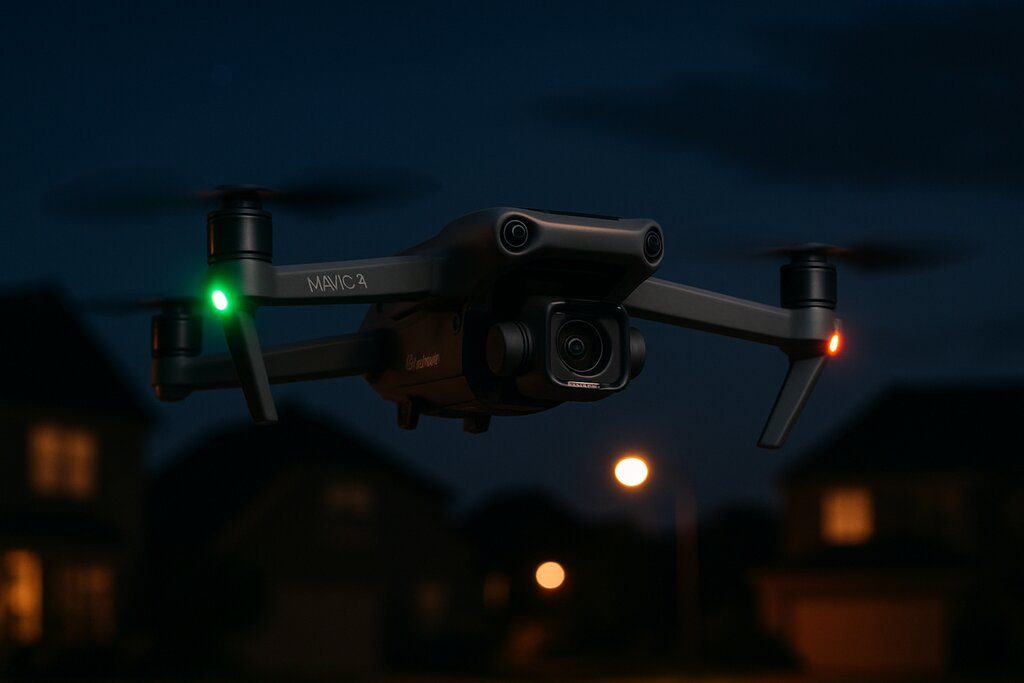
Can you fly a drone at night? DJI Mavic 3 hovering over residential street with LED lights visible

Flying a drone at night opens up a new world of possibilities for aerial photography, surveying, security, and creative cinematography. But many drone operators often ask the same crucial question: can you fly a drone at night? In this comprehensive guide, we’ll explore everything you need to know about night flights in Australia, from CASA regulations to technological capabilities, safety procedures, and more.

Flying Drones at Night in Australia – Rules Explained

First things first, can you fly a drone at night in Australia? The answer is yes — but only under specific conditions. According to the Civil Aviation Safety Authority (CASA), flying a drone at night is legal only if you are operating under a Remote Operator’s Certificate (OC) and the flight is conducted by a person with a valid Remote Pilot Licence (RePL). Recreational night flights are not permitted under standard rules, meaning you cannot fly a drone at night for fun unless you’ve obtained special permission. So, if you’re wondering “can you fly drones at night recreationally?” — the short answer is no, unless you have specific CASA approval or are flying under a certified organisation like ours, Flying Glass, who can conduct night operations for film, TV, or commercial projects.

Drone Night Flying with Flying Glass

At Flying Glass, our licensed operators and certified operations allow us to conduct drone night flying under CASA regulations. We are fully equipped for drone night flights whether it’s over cityscapes, remote bushland, or industrial sites. If you don’t have permission to conduct a night flight but need specific footage, we can handle the shoot for you and ensure compliance with all Australian airspace laws.

Night Flying a Drone in a Residential Neighbourhood?

One of the most frequently asked questions is, “Is night flying a drone in a residential neighbourhood allowed?” The same CASA rules apply — if you’re flying for commercial purposes and you have approval, then yes, you may conduct such flights. However, you must adhere to noise restrictions, maintain visual line of sight with the help of spotters or lighting, and avoid overflying people and private property without consent.

Do Drones Have Night Mode?

Yes, many drones today, particularly those from DJI, come equipped with a form of night mode or low-light optimisation. This enhances camera sensitivity in darker conditions, which is vital for safe navigation and capturing usable footage. These features make drone night flight safer and more effective, but they do not replace the need for CASA authorisation in Australia.

Does DJI Drone Work at Night?

Does DJI drone work at night? Absolutely. Most DJI models are designed with low-light sensors, bright status LEDs, and GPS stabilisation. However, obstacle avoidance sensors may not function reliably in total darkness, which can affect the drone’s autonomy and safety. For example, models like the DJI Mavic 3 Cine and Inspire 3 are commonly used for flying drone at night in professional settings because of their excellent camera performance and lighting features.

Can I Fly My DJI FPV Drone at Night?

Can I fly my DJI FPV drone at night? Only if you’re a licensed operator flying under an OC and have received night flight approval. FPV drones pose additional challenges, such as requiring a spotter to maintain line of sight. At Flying Glass, we’re experienced in both traditional and FPV night operations, with systems tailored for high-end film and TV shoots.

What Does the Green Light on a Drone at Night Mean?

What does the green light on a drone at night mean? The green LED typically indicates the drone’s orientation, often showing the starboard (right) side of the drone. Red is used for port (left), and white or blinking lights help identify the drone’s rear or front depending on the model. These lights are crucial for navigation and maintaining visibility during drone night flying.

How Far Can a Drone See at Night?

How far can a drone see at night? It depends on the drone’s camera and lighting systems. Most consumer-grade drones with standard cameras can see a few hundred metres with low-light sensors, but visibility drops significantly without ambient lighting. Industrial drones or those with thermal or infrared capabilities can see much farther. At Flying Glass, we use top-tier equipment with night vision and IR options where necessary, ensuring sharp, cinematic shots even in darkness.

Can you fly a drone at night? DJI Mavic 3 hovering over residential street with LED lights visible

Training to Fly a Drone at Night

If you want to learn how to fly drone at night legally and safely, consider enrolling in a certified training program. Our partners at SkyMedia Training offer CASA-approved Remote Pilot Licence (RePL) courses, providing essential knowledge about airspace, risk management, and night flying protocols. This training is the first step towards becoming a professional operator capable of flying drone at night.

Why Use Flying Glass for Your Drone Night Sky Needs?

Drone night sky footage requires more than just skill — it demands experience, high-end gear, and proper authorisations. At Flying Glass, we deliver all three. Our pilots hold RePLs and we operate under a CASA-certified OC, making us eligible to perform night operations anywhere in Australia where flight permissions can be granted. Whether it’s filming a quiet coastal town at midnight, capturing a glowing city skyline, or flying above an industrial site during off-peak hours, our team has the gear and the know-how to handle it all. If you need night footage but don’t meet CASA requirements, let us do the shoot for you.

Summary: Can You Fly a Drone at Night in Australia?

  • Can you fly a drone at night in Australia? Yes — with an OC and RePL.
  • Can you fly drones at night recreationally? No, unless you obtain CASA approval.
  • Fly a drone at night only if you meet legal, safety, and technical requirements.
  • Do drones have night mode? Yes, many modern drones do, especially DJI models.
  • Need help? Flying Glass can do the job for you — fully legal, insured, and experienced.
  • What are those mysterious drone orbs I’m seeing at night?  Probably just a drone!

Get in touch with us today to discuss your night drone project or to enrol in a training course that helps you get started with legal night operations.

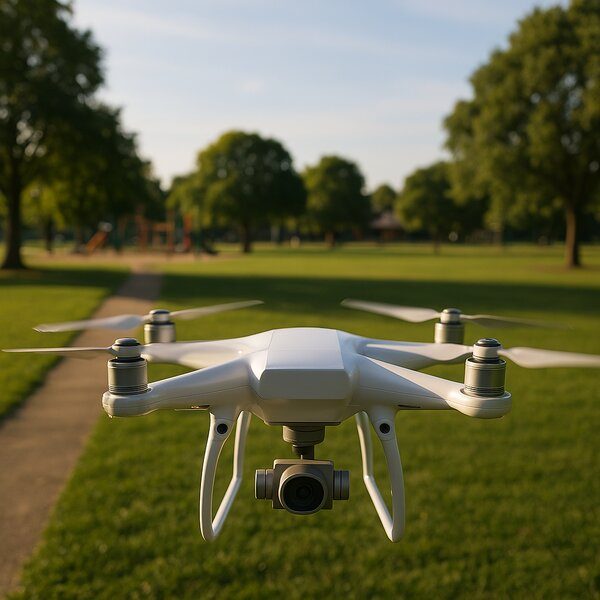
Can I fly a drone in a park – white quadcopter hovering in an Australian public park

Whether you’re a hobbyist pilot or simply curious about drone regulations in your area, one of the most common questions is: can I fly a drone in a park? In this comprehensive guide, we’ll break down the rules around drone usage in public spaces, including local ovals, parks, and school grounds in Australia. We’ll also clarify what’s allowed, what to avoid, and how to stay compliant while enjoying recreational drone flying.

Understanding CASA Regulations

In Australia, the Civil Aviation Safety Authority (CASA) regulates drone usage. These rules apply to all drone operators, whether recreational or commercial. Before you lift off in a public space, it’s important to understand the standard operating conditions:

  • Your drone must be under 2 kg if flying recreationally without a Remote Pilot Licence (RePL).
  • You must fly in visual line-of-sight at all times.
  • You cannot fly higher than 120 metres above ground level.
  • Stay at least 30 metres away from people not involved in the flight.
  • No flying over or near emergency operations, sporting events, or populated areas.

These regulations are general guidelines, but specific areas like public parks may have additional restrictions depending on local council rules.

Can I Fly a Drone in a Public Park?

If you’ve ever asked, can I fly a drone in a public park?, the answer is: it depends on the location and who manages the park. In most cases, flying a drone in your local park is allowed if you follow CASA rules. However, many councils and park management authorities have their own drone policies. To avoid fines or complaints, it’s best to check your local council’s website or call them directly. Some councils require permission, especially for larger drones or where other people are present. Others allow recreational drone flying with no additional permits, provided you follow the standard drone rules.

Drone Parks and Designated Flying Areas

The term drone park is sometimes used to refer to designated areas where drones are explicitly allowed. These are often located within model aircraft clubs or areas set aside by councils to promote safe drone flying. While not every city or town has an official drone park, it’s worth checking whether there’s a designated area near you. Flying in approved drone parks gives you peace of mind and may even connect you with other drone enthusiasts.

Can I Fly My Drone at a Park That Is Not Populated?

Even if the park is empty, the same CASA rules apply. While you may not risk collisions with people, you still need to maintain visual line-of-sight and stay under 120 metres high. If the space is truly isolated, it may offer a perfect environment to practise flying or capture some scenic footage, assuming the local council allows it.

Can I Fly a Drone in a Local Oval?

Flying a drone in a local oval can seem like a good idea, especially when it’s not in use. However, most ovals are managed by councils or schools. If it’s a school oval, even if used out of hours, you technically need permission from the school or department of education. For council-managed ovals, the same rule applies: check your local drone policy. Some ovals double as public parks and may fall under general park guidelines.

Can I Fly a Drone in a School Ground After Hours?

This is a grey area. School grounds are not public property and are managed by educational departments or private operators. Even outside of school hours, flying a drone without permission is considered trespassing and may be illegal. While you might not be stopped immediately, doing so risks penalties and could lead to police involvement.

National Parks Are a No-Go (Mostly)

Flying in national parks is generally prohibited unless you’ve obtained specific permission. You can read more about this in our national parks drone guide. This article, however, focuses on local and public areas like neighbourhood parks and ovals, where the rules can be more lenient — or more confusing.

Tips to Stay Compliant When Flying in a Park

  • Fly early in the morning or at quiet times to minimise risk of bothering others.
  • Keep your drone under control at all times. Sudden gusts or GPS errors can lead to accidents.
  • Always carry your drone’s serial number and proof of ownership. Some councils may request it if questioned.
  • Respect birds, wildlife, dogs, and children — even if the area is legally flyable, it doesn’t mean it’s appropriate.
  • If a sign says “No Drones”, don’t fly — even if CASA rules would otherwise permit it.

Can I fly a drone in a park – white quadcopter hovering in an Australian public park

What If I Want to Fly Commercially in a Park?

If you’re looking to fly for commercial purposes — for instance, real estate footage, promotional content, or business use — you’ll need a Remote Pilot Licence (RePL). You may also need approval from the council and landowners, and if you’re operating under an Operator’s Certificate (OC), mission planning and flight approvals are essential.

Drone Training: Know the Rules, Fly with Confidence

If you love drones and want to understand the legal and technical side of flying, we offer fully accredited Remote Pilot Licence (RePL) training. This opens the door to flying commercially, earning income from drone operations, and understanding exactly where and how to fly legally in complex areas like parks, schools, and commercial zones.

Summary: Can You Fly a Drone in a Park?

So, can you fly a drone in a park? Yes — but it depends. While many local parks allow recreational drone use, local council rules vary. Oval use and school grounds are typically off-limits without direct permission. Your safest bet is to:

  • Check local council policies
  • Fly during quiet times
  • Follow CASA standard rules
  • Keep your drone away from people and property

With the right approach and local knowledge, you can enjoy flying your drone safely and legally across many parks in Australia.

Aerial drone flying over vibrant coral formations, illustrating the topic: can you fly a drone over the Great Barrier Reef

The Great Barrier Reef is one of the most iconic and protected natural wonders on the planet. Spanning over 2,300 kilometres along Queensland’s coastline, it’s a haven for marine life, tourism, and stunning aerial photography. But can you fly a drone over the Great Barrier Reef? The short answer is: yes, in some places, under certain conditions. However, there are strict rules, local restrictions, and ethical responsibilities involved. In this post, we’ll explore the regulations and tips for safe drone flying over the reef, including locations like Hamilton Island and the Whitsunday Islands.

The Ultimate Guide to Fly Your Drone Over the Great Barrier Reef

Australia’s Civil Aviation Safety Authority (CASA) governs drone (or remotely piloted aircraft, RPA) operations across the country. Their regulations apply no matter where you fly, but additional local rules often exist when flying in national parks, marine reserves, or tourism hotspots like the Great Barrier Reef. Before launching your drone, you need to understand both CASA laws and the specific site-based restrictions in the area you’re visiting.

General CASA Rules for Flying a Drone in Australia

  • You must keep your drone within visual line of sight (VLOS) at all times.
  • Only fly during daylight hours and in good weather conditions.
  • Do not fly higher than 120 metres (400 feet) above ground level.
  • Stay at least 30 metres away from other people.
  • Do not fly over or near emergency situations (e.g., accidents or fires).
  • If you’re flying for commercial purposes, you need a Remote Pilot Licence (RePL) and potentially an Operator’s Certificate (OC).

Can I Fly My Drone at the Great Barrier Reef?

The reef is managed by the Great Barrier Reef Marine Park Authority (GBRMPA). While CASA governs how you fly, GBRMPA determines where and whether you can fly. In general, recreational drone flying is not permitted over designated protected zones without prior permission. These areas include many of the reef’s most famous sections and marine tourism zones. However, some parts of the reef that aren’t under restricted zones may allow drone use, particularly from private boats or low-use beaches. Always check the GBRMPA zoning map and seek written permission if you’re unsure. Failing to comply with marine park laws can result in serious fines.

Flying Drones/Remotely Piloted Aircraft at Hamilton Island

Hamilton Island is a privately operated resort island and has strict no-drone policies for recreational visitors. Even licensed commercial drone pilots need special permission to operate on the island. This is mainly to ensure guest privacy and safety. If you’re planning to capture aerial footage on or near Hamilton Island, contact the Hamilton Island Enterprises Group well in advance to apply for permission.

Can I Fly a Drone in the Whitsunday Islands?

The Whitsundays fall under both GBRMPA and Queensland Parks and Wildlife Service (QPWS) jurisdiction. Many islands are within protected national parks, meaning drones are generally prohibited without a permit. Whitehaven Beach, Hill Inlet, and other popular Whitsunday locations are drone-restricted zones due to high visitor numbers and environmental sensitivity. That said, certain lesser-known locations and nearby areas may be drone-friendly. If you’re operating commercially or want to fly legally in a restricted zone, you must apply for a commercial filming permit from QPWS and potentially a GBRMPA permit as well.

Tips for Drone Use Around the Great Barrier Reef

  • Always check local laws and obtain relevant permits before flying.
  • Use apps like OpenSky or AirMap to confirm airspace permissions.
  • Avoid flying over sensitive marine life, nesting birds, or busy tourism spots.
  • Use polarising filters to reduce glare over water and enhance your reef imagery.
  • Consider launching from a private vessel in permitted areas for the best angles.
  • If you’re unsure about permissions or how to fly safely, contact us and we’ll help organise the shoot professionally.

Aerial drone flying over vibrant coral formations, illustrating the topic: Can You Fly a Drone Over the Great Barrier Reef?

Why Work with a Licensed Drone Operator?

Even if you’re an experienced drone enthusiast, operating in areas like the Great Barrier Reef involves complexities you may not be familiar with. That’s where Flying Glass comes in. As a licensed drone operator holding an Operator’s Certificate (OC), we’re authorised to fly in restricted areas with the correct approvals. We manage all regulatory permissions and ensure that every shoot is legally compliant and environmentally responsible. If you’re a filmmaker, tourism provider, or brand wanting breathtaking reef visuals, we can handle the entire shoot—from preflight approvals to post-production. Or if you’re keen to get your own Remote Pilot Licence (RePL) and learn the rules to fly commercially across Australia, including the Great Barrier Reef region, our drone training courses are the ideal starting point.

Can I Fly a Drone Over Great Barrier Reef Without Permission?

No, not in most cases. While open airspace may exist over certain parts of the reef, the underlying marine zoning restrictions usually prohibit drone flights without permission. Whether launching from a boat or beach, your drone is considered to be operating in the Marine Park. That means you’re subject to GBRMPA rules even if you’re above the water, not in it. Drone flights without the required permits can attract fines or even prosecution. Permission requirements vary depending on whether you’re a hobbyist or operating commercially, so always check before flying.

Final Thoughts

So, can you fly a drone over the Great Barrier Reef? Yes—with planning, permits, and respect for the environment. Whether you’re exploring Hamilton Island, the Whitsundays, or lesser-known reef areas, your drone footage can showcase the reef’s majesty, but only if flown responsibly. Need help with permissions or want professional-grade reef footage? Reach out to Flying Glass. We know the rules, we’ve got the gear, and we’re ready to fly.

how high can you fly a drone in Australia

If you’re flying a drone recreationally or commercially in Australia, you’ve likely asked: how high can you fly a drone in Australia? Whether you’re capturing stunning aerial cinematography or completing an aerial inspection, understanding height restrictions is essential to operating legally and safely.

Understanding the Drone Legal Height Limit

In Australia, the drone legal height limit is strictly governed by CASA (the Civil Aviation Safety Authority). The general rule is that drones must not fly higher than 120 metres (400 feet) above ground level. This rule applies to both recreational and commercial drone pilots unless special permissions or approvals are obtained. Flying above this limit without an exemption is illegal and can lead to significant penalties. That said, there are circumstances where going higher may be permitted, such as within controlled airspace under an Operator’s Certificate (OC) with an approved risk assessment and a dedicated flight plan.

How High Can I Fly My Drone in Australia?

The question how high can I fly my drone in Australia comes up frequently, particularly among DJI drone owners. The answer remains the same: without additional permissions, your maximum altitude is 120 metres above ground level. This applies no matter where you are in Australia – whether it’s coastal New South Wales, a remote part of the Northern Territory, or within proximity to a capital city. However, there are some key location-specific considerations to keep in mind, which we’ll cover later.

What Is the Maximum Height I Can Fly My Drone?

Legally, the maximum height you can fly a drone is capped at 120 metres unless you are authorised to exceed it. For many newer pilots, that might sound restrictive, but remember, even at 100 metres, you can get breathtaking shots and useful survey data. Breaking this rule can result in steep fines or legal action, particularly if you interfere with manned aircraft or fly near controlled airspace.

How High Can I Fly My DJI Drone?

Modern DJI drones come with built-in software restrictions that prevent them from flying above the legal limit in most regions. So if you’re wondering how high can I fly my DJI drone, the answer is that it’s typically capped at 120 metres by default in Australia. However, some DJI models can technically reach much greater altitudes – up to 500 metres or more – if unlocked. But again, unless you’re flying under an OC and have CASA’s permission, exceeding 120 metres is not allowed.

What Is the Best Height to Fly a Drone?

Aside from legal limits, pilots often wonder what is the best height to fly a drone? The answer depends on what you’re trying to achieve. For cinematic shots or real estate videography, 40–70 metres often offers the ideal perspective. For mapping or agricultural surveying, 100–120 metres allows better coverage and data quality. When shooting television or film projects – which is our speciality at Flying Glass – we often fly between 20 and 60 metres to capture dynamic, low-angle cinematic movement. This keeps us well within CASA rules and ensures optimal safety.

How High Can I Fly My Drone in My Area?

Asking how high can I fly my drone in my area is smart, as local airspace regulations can differ. Near airports, helipads, or military zones, you are unlikely to be able to fly – or will face additional restrictions and require approval. Apps like CASA’s Can I Fly There? are excellent tools to check your local airspace status before taking off.

Drone Flight Height Accuracy

One commonly overlooked detail is how accurate is drone height information? Drones use barometric pressure, GPS, and internal IMUs to estimate altitude, but these are not foolproof. Barometric altimeters can drift with weather, and GPS signals can lag. This means your drone might report 120 metres when it’s actually at 115 or 125 metres. As a safety buffer, we recommend staying at or below 115 metres if you’re flying close to the ceiling limit.

Maximum Height Range of a Drone

The maximum height range of a drone depends on the drone itself. Some high-end quadcopters can reach well over 500 metres. However, just because your drone can doesn’t mean it should. The question isn’t really how high drone, but how high is legal and safe in Australian skies.

How High Can a Quadcopter Fly?

If you’re curious how high can a quadcopter fly, the answer can be surprising. Many models, including prosumer-level drones like the DJI Air 3 or Inspire 3, can physically ascend to 500–600 metres or higher. But once again, Australian aviation law takes precedence: 120 metres is the enforceable ceiling without CASA approval.

What Happens If You Fly Over the 400 ft Limit?

You might be wondering how screwed are you if you go over the 400 ft limit? In short – quite. CASA takes breaches seriously. If you’re caught flying over the legal ceiling without approval, penalties can include thousands in fines, loss of licence, and even criminal charges if the breach endangers aircraft or people. If you need to capture aerial shots beyond 120 metres, Flying Glass can help. We’re licensed and approved to perform high-altitude shoots legally and safely across Australia.

Drone Return-to-Home Height

What height do drones return to home? Return-to-Home (RTH) height is configurable in most drones and should be set high enough to clear buildings and trees, typically between 30 and 100 metres. If you’re operating near taller structures, adjust accordingly to ensure a clear path home without breaching CASA’s maximum limit.

how high can you fly a drone in australia

How High Can a Drone Fly at Night?

When it comes to how high can a drone fly at night, the same 120 metre limit applies. However, night flying brings extra complexity. You must maintain visual line of sight (VLOS), which becomes harder in darkness. Night flights are also subject to additional CASA rules, especially for RePL holders operating under an Operator’s Certificate.

How High Can a Drone Fly in Metres?

If you’re Googling how high can a drone fly in metres, you’re likely hoping to convert imperial figures. The legal maximum in Australia is 120 metres, which equates to roughly 400 feet. Drone specs from manufacturers often use feet, so keep that conversion in mind. And for how high can a drone fly DJI, many DJI drones cap at 500 metres physically, but software restrictions prevent exceeding 120 metres in Australian airspace.

Need to Fly Higher? Let Flying Glass Handle It

If you need drone footage higher than 120 metres – for TV production, tower inspections, or architectural flyovers – let us do the flying. Flying Glass holds a CASA-approved Operator’s Certificate (OC) and can handle the application process for flight permissions, risk assessments, and safe execution. We also offer drone training courses for those who want to understand the rules and fly commercially. Our training covers everything from legal compliance to safe operations and airspace awareness. Whether you’re a filmmaker or future pilot, Flying Glass is here to help you stay safe, stay legal, and get the shot – no matter how high you need to go.

Baby in pushchair flying large industrial drone in public – illustrating the age limit for drone pilot

Flying drones in Australia is a thrilling and accessible hobby, but when it comes to the legal side, especially age limits, things can get a little more complex. Whether you’re a parent wondering if your 12-year-old can take the controls, or you’re a teenager keen to explore drone piloting as a future career, it’s crucial to understand the age requirements for flying drones across Australia.

Can a 12 Year Old Use a Drone?

Yes, a 12-year-old can use a drone in Australia, but only under certain conditions. Recreational drone use is not restricted by age under the Civil Aviation Safety Authority (CASA) rules. However, children under 16 are strongly encouraged to be supervised by an adult, especially if flying in public spaces or using a drone that weighs over 250 grams. While there’s no official ban on children using drones recreationally, safety remains a key priority. Most consumer drones now feature built-in safety mechanisms like geofencing and altitude limits. Some beginner drones also offer features like headless mode. Even so, proper training and supervision are essential to avoid fines or safety issues.

What is the Age Limit for Drones in Australia?

The age limit for drones depends on how you intend to use them. In Australia, there are two main categories of drone use: recreational and commercial. Let’s break them down:

Recreational Use

There is no minimum age requirement to fly a drone recreationally, but CASA advises that anyone under 16 should be closely supervised. Even for recreational flying, you must follow the standard drone safety rules.

Commercial Use (Flying for Money)

To fly commercially and be paid for your drone work, you’ll need to obtain a Remote Pilot Licence (RePL). According to CASA, the minimum age to obtain a RePL is 16 years old. This requirement applies whether you’re flying for a real estate project, TV commercial, or infrastructure inspection.

What is the Minimum Age to Fly a Drone Commercially?

If you’re interested in pursuing a career in drone operations, you’ll need a RePL. CASA stipulates the following:

Flying Glass offers RePL training courses across Australia, designed to suit beginners as well as those with existing flight experience. Our courses are open to anyone 16 and over, and we provide hands-on guidance and flight time at our accredited facilities.

Age Limit for Drone in NSW

In New South Wales, drone flying rules align with national CASA regulations. There is no special minimum age law for drone use in NSW. However, local councils may impose restrictions on where you can fly, especially in public parks and reserves. Always check with your local authority before flying.

Age Limit for Drone in QLD

Queensland follows the same federal standards: no age limit for recreational use and a minimum of 16 years for commercial RePL certification. Schools across Queensland have even introduced drone programs to help students understand the technology and regulations involved, often supervised by teachers who hold a RePL.

Age Limit for Drone in Victoria

Victoria also adheres to CASA’s national rules. Young pilots can fly drones recreationally without an age restriction, but for any commercial work, a RePL is required from age 16. Victorian schools and universities are increasingly incorporating drones into STEM programs, giving students a great head start into the world of RPA (Remotely Piloted Aircraft).

Baby in pushchair flying large industrial drone in public – illustrating the age limit for drone pilot

How Old Do You Have to Be to Fly a Drone in Australia?

To recap:

  • Recreational drone use: No official age limit, but supervision recommended for under-16s
  • Commercial drone use: Must be at least 16 years old to obtain a Remote Pilot Licence (RePL)

These rules are designed to ensure safety, responsibility, and proper training in all drone operations. As drone use becomes more widespread across industries like construction, film, agriculture, and emergency services, these age limits help maintain a high standard of operation.

Why Age Matters: Safety and Accountability

Drones, while incredibly fun and useful, come with responsibilities. A drone weighing over 250 grams can cause injury or damage if not handled properly. Age restrictions are put in place to ensure that pilots have the maturity and judgement required to fly safely and follow the rules. In addition, understanding how to interpret airspace maps, respect privacy laws, and obtain flight permissions are skills more easily grasped with age and education. This is why formal training is essential before flying drones for commercial purposes.

Can Kids Take a Drone Course?

At Flying Glass, we occasionally run drone introduction sessions for younger kids aged 12 and up, usually as part of school incursions or STEM programmes. However, for the full RePL training course, CASA mandates that students must be at least 16. If you have a young aspiring drone pilot in the family, we recommend supervised recreational flying to build skills early. By the time they reach 16, they’ll be more than ready to get certified and fly commercially.

What Happens If You Fly Without a Licence?

Flying a drone commercially without the appropriate licence or permissions can result in hefty fines from CASA. It is not just a matter of insurance or legality – it’s also about safety. CASA takes illegal drone use seriously, particularly when drones are flown near airports, people, or in restricted airspace. If you don’t have the permission to get the shots you need, we can do the shoot for you. Flying Glass is fully licensed with an Operator’s Certificate (OC) and decades of aviation experience. Our team can handle even the most complex shoots in restricted areas with the correct approvals in place.

Want to Fly Commercially? Start with Training

If you’re 16 or over and interested in flying drones commercially, getting your RePL is the first step. At Flying Glass, we offer accredited RePL training courses delivered by experienced pilots. Our courses are hands-on, comprehensive, and ideal for those looking to break into drone cinematography, inspections, agriculture, and more. We also offer drone training courses for corporate teams and individuals, delivered at airports, private flying fields, or your workplace. Learn the rules, master your flying skills, and start your journey to becoming a licensed drone pilot in Australia.

Final Thoughts on the Age Limit for Drone Pilot in Australia

Age limits for drone pilots in Australia are straightforward: there’s no age barrier for recreational use, but commercial pilots must be at least 16. For parents, educators, and aspiring young pilots, the key is to ensure proper supervision and build skills early. For anyone keen to earn money flying drones, certification and training are non-negotiable. Flying Glass is here to help every step of the way, from getting the right training to capturing the footage you need under complex airspace rules. Whether you’re 16 or 60, it’s never too late to take to the skies.

Flying a drone in a national park with Australian bushland below

Drones offer incredible opportunities for capturing Australia’s natural beauty from above, but flying a drone in a national park comes with significant legal considerations. If you’re wondering whether you can fly drones in NSW national parks or need to understand the rules across Australia, this guide is essential reading.

Can You Fly Drones in NSW National Parks?

The short answer is: not without permission. National parks across Australia, including in New South Wales (NSW), are governed by strict drone regulations. The NSW National Parks and Wildlife Service (NPWS) prohibits recreational drone use in most areas to protect wildlife, cultural heritage, and visitor experiences. Commercial use may be allowed, but only with a drone permit for the national park in question.

Drone Permit National Park: When and Why You Need One

To fly commercially in a national park, you’ll need a drone permit issued by the appropriate park authority. In NSW, this means applying to the NPWS with detailed information about your intended flight, including the location, purpose, and safety precautions. Approval is not guaranteed and can take time, so it’s vital to plan well in advance. Flying without the correct permit is considered illegal and can lead to significant penalties. If you’re unsure or unable to obtain the required permissions, Flying Glass can assist with the shoot. Our team holds the necessary approvals and experience to operate in sensitive locations across Australia, including national parks.

What Is the Fine for Flying a Drone in a National Park?

If you’re caught flying a drone in a national park without the required authorisation, you may face substantial fines. In NSW, the fine for flying a drone in a national park without permission can reach up to $3,300 AUD under the National Parks and Wildlife Regulation 2019. Additional penalties may apply if your actions disturb wildlife or breach CASA (Civil Aviation Safety Authority) regulations. So, what is the fine for flying a drone in a national park? It varies by state, but most jurisdictions take the offence seriously, particularly in environmentally sensitive or heritage-listed areas.

Flying Drone in National Park: CASA Regulations

Even with park permission, drone pilots must also comply with CASA’s standard operating conditions. This includes maintaining visual line of sight, not flying over people, and keeping below 120 metres above ground level. If your intended flight breaches any of these rules, you’ll need an Operator’s Certificate (OC) and additional CASA authorisations. Our Flying Glass team holds all relevant certifications and understands how to secure the required exemptions and approvals. Whether it’s a tourism promo, film production, or nature documentary, we can handle the red tape and the flight logistics.

Drones in National Parks: Why the Restrictions?

National parks are preserved for environmental, cultural, and recreational reasons. Drones, while useful, can disturb nesting birds, threaten threatened species, and annoy other visitors seeking peace and quiet. These issues are especially critical in NSW national parks, where ecosystems are tightly protected and monitored. That’s why drones in national parks are generally banned for personal use. Commercial operators like us can be granted permission because we follow strict risk mitigation processes, notify nearby rangers, and understand environmental impact limitations.

Where Are Drones Allowed in Australia?

Rules vary from state to state and even from park to park. Some areas have designated flight zones, while others ban drone use entirely. Here’s a general breakdown:

  • NSW: Prohibited in all national parks unless permitted.
  • QLD: Some parks allow drones in designated areas; permits needed elsewhere.
  • VIC: Most parks require permission from Parks Victoria.
  • SA: Permits required; some areas completely banned.
  • WA: Commercial use allowed with permits; recreational use mostly restricted.
  • NT/TAS: Similar restrictions and permit processes apply.

So, can you fly drones in NSW national parks? Only if you’ve successfully applied for and received a drone permit. For everyone else, it’s strictly off-limits.

Flying a drone in a national park with Australian bushland below

How Flying Glass Can Help

If you’re a filmmaker, marketer, land surveyor, or anyone who needs footage within a national park, Flying Glass can take care of the aerial shoot for you. With over 30 years’ flying experience and numerous national credits in TV, film, and advertising, we understand how to navigate the complex world of drone regulations. We’re fully licensed, insured, and experienced in acquiring both CASA and national park approvals. If you’re new to drone operations and wondering how to fly legally, we also run industry-recognised drone training courses. Our Remote Pilot Licence (RePL) programs help individuals and companies understand the rules, fly commercially, and take on permitted work within national parks and restricted areas.

Drone Training to Learn the Rules

Interested in getting qualified to fly your drone for commercial purposes, including within national parks? Our training programs cover everything from basic flight operations to advanced mission planning, airspace management, and risk assessment. You’ll learn how to apply for drone permits for national parks and other restricted areas and build confidence to fly legally and safely anywhere in Australia. We train students across NSW and other states, offering flexible in-person and location-based options for corporate clients. Training is conducted by experienced instructors and pilots who work in the industry daily.

Summary: Drones in National Parks NSW and Beyond

  • Flying a drone in a national park without permission is illegal in most cases.
  • The fine for flying a drone in a national park in NSW can be up to $3,300 AUD.
  • You’ll need a drone permit for any commercial work in a national park.
  • CASA regulations must be followed even with park approval.
  • Flying Glass can complete the job for you or help you get qualified.

Don’t risk fines or environmental harm by flying without permission. If you’re unsure about how to proceed, get in touch with us. We’ll either organise the shoot or guide you through becoming a certified drone operator with all the knowledge you need. Whether you’re curious about flying drone in national park situations or actively need a drone permit national park process completed, we’re here to help. Trust the professionals at Flying Glass to navigate regulations, avoid fines, and capture stunning footage legally and ethically.

Can I Shoot Down a Drone in Australia legally

It was a warm Sydney afternoon, the kind of day that makes you wish every job involved filming multimillion-dollar waterfront homes. Our crew was mid-shoot, Inspire 3 humming above the glistening harbour, when a man strolling past with his off-leash terrier glanced up, squinted, and said: “If that thing comes over my yard, I’m gonna shoot it down.” We laughed politely, as you do, and kept flying. But his comment stuck with us. It wasn’t the first time we’d heard that line, and unfortunately, it probably won’t be the last. So let’s settle this once and for all:

Can you shoot down a drone in Australia?

In short? Absolutely not. And here’s why.


Australian Law: Drones Are Aircraft

First things first: under Australian law, drones (or RPAs – Remotely Piloted Aircraft) are classified as aircraft. This means that damaging, disabling, or interfering with a drone can amount to a criminal offence under the Crimes Act 1914, the Criminal Code Act 1995, and aviation-specific legislation such as the Civil Aviation Act 1988. Shooting at a drone is legally comparable to shooting at a manned aircraft. Let that sink in. It doesn’t matter whether you used a rifle, a slingshot, or a can of WD-40 and a strong arm. Interfering with the lawful operation of an aircraft is a Commonwealth offence. You could face significant fines, or even jail time.


But What If a Drone Is Over My Property?

We get it. You’re sunbathing in the backyard and hear that familiar buzz overhead. It feels intrusive. Possibly illegal. Possibly creepy. Surely that gives you the right to defend your airspace? Well, not quite. Under Australian law, homeowners do not own the airspace above their property to an unlimited height. Your property rights extend to what is known as “the airspace necessary for the reasonable use and enjoyment of your land.” That might include low-flying drones hovering metres above your clothesline. But that doesn’t grant you the right to bring them down with force. Instead, you have legal and appropriate channels for complaints. More on that shortly.


So What Are My Rights If a Drone Is Spying or Harassing Me?

The Civil Aviation Safety Authority (CASA) regulates drone use nationally, and they have clear rules:

  • Drones must not fly over people
  • Drones must stay at least 30 metres away from individuals
  • Drones must not fly over private property without consent if filming or causing a nuisance

If someone is breaching these rules, it’s not up to you to play vigilante. You can:

  1. Report to CASA – Especially if it’s a safety concern or a commercial drone.
  2. Call police – If you feel threatened, harassed, or your privacy is being violated.
  3. Gather evidence – Photos, footage, location, time, and description of the drone all help.

But remember: retaliation by damaging or disabling the drone is illegal.

Can I Shoot Down a Drone in Australia? No!


What If the Drone Isn’t Registered or Is Flying Illegally?

Even if the drone operator is doing the wrong thing, the drone itself remains legally protected. Taking justice into your own hands still puts you at risk of being prosecuted. You wouldn’t throw a rock at an illegally parked car, would you? (Well, we hope not.) Same logic applies here.


What If It’s a Drone with a Camera?

Most drones do have cameras. But the presence of a camera doesn’t equal an intent to spy. In fact, it’s incredibly difficult to identify specific people or actions from many consumer drones, unless the drone is practically on top of you. And we can assure you, the drone isn’t listening to you. However, there are legal frameworks in place for misuse of drone footage:

  • Privacy Act (if a company is collecting personal data)
  • State laws around harassment or surveillance (e.g. NSW’s Surveillance Devices Act)

If someone is filming you repeatedly and without consent, you should contact your local police. If a drone is following you, contact the police. Again, not with a slingshot. Can I Shoot Down a Drone in Australia? No


Drone Rage Is Real (But Still Illegal)

We get that drones are sometimes annoying. We’ve heard of people throwing things, shouting threats, and even try to fly kites to bring drones down. But consider this: drone operators (like us at Flying Glass) often have thousands of dollars in equipment in the air and fly under strict rules from CASA. We undergo licensing, we log flights, and we often operate under special permissions like an Operator’s Certificate (OC) or an OONP (Over People) exemption. If you take down our drone, you’re not just damaging equipment — you’re risking lives (yes, even unmanned aircraft can injure), breaking federal law, and putting your own criminal record at stake.


Famous Cases in Australia

There have been a few notable incidents where members of the public have attempted to shoot down or destroy drones in Australia. The most infamous include:

  • A WA farmer who shot down a drone he believed was spying on his property. He was charged with criminal damage.
  • A Melbourne resident who used a garden hose to spray a drone flying near his unit block — he was cautioned by police.

These cases highlight that no matter your motives, drone takedown = legal takedown (of you).


The Best Way to Handle an Unwanted Drone

  1. Don’t engage physically.
  2. Take a photo or video of the drone, if you safely can.
  3. Note the time, location, and behaviour.
  4. Report to CASA
  5. Contact police if you feel unsafe or harassed.

Remember, commercial drone pilots are working on approved shoots. At Flying Glass, we notify councils, log NOTAMs, liaise with CASA, and often fly with spotters to ensure everything is safe and legal. We’re not here to spy on your backyard cricket game.

Can I Shoot Down a Drone in Australia?


If You’re a Drone Operator: Know the Risks

For drone operators reading this, it’s worth remembering how the public might perceive your flights. Always:

  • Keep to CASA rules
  • Maintain appropriate distances
  • Be visible and approachable
  • Have your RePL (Remote Pilot Licence) and OC documentation handy
  • Avoid sensitive locations (schools, private homes) unless authorised

A polite smile and a wave go a long way.


Final Word: Can I Shoot Down a Drone in Australia? No!

No matter how annoying or intrusive a drone might feel, the law is crystal clear: you cannot shoot down a drone in Australia. Doing so can lead to serious criminal charges, civil lawsuits, and possibly time behind bars. So next time you see a drone buzzing overhead, resist the temptation to channel your inner action movie star. The smarter play? Take a photo, make a report, and let the law handle it. Or, if it’s Flying Glass up there, give us a wave. We’re probably just filming that spectacular sunset — not you in your budgie smugglers.

Can a drone fly over private property in Australia

You’re sipping a cuppa on your back deck when you hear that familiar high-pitched buzz. A few metres above your yard, a drone hovers, then glides slowly away. Your dog barks. You squint up at the machine. You didn’t invite it. You don’t know who’s flying it. And you’re wondering – Can a Drone Fly Over Private Property in Australia? If you’ve typed “can drone fly over private property” into Google, you’re not alone. It’s one of the most common concerns we hear from both property owners and drone operators. And with drones becoming more popular for photography, delivery, surveying, and recreation, it’s a good time to unpack what the law actually says in Australia – and what it means for you, whether you’re behind the sticks or beneath the drone. Let’s break it down.


The Short Answer

Yes, drones can legally fly over private property in Australia – but there are several conditions, limits, and responsibilities involved. Drone operators must comply with CASA (Civil Aviation Safety Authority) regulations, which focus on safety, rather than property rights. Meanwhile, property owners may have recourse under privacy or trespass laws, but those are far from clear-cut.


Who Owns the Airspace Above Your Home?

In Australia, you don’t own the air above your home. Not in the way you might think. The concept of airspace ownership is legally complex. While you do have rights to exclusive enjoyment of your land, including a reasonable amount of airspace above it, that doesn’t mean you control the sky. Airspace in Australia is regulated by the Commonwealth – specifically, CASA. This means the federal government controls how aircraft (including drones) operate in the sky. The key distinction is this: while a landowner may have limited rights to airspace necessary for the ordinary use and enjoyment of their land (like for building a home or trees to grow), they do not have unrestricted rights to the entire column of air above their block. So, while it might feel like someone flying over your backyard is trespassing – legally, it’s not so simple.


CASA Rules for Flying Drones Near Property

CASA sets national rules for all drone (or RPA -Remotely Piloted Aircraft) operations. For recreational and commercial flyers alike, here are some relevant rules:

  • Keep at least 30 metres away from other people not involved in the flight.
  • Do not fly over people or populous areas (e.g. beaches, parks, events).
  • Do not fly higher than 120 metres (400 feet) above ground level.
  • Always maintain visual line of sight.
  • Respect privacy – don’t record people without consent.

If a drone flies directly over your property, but at a legal altitude, without flying over people, without hovering too low, and without capturing intimate images – it’s probably not breaking CASA rules. However, if it’s flown recklessly, causes a nuisance, or captures footage that breaches your reasonable expectation of privacy, that’s where it gets murky.


Is It Trespass to Fly a Drone Over Private Land?

This is the legal grey area. In Australian law, trespass to land usually involves someone or something entering or interfering with your land without permission. But what about above your land? Legal scholars argue both sides. Some say that if a drone flies so low that it interferes with your enjoyment of your property (e.g. buzzing 2 metres above your pool), it could constitute trespass. Others argue that unless it physically touches your land, it doesn’t count. There’s no clear case law in Australia yet that defines this definitively. But if a drone is hovering persistently low over your home, recording you, or interfering with your lifestyle – you might have a case for nuisance, harassment, or trespass. But you’d likely need to go through civil court to pursue it.


Can You Shoot Down a Drone?

Tempting as it may be – absolutely not. Shooting down, disabling, or interfering with a drone is illegal. Drones are considered aircraft under Australian law, and interfering with them is a criminal offence under the Crimes Act 1914 and Criminal Code Act 1995. You could be charged with endangering the safety of an aircraft – which is a serious federal crime. So no, you can’t shoot it, jam it, or throw a tennis ball at it. (We’ve heard of people doing all three.)


What About Privacy?

Australian privacy laws are still catching up to drone tech. There is no specific federal law that says someone can’t fly over your house with a camera. However, there are laws around surveillance, harassment, and recording private activities that may apply, depending on the situation. Some states, like NSW, have Surveillance Devices Acts that make it illegal to record people in private places without consent. But these laws were designed before consumer drones were widely available – so whether a drone counts as a “surveillance device” under the Act can depend on the circumstances. If someone is deliberately using a drone to spy on you, film you inside your home, or follow you – that’s another matter. You should report it to police or your state’s privacy body.


What Can Drone Operators Do to Stay Compliant?

If you’re a drone pilot – whether flying recreationally or commercially – you have a responsibility to fly respectfully and legally. Here’s what we recommend:

  • Avoid low-level flights directly over private homes.
  • Don’t hover – especially not near windows, balconies, or pools.
  • Use the zoom instead of proximity to get closer shots.
  • Check state-specific laws on surveillance and recording.
  • If in doubt, don’t fly.

Flying Glass, for example, is a fully CASA-licensed drone cinematography company with an Operator’s Certificate (OC). This allows us to fly in otherwise restricted areas with proper planning, permissions, and safety controls. For TV, film, and commercial projects where flights must occur near homes or buildings, we coordinate with landowners, neighbours, and even apply for ReOC permissions where required. See some of our recent work in our showreel.


What Can Property Owners Do If a Drone Is Overhead?

If a drone is flying over your house and you’re uncomfortable, here’s what you can do:

  1. Observe and record. Take note of the time, flight path, and what the drone is doing. If possible, film it on your phone.
  2. Do not retaliate. Don’t throw objects, jam the signal, or try to interfere.
  3. Check the CASA Drone Safety app. See if there are any registered operators nearby or a flight plan.
  4. Report to CASA if you believe the drone breached safety rules (e.g. flew over people, too low, or was reckless): https://www.casa.gov.au/drones
  5. Contact police if you believe your privacy was violated, or if the drone was used to harass or spy.

What’s the Future of Airspace Rights in Australia?

As drone use increases, we expect Australia’s laws to evolve – likely with clearer definitions of what constitutes trespass by drone, stronger privacy protections, and possibly a drone register that includes location-based flight logging. Already, CASA is working on UTM (Uncrewed Traffic Management) systems that will allow drone flights to be tracked and coordinated in real time. This could include geofencing around homes or sensitive areas in future. In the meantime, good operators – like us at Flying Glass – always operate with respect, permission, and a focus on safety. We believe the airspace above your home is not a free-for-all – but nor is it off-limits without nuance. It’s shared, regulated space, and both sides (operators and homeowners) deserve to understand their rights and responsibilities.

Can a Drone Fly Over Private Property in Australia?


Summary: Can a Drone Fly Over Private Property in Australia?

Question Answer
Can drones legally fly over homes? Yes, if they follow CASA rules and don’t infringe on privacy or safety.
Is it trespass? Not always – it depends how low, how intrusive, and what the drone is doing.
Can I shoot it down? No. That’s illegal.
What if it’s filming me? You may have recourse under privacy or surveillance laws.
Who do I report it to? CASA for safety breaches; Police for harassment or privacy issues.

If you need drone services that comply with all legal frameworks and consider your neighbours’ rights as much as your project’s needs, contact us at Flying Glass. We’re a Sydney-based drone team with operators across Australia, specialising in high-end drone cinematography, film and TV shoots, and complex aerial projects. Need help flying over or near private property? We can advise on approvals, flight plans, CASA exemptions and more.


Disclaimer: This article is for general information only and does not constitute legal advice. Laws may vary between states and territories. Always consult a qualified professional for legal matters.

FLYING GLASS - Copyright © 2026