Best Posts

A selection of our top-performing, most useful, or most insightful about everything related to drones.

Drone shark detection using aerial drone over Australian beach with visible shark below

Australia’s beaches are some of the most beautiful and popular in the world, but they are also home to some of the ocean’s most formidable predators. In recent years, technology has come to the aid of beachgoers and surf lifesaving services through drone shark detection. These smart aerial tools are helping prevent incidents and save lives, giving real-time updates and alerts about sharks in the vicinity. With the rise of drone technology, shark spotting has entered a new era of safety and efficiency.

How Drone Shark Detection Works

Drone shark detection uses high-resolution cameras, AI-powered image recognition, and live feeds to monitor coastal waters. Drones fly regularly over the ocean and along beaches, scanning the ocean surface and transmitting footage to trained operators on land. Some systems integrate AI that can detect and identify the shape, movement, and size of marine creatures – distinguishing sharks from dolphins, rays, or surfers. When a shark is detected, the operator can issue warnings, alert emergency services, or even deploy drones with audio systems to advise swimmers and surfers to exit the water. These proactive responses have proven effective at several locations across Australia.

Is There a Drone That Detects Sharks?

Yes, there are multiple commercial drones being used in drone shark detection programs across Australia. These drones are typically equipped with 4K or higher-resolution cameras, real-time video streaming capabilities, and GPS tracking. More sophisticated versions integrate machine learning to automatically flag the presence of sharks. DJI drones, such as the Mavic 4 and Matrice series, are commonly used due to their flight stability, payload options, and high-quality imaging. While off-the-shelf drones can be adapted for shark detection, some systems are custom-built for surf lifesaving purposes. These include thermal imaging, floatation drop mechanisms, and integration with public alert systems.

Drone Shark Sightings Are on the Rise

With greater deployment of drones, drone shark sightings have increased significantly. This does not necessarily mean there are more sharks, but rather, we are now better at seeing them. From Byron Bay to Esperance, drones are spotting sharks that would have otherwise gone unnoticed. Drone footage provides authorities with precise shark location data, allowing them to make informed decisions about beach closures or safety warnings. It also provides valuable behavioural data for marine researchers studying shark movement and population trends along the coast.

The Drone Shark App: Public Awareness in Real Time

The Drone Shark App allows beachgoers to receive live alerts, footage, and updates about local shark sightings captured by drone patrols. This app has grown in popularity among Australian coastal communities, offering a sense of security and transparency. Users can receive real-time video of shark activity, allowing them to make safe decisions about entering the water. It also offers updates about drone patrols, weather conditions, and beach closures – making it a go-to tool for both surfers and families alike.

Australian Surf Lifesavers Using Drones to Spot Sharks

Australian surf lifesavers using drones to spot sharks is no longer a pilot program – it’s standard practice in many states. Surf Life Saving NSW and Surf Life Saving WA have integrated drone patrols into their daily operations, particularly during peak beach seasons. Drones provide a bird’s eye view that no tower or jet ski can replicate. By covering larger areas in less time and offering immediate transmission of data, drones have become essential for improving water safety. They also offer quicker response times in emergencies, including dropping inflatable buoys to swimmers in distress.

Esperance Shark Attack Drone Response

The tragic Esperance shark attack drone incident in Western Australia was one of the key moments that sparked a nationwide push for drone-based shark detection. Following several fatal attacks in the region, local councils and emergency services began incorporating drone surveillance to enhance early warning capabilities. Since implementation, multiple sightings have been captured on drone footage, allowing local authorities to close beaches before any harm could occur. These proactive measures have been widely supported by the community and are being adopted across more coastal regions in response.

Drone Footage of Shark Attacks: Educating and Preventing

Unfortunately, drone footage of shark attacks has surfaced in some coastal incidents, including shark interactions with surfers and swimmers. While these videos can be confronting, they have become vital teaching tools in both public awareness campaigns and professional training courses. At Flying Glass, we support responsible footage use and believe that drone footage – when used ethically – can help reduce risks. Our training programs also include situational awareness, coastal surveillance techniques, and risk mitigation strategies.

Drone Shark Attack Response and Prevention

The term drone shark attack might conjure up a dramatic image, but in practice, drones are being used to reduce attacks, not cause them. Timely drone surveillance can mean the difference between a quiet beach day and a critical incident. Australia’s proactive stance on integrating drones into shark prevention efforts is saving lives. The technology continues to evolve, and so do our capabilities in protecting the public through efficient aerial monitoring.

Drones for Shark Spotting: Capabilities and Limitations

Drones for shark spotting excel in clear, sunny conditions when water visibility is high. However, they are less effective during cloudy days, rough surf, or turbid water. This is where pairing human interpretation with AI technology comes in – blending the strengths of machine learning with experienced lifeguards who know local water conditions. Despite some limitations, drones offer far more than visual identification. They can relay GPS coordinates, capture evidence for scientific research, and provide operational support for lifeguards in real time.
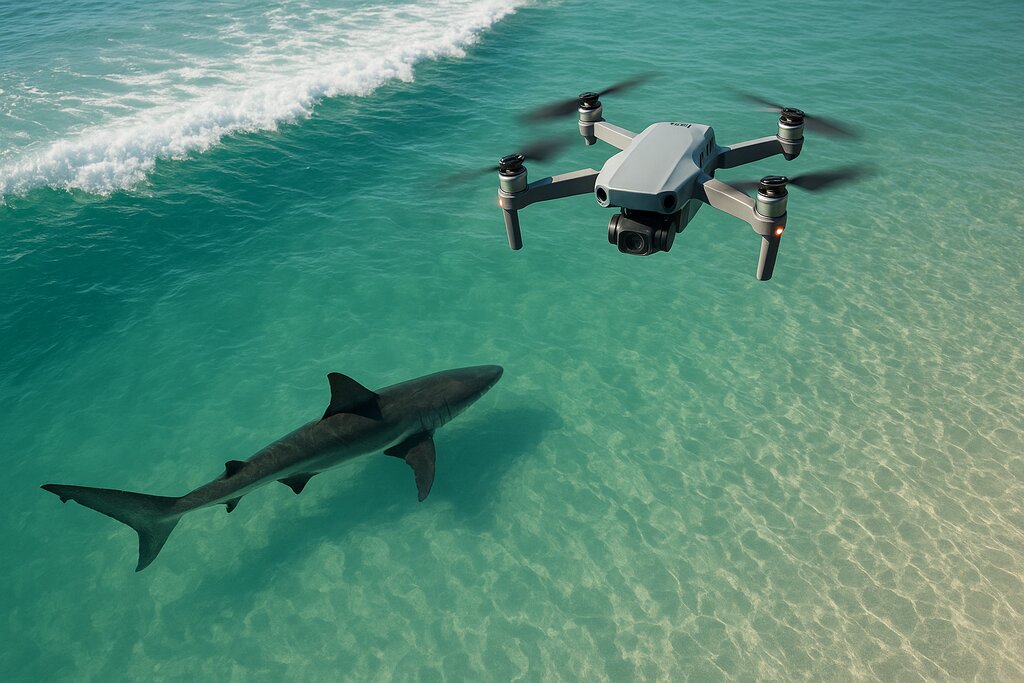
Drone shark detection using aerial drone over Australian beach with visible shark below

Drone Shark Spotting: What You Need to Know

Drone shark spotting is expanding across Australia, especially in high-risk areas. Councils, surf clubs, and government bodies are investing in drone fleets and operator training to ensure maximum safety and efficiency. For those wanting to get involved in drone shark detection, training and licensing are essential. At Flying Glass, we offer accredited drone training courses that equip you with the skills and legal permissions required to fly drones for commercial use, including coastal monitoring roles. From beach patrols to marine research, the opportunities for certified drone operators are growing rapidly. Whether you’re a professional looking to enhance your credentials or an organisation seeking safer beach monitoring methods, drone shark detection training is a valuable step forward.

Commercial Drone Services and Support

If you’re a council, surf lifesaving organisation, or production company without the necessary permissions or experience to carry out drone shark detection safely and legally, we can help. At Flying Glass, we offer expert drone services, including coastal surveillance and high-resolution aerial videography tailored to your needs. All operations are carried out by fully licensed drone pilots with extensive experience in high-risk and coastal environments. We understand the legal landscape and can ensure all work is conducted safely, ethically, and in full compliance with CASA regulations.

Learn the Rules: Enrol in Drone Training

If you’d prefer to gain the skills yourself, we also run certified drone training courses across Australia. Whether you’re an individual keen to join the growing field of drone shark spotting or a business looking to upskill your staff, our RePL course will give you the edge. Our training covers everything from safety and weather assessment to coastal risk operations and emergency response procedures – ideal for those aiming to enter the field of drone shark detection.

Can a drone fly in the rain? A DJI drone is shielded by a large colourful umbrella held by a hand in wet weather.

It’s a question we get asked all the time: can a drone fly in the rain? Whether you’re flying recreationally, filming a commercial project, or delivering critical supplies, understanding how rain affects drone performance is essential. In this post, we’ll explore the risks, exceptions, and professional best practices for operating drones in wet weather conditions across Australia.

What Happens When You Fly a Drone in Rain?

Rain may seem like a minor inconvenience, but for drones, it can be a serious hazard. Most consumer drones, including the popular DJI range, are not waterproof or water-resistant. Flying in rain can cause:

  • Short circuits in exposed electronic components
  • Motor failure due to water ingress
  • Decreased visibility for onboard sensors
  • Corrosion over time if water reaches internal parts

Will Rain Destroy a Drone?

Yes, in many cases rain can destroy a drone. Even light moisture can damage delicate internal circuits. If your drone is not explicitly waterproof, rainwater can cause critical damage and potentially void your warranty. It may continue to fly briefly after exposure, only to fail mid-air — leading to loss of control and crash damage.

Can You Fly a DJI Mini 4 Pro in the Rain?

No, the DJI Mini 4 Pro is not designed for use in rain or any wet weather conditions. DJI clearly advises against flying their drones in precipitation. The Mini series is especially vulnerable because it has limited waterproofing and minimal protection from moisture. If caught in a sudden downpour, land immediately and dry the drone thoroughly before attempting to fly again.

Can Drones Deliver in the Rain?

Some specialised delivery drones used in logistics are built with weather-resistant casings and have undergone rigorous testing. These high-end commercial drones may deliver in light to moderate rain, but even then, flight is typically avoided unless critical. In Australia, CASA regulations and safety protocols usually advise against operating any RPA in poor weather unless specifically permitted.

Can Drone Shows Happen in the Rain?

Drone light shows require synchronised, reliable performance from multiple units. Any level of precipitation can interfere with sensors, visibility, and communication between drones. As a result, drone shows are usually cancelled or postponed in rainy conditions. The risk to the drones, the choreography, and public safety is simply too high.

Can Drones Go Up in Rain?

Technically, yes, drones can take off in rain — but it’s ill-advised. Flying a drone in the rain increases the chance of malfunction, and the drone’s propulsion system may struggle with wet propellers. Plus, camera lenses become fogged or splattered, ruining footage. For commercial operations, insurance might not cover damage caused by rain unless specified.

How Long Can Drones Fly in the Rain?

The answer is: not long. Some industrial drones designed for search and rescue or surveying may last 20–30 minutes in light rain. But consumer models should not fly at all in wet conditions. Moisture builds up quickly and can start causing issues within just a few minutes. Once components become wet, corrosion and short circuits can occur almost instantly.

Is a Drone Waterproof?

Only a very small subset of drones are actually waterproof. Models like the SwellPro SplashDrone are built specifically for marine and wet-weather use. These waterproof drones have sealed electronics, corrosion-resistant components, and floatation features. The majority of drones on the market, however, are not waterproof at all. Even DJI drones are not rainproof unless clearly specified otherwise.

How Do I Protect My Drone from Rain?

If you’re determined to fly in unpredictable weather or need to be ready for changing conditions, there are a few ways to protect your drone from rain:

  • Use a weatherproof carrying case and rain cover
  • Apply hydrophobic coating to propellers and arms (not electronics)
  • Attach lightweight silicone covers to key ports
  • Keep landing pads handy to avoid wet or muddy take-offs
  • Plan your flight path carefully to avoid storm systems

These precautions can help with light mist or brief exposure, but they won’t make your drone waterproof. The safest option, if you’re wondering whether a drone can fly in the rain, is still to avoid flying in the rain.

Can a drone fly in the rain? A DJI drone is shielded by a large colourful umbrella held by a hand in wet weather.

What If My Drone Gets Wet?

If your drone gets caught in rain or lands in a puddle, follow these steps immediately:

  1. Turn it off and remove the battery straight away
  2. Dry the exterior thoroughly with a towel
  3. Use silica gel packets or place the drone in a dry rice container to absorb moisture
  4. Do not attempt to turn it back on for at least 48 hours
  5. Inspect for corrosion or damage before flying again

In serious cases, seek professional servicing. It’s better to be cautious than to risk catastrophic failure in future flights.

Does Weather Affect Drones?

Absolutely. Aside from rain, drones are affected by wind, humidity, and temperature:

  • Wind: Gusts can knock drones off course, making stable footage or accurate mapping impossible.
  • Humidity: High humidity can fog up lenses and reduce signal strength.
  • Cold: Reduces battery performance and increases the risk of ice build-up.
  • Heat: Can cause batteries to overheat, especially in direct sun.

If you’re flying in Australia, keep an eye on BOM forecasts and CASA alerts. Understanding the weather is a critical part of pre-flight planning.

Can Drones Fly in Light Rain or Snow?

Can you fly a drone in light rain? Technically yes, but it’s not advisable. Even light drizzle can seep into vents. Similarly, can drones fly in snow? Some rugged models might manage, but snow is effectively frozen water — and water and electronics do not mix. Snow also interferes with optical sensors, making accurate positioning harder.

Can Police Drones Fly in the Rain?

Some law enforcement agencies operate high-spec drones with additional weatherproofing. Police drones can fly in the rain if the hardware has been tested for water resistance and the mission requires it. That said, even police and emergency services have strict risk assessment protocols, and operations in bad weather are typically avoided unless absolutely necessary.

Can We Fly Your Drone for You?

If you’re unsure whether it’s safe — or legal — to fly your drone in the rain or under restricted weather conditions, Flying Glass can handle the shoot for you. We’re CASA certified and fully insured, with professional-grade gear and experienced operators across Australia. Don’t risk your own equipment or legal trouble. We’ll get the footage you need, rain or shine (within the legal limits).

Want to Fly Commercially? Learn the Rules

If you’re looking to become a commercial drone pilot in Australia, we also offer RePL (Remote Pilot Licence) training courses. Our training includes weather assessments, risk mitigation, and legal compliance so that you’re prepared for every flight — wet or dry. Whether you’re flying for film, TV, real estate, or construction, it’s critical to know what the rules are — and how to work within them safely.

Final Thoughts

So, can a drone fly in the rain? While some industrial models can handle wet weather, the majority of consumer drones should stay grounded when it rains. Flying in rain risks serious damage and legal consequences. If you’re ever in doubt, play it safe. Wait for clear skies or call the professionals. Flying Glass is based in Sydney, with pilots across Australia. Whether you’re after a stunning aerial shoot, help with complex approvals, or training to launch your own drone career — we’re here to help.

Do drones float or sink? Drone crashes into a lake as a shocked pilot and onlookers watch in despair from the shore

Drones are often used to capture breathtaking footage over oceans, lakes, and rivers. But what happens if a drone falls in water? Will it float, sink, or survive the experience? In this in-depth post, we explore what really happens when drones encounter water, how to avoid damage, and whether DJI drones and others can safely fly over or even go into water.

Does a Drone Float or Sink?

The simple answer to “does a drone float?” is no. Most consumer and professional drones, including DJI drones, are not designed to float. They are constructed with dense components like batteries, motors, and gimbals that weigh more than water. As a result, if a drone crashes into a body of water, it will usually sink unless it is specifically fitted with floatation gear.

What Happens if a Drone Falls in Water?

When a drone falls into water, several things can go wrong very quickly. The most immediate concern is electrical short-circuiting. If the battery or flight controller gets wet, the drone can instantly shut down, corrupt its data, or worse, catch fire once removed and powered up. Even saltwater can corrode internal components in a matter of hours. If your drone crashes into freshwater and you retrieve it immediately, there may be a chance to save it. But the sooner you act, the better. Disconnect the battery at once, avoid powering it on, and dry it completely using silica packs or a specialised drone drying bag.

Will a Drone Sink Instantly?

In most cases, yes. Standard drones do not come with any buoyancy. Some may float briefly if they land flat or on a prop arm, but this is rare. Professional drone operators often carry floatation kits, parachutes, or landing gear that keeps the drone above water if a water landing is required or likely.

Can DJI Drones Fly Over Water?

Yes, DJI drones like the Mavic 4 Pro or Inspire 3 can safely fly over water. But there are caveats. Flying close to water can cause GPS reflections and downward sensor confusion. The drone may struggle to hold altitude or react erratically. Pilots should disable obstacle sensors or switch to manual altitude modes when flying close to reflective surfaces like water. Always maintain a safe altitude and avoid low, hover-heavy flight patterns over water bodies.

Can a Drone Work Underwater?

Standard aerial drones cannot work underwater. Their motors, electronics, and batteries are not waterproof. Water pressure and signal interference also make underwater flight impossible for traditional quadcopters. However, there are specially built underwater drones, also known as ROVs (remotely operated vehicles), designed for underwater exploration, inspection, and filming. But these are an entirely different category of technology and are not capable of aerial flight.

Can a Drone Fall from the Sky Without Warning?

Yes, drone crashes do happen. A drone can fall from the sky due to low battery, firmware glitches, motor failure, or signal loss. Water-related crashes are particularly common when flying over lakes or beaches, as strong gusts or misjudged battery levels can lead to unplanned descents. To avoid this, always perform a full pre-flight check, monitor your battery level closely, and set your return-to-home altitude above any obstacles. We regularly do drone shoots on Sydney Harbour. Flying Glass can handle difficult shots over water — if you’re unsure about your equipment or permissions, we can do the shoot for you.

Is It Easy to Crash a Drone Over Water?

Water adds a unique layer of risk. Reflections can confuse sensors, winds can be stronger and more unpredictable over open areas, and emergency landings are not an option. Many beginner pilots are unaware of how sensitive altitude sensors can become over reflective surfaces, leading to abrupt drops or crashes. If your drone doesn’t have waterproofing or floatation, even a minor misjudgement can be costly. This is why experienced drone operators take extra precautions, including practising emergency procedures and maintaining greater altitude margins over water. For those without commercial drone training, we also offer drone training courses to help you learn the rules and fly safely.

Can Drones Go In and Out of Water?

Very few drones are designed to go into and out of water. Some highly specialised amphibious drones exist and are built with waterproofing, sealed compartments, and buoyant frames. These are typically used for search and rescue, marine monitoring, or military applications — and come with a hefty price tag. For recreational or professional cinematography drones, going in and out of water is not possible without extensive custom modifications and significant risk. If you’re working on a project requiring aerial and aquatic footage, it’s best to use both a drone and an ROV, or simply hire a professional team like Flying Glass with access to a broader toolkit.

Can You Waterproof a Drone?

Some pilots attempt to waterproof drones with silicone conformal coating, waterproof sprays, or sealed enclosures. While this may provide some resistance to moisture and light rain, it won’t guarantee full protection in a water crash. The battery, gimbal, and motor systems remain highly vulnerable to water ingress. If you’re flying in wet conditions or over water regularly, consider drones with purpose-built protection or invest in floatation kits. Alternatively, hire a drone operator experienced in risky environments who is fully licensed and insured.

Do drones float?Or sink? Drone crashes into a lake as a shocked pilot and onlookers watch in despair from the shore

How to Protect Your Drone When Flying Over Water

  • Install floatation gear if low-altitude flight is required.
  • Use propeller guards for improved stability and emergency landings.
  • Keep altitude well above water to avoid sensor issues.
  • Fly in manual or ATTI mode when necessary to prevent erratic sensor behaviour.
  • Check wind speeds and avoid flying in high gust conditions.
  • Plan your flight path and return-to-home carefully before launch.
  • Carry a waterproof retrieval kit if flying over lakes, rivers, or the sea.

What If You Need Drone Footage Over Water but Don’t Have Permission?

Many locations in Australia require special permissions to operate drones, especially over beaches, rivers, and national parks. If you don’t have the required permits or OC (Operator’s Certificate), Flying Glass can capture the aerial footage for you. Our experienced drone cinematographers are fully licensed and insured and have worked on projects across Australia, including coastal TVCs, documentaries, and luxury real estate.

Learn to Fly Drones Commercially in Australia

If you’re serious about mastering drone flight — especially for commercial work — enrol in one of our RePL training courses. You’ll learn how to handle emergency procedures, understand CASA regulations, and develop confidence flying in complex environments, including near water.

So, Do drones float?

So, will a drone float? Not unless you’ve modified it or purchased an amphibious model. Can drones fall from the sky or sink in water? Absolutely. Flying over water is risky but manageable with the right precautions, training, and equipment. Whether you need drone footage over a harbour, beach, or lake — or want to upskill and get your RePL — Flying Glass is here to help you do it safely and professionally.

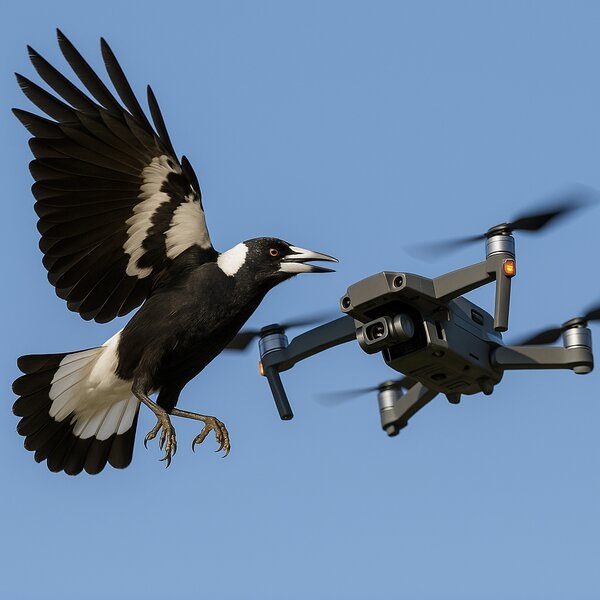
An Australian magpie bird swooping and attacking a grey quadcopter drone mid-flight under a clear blue sky.

If you’ve ever taken to the skies with your drone only to be dive-bombed by a territorial magpie or stalked by a curious hawk, you’re not alone. Across Australia, drone operators are increasingly reporting encounters with aggressive birds, from swooping magpies to full-on attacks from raptors. Understanding why birds attack drones, and knowing how to stop birds attacking your drone, can mean the difference between a smooth flight and a costly crash.

Why Do Birds Attack Drones?

To a bird, a drone can be many things: a threat, a rival, or just a noisy nuisance. Drones often mimic the flight patterns and sounds of birds of prey, which may explain why so many bird species react aggressively. This is especially true in nesting season when territorial behaviour is heightened. So, why do birds hate drones? Mostly, it’s instinct. Birds are hardwired to protect their airspace.

Which Birds Attack Drones in Australia?

Australia is home to some notoriously territorial birds. The most common species reported in drone conflicts include:

  • Magpies: These birds are infamous for swooping during breeding season. Magpies and drones often clash due to the bird’s aggressive defence of nesting areas.
  • Crows: Highly intelligent and inquisitive, crows can attack drones either out of curiosity or to scare them off.
  • Hawks and Eagles: Do hawks attack drones? Absolutely. Wedge-tailed eagles have been known to destroy drones mid-flight, likely viewing them as a threat or prey.

Wondering, what birds take down drones? Raptors are top of the list, given their size and strength.

Do Birds Get Scared of Drones?

Are birds scared of drones? It depends on the species. Smaller birds may flee the area, but larger, more territorial birds may see your drone as a direct challenge. Do birds get scared of drones? Not if they think your drone is a predator. It’s best not to rely on fear as a defence mechanism.

How to Avoid Bird Attacks on Your Drone

How do I stop birds from attacking my drone? Prevention is key. Here are practical tips to minimise your risk:

  • Know the breeding seasons: Avoid flying in areas with known bird activity during spring, particularly in August to November.
  • Scout the area first: Walk around and look for nests or birds exhibiting territorial behaviour before launching.
  • Ascend quickly: Get your drone above the attack zone fast. Birds usually strike at lower altitudes.
  • Avoid hovering: Hovering makes your drone an easier target. Keep it moving in a predictable pattern.
  • Keep your distance: Use zoom to get the shot instead of flying too close to birds or nests.
  • Use deterrents cautiously: Some drone pilots use lights or reflective tape, but these can also attract attention.

What to Do if a Bird Chases Your Drone

What to do if a bird chases your drone? Stay calm and follow these steps:

  1. Climb or descend quickly: Change altitude to confuse the bird.
  2. Fly away in a straight line: Avoid erratic movements that may agitate the bird.
  3. Land if needed: If a bird is persistent, land immediately in a safe place.
  4. Don’t try to outfly raptors: Birds like hawks are faster and more agile than most drones.

If you’re wondering, can a bird take down a drone? Yes. Particularly larger birds like eagles. It’s not worth the risk.

Best Drones to Avoid Bird Attacks

What is the best drone to avoid bird attacks? There’s no model completely immune, but some drones are more agile and quieter, which can reduce attention. Look for drones with:

  • Quieter propellers
  • Longer flight range (so you can stay further from nests)
  • Advanced sensors and return-to-home functions
  • Obstacle avoidance, which may help evade sudden swoops

Are Drones Safe Around Birds?

Are drones safe around birds? Not really, if the operator isn’t careful. Flying too close to birds can disrupt their natural behaviours, cause stress, or worse, result in injury to the bird or damage to your drone. Flying Glass always recommends observing ethical flying practices and maintaining safe distances from wildlife.

Birds attacking drones: An Australian magpie bird swooping and attacking a grey quadcopter drone mid-flight under a clear blue sky.

Drones and Magpies in Australia

Spring in Australia means magpie swooping season. Drones and magpies in Australia have a history of conflict, with many drone pilots reporting aggressive mid-air attacks. If you absolutely must fly in magpie territory during breeding season, stay high, move quickly, and avoid black-and-white drones which might be perceived as rival birds.

Recent Changes and Ongoing Trends in Bird- Drone Incidents

Bird attacks on drones continue to be a regular issue for Australian drone operators, and the pattern is staying fairly consistent year to year: springtime brings more territorial behaviour, and larger raptors remain the highest-risk encounters for serious drone damage.

  • Spring still drives most incidents: In Australia, the highest number of aggressive encounters tends to occur during the breeding season, when birds defend nests and territory more actively.
  • Magpies remain the most common swoopers: Magpies are still the bird most frequently reported for dive-bombing drones at lower altitudes, especially around parks, ovals, and suburban streets.
  • Raptors are still the biggest “loss risk”: Hawks and eagles are less common than magpies, but they are far more capable of taking down a drone due to their speed, power, and talons.
  • More drones means more encounters: With more recreational and commercial drones in the air, operators are simply crossing paths with wildlife more often, including in places that may feel “safe” or familiar.
  • Behaviour can change quickly on the day: Even if a location was calm on a previous flight, birds can become aggressive without warning due to nesting, juveniles nearby, or other birds entering their airspace.

The safest approach is to treat bird activity like weather: plan for it, watch for early signs, and be willing to change your flight plan (or abandon the flight) if conditions are not right.

Wildlife Safety and Australian Drone Regulations

In Australia, drone operators are responsible for flying in a way that avoids creating unnecessary risk to people, property, and wildlife. Even when you are flying legally in terms of airspace and separation rules, it’s still important to operate ethically around animals.

  • Do not pursue or “test” birds: Intentionally flying at birds, near nests, or repeatedly provoking a reaction can cause stress and may be interpreted as harassment.
  • Maintain sensible separation from wildlife: If birds are reacting to your drone, treat that as a sign you are too close and increase distance immediately.
  • Be ready to land and reassess: If a bird is persistently engaging with your drone, the safest decision is often to land in a safe spot, relocate, and adjust your flight plan.
  • Choose the lowest-impact flight plan: Reduce hovering, avoid slow loitering near treelines, and keep the flight path clean and purposeful to minimise wildlife disturbance.

If you’re filming commercially or operating in complex environments, it’s worth building wildlife considerations into your pre-flight checklist so you can protect both your equipment and Australia’s native birds.

Flying Glass Can Help

If your project requires aerial footage in a bird-sensitive area, you don’t have to risk your drone. Flying Glass has the experience and permissions to get the job done safely and ethically. If you can’t get the shots you need due to bird activity or local restrictions, we can do the shoot for you.

Want to Learn the Rules?

If you’re keen to fly your own drone but unsure about the rules around drones and birds in Australia, Flying Glass also offers drone training courses to help you fly commercially and legally. We’ll teach you everything from airspace awareness to ethical flying practices, including how to fly around wildlife safely.

Final Thoughts on birds Attacking Drones

Can a bird attack a drone? Yes. Should you take it seriously? Absolutely. By understanding how to avoid bird attack on a drone, and flying with caution, you can protect both your equipment and the native wildlife around you. Drones are an incredible tool, but they come with responsibilities. Need help filming in a protected area? Want to become a certified drone operator in Australia? Contact us at Flying Glass today.

Child flying toy drone outside Kmart store - Kmart Drone Review Australia

Searching for a drone with camera from Kmart? Wondering if a low-cost drone with camera is worth the purchase? With so many budget-friendly options in Kmart’s toy and electronics aisles, it can be tempting to snap up a $20–$59 quadcopter and hope for the best. But do these drones actually perform? And are they suitable for anything beyond casual indoor play? In this post, we take a closer look at the full range of Kmart drones in Australia, covering specs, reviews, common issues, and who they’re really suitable for. We’ll also explore why these drones, while basic, might be the perfect first step for children who are curious about flying and technology.

What Drones Are Available at Kmart Australia?

Kmart currently sells a variety of budget-friendly drones, including:

  • RC Quadcopter with Camera – $49
  • Nano Drone – $20
  • Remote Control Quadcopter – $29
  • RC Wi-Fi Folding Quadcopter – $59
  • Remote Control Quadcopter with Camera – $49
  • Radio Control Foldable Quadcopter – $59
  • Stunt Quadcopter – $25
  • Hand Operated Light Up Drone – $15

These drones are aimed primarily at children aged 8 and above. Most models include basic flight features such as 360-degree flips, altitude hold, and LED lighting. A few of the more expensive models advertise having built-in cameras that connect to smartphones.

What to Expect from a Drone with Camera at Kmart

While the idea of getting a drone with a camera at Kmart for under $60 is appealing, it’s important to set realistic expectations. The camera quality is typically very low-resolution, often with laggy feeds and unreliable connections. Pairing the drone to a phone app can be hit or miss, and the video output, if it works, is grainy and shaky at best. In essence, these cameras are more for novelty than utility. Don’t expect to shoot clear footage or capture Instagram-worthy aerial shots.

What Real Buyers Are Saying

Online reviews and forums are full of feedback from parents and first-time users. Some common points include:

  • Battery life is very short, often 5–7 minutes per charge.
  • Many drones are hard to control and may drift unpredictably.
  • Outdoor performance is poor – even a light breeze can send the drone flying off course.
  • Assembly instructions are often vague or incomplete.
  • Camera pairing frequently fails.

Despite this, a recurring theme among reviews is that these drones can still be a lot of fun – for a short while. For kids, the thrill of taking flight, doing a flip, or landing safely can make up for some of the limitations.

A Great First Step into Drones for Kids

Perhaps the most valuable aspect of a Kmart drone is its potential as an introduction to flying. If you have a child interested in tech, aviation, or remote control toys, a $25–$60 drone is a relatively low-risk way to let them explore that curiosity. Flying a drone – even a simple one – teaches basic coordination, spatial awareness, and patience. Many kids also begin to understand concepts like wind resistance, altitude, and the importance of gentle handling. For children aged 8 to 12, this type of toy can be a fantastic way to build confidence before moving to more expensive equipment. It also creates a valuable learning opportunity for parents and children to explore safety rules together. Understanding where and how to fly responsibly, and why certain areas are restricted, can lead to deeper interest in aviation or even future career paths.

Battery Life and Charging

Kmart drones generally provide 5–7 minutes of flight on a full charge. This is enough time for some quick experiments and fun, but not much more. Many units come with a USB charger, but charging often takes over an hour. Some drones use built-in rechargeable batteries, while others require AA batteries for the remote. It’s a good idea to stock up before gifting one, as nothing disappoints more than running out of battery after the first flight.

Indoor vs Outdoor Use

Although many product descriptions mention outdoor use, in practice, these drones are best suited for indoor environments. They’re very lightweight, which makes them vulnerable to wind. Several buyers report drones being carried away even on calm days. Indoors, you can create a safe flying zone for kids in a lounge room, garage, or hallway. Add a few soft obstacles, and you’ve got a basic drone course that encourages control and precision. This is a safer and more manageable way for kids to practise flying.

Child flying toy drone outside Kmart store - Kmart Drone Review Australia

Common Issues

Based on buyer feedback, here are a few common issues with Kmart drones:

  • Fragility: Drones often break or come apart on impact. In some cases, parts can be reattached; in others, the drone stops working entirely.
  • Flyaways: Some models have no emergency stop or return-to-home feature. If they catch a gust of wind, they may be lost for good.
  • Erratic controls: Drones may drift, spin, or become unresponsive, especially after crashes.
  • Limited features: Altitude hold, flips, and obstacle avoidance are advertised but not always effective.
  • Packaging: Poorly packaged items may arrive damaged or missing components.

However, some users note that crashing and repairing these drones can be part of the learning experience. Children learn about troubleshooting, basic repairs, and even cause-and-effect.

Are Kmart Drones Worth It?

That depends entirely on your expectations. If you’re looking for:

  • A drone that takes smooth video footage
  • Long flight times
  • Outdoor performance in varied weather
  • Reliable smart features

…then you’ll be disappointed. But if you want:

  • A fun and affordable gift for a child
  • A first step into drone controls and flight principles
  • A toy to use indoors in short sessions
  • A way to test a child’s interest before buying a better drone

…then yes, a Kmart drone could be worth it. Just understand the limitations before you buy, and make sure your child does too.

Legal Considerations

Even a cheap drone must follow Australian rules for safety and airspace. CASA (Civil Aviation Safety Authority) outlines clear guidelines, even for toy drones. These include:

For full rules, visit droneflyer.gov.au. Teaching children to follow these rules from the beginning creates safe habits that will serve them well if they pursue the hobby further.

Final Verdict: A Fun Entry-Level Toy with Some Surprises

Kmart drones are not suitable for serious photography, long-term outdoor use, or professional learning. They are, however, accessible, affordable, and occasionally surprising in the joy they can bring to young flyers. For under $60, you get a crashable, flyable, sometimes fixable toy that can ignite interest in aviation and tech. The biggest value might not be the drone itself, but the spark of curiosity it lights in the person flying it.


Want to learn how to fly drones properly or take your drone skills further? Check out our RePL training course and get certified with professional instructors in Australia.

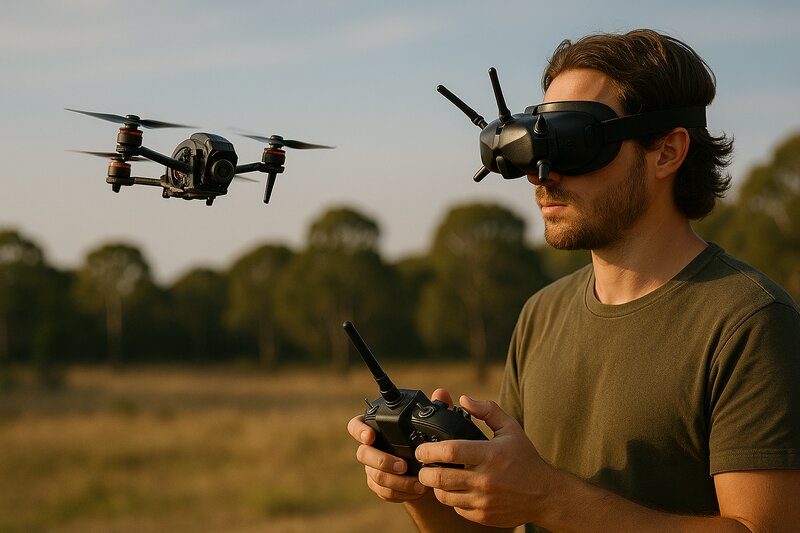
FPV Drone racing drones First Person View UAV

If you’ve watched an ad or TV show lately and thought, how did they get that shot? – chances are, it was filmed with an FPV drone. From the high-octane visuals in Red Bull productions to the cinematic sequences in Top Gear Australia, FPV drones (short for First Person View drones) are rapidly changing how aerial cinematography is done. At Flying Glass, we offer FPV drone services as part of our advanced drone cinematography offering, giving our clients dramatic, immersive footage that just can’t be captured any other way. In this article, we’ll unpack what FPV drones are, how they differ from other drones, why they’re in such high demand, and how Flying Glass is uniquely positioned to deliver professional-grade FPV services across Australia.


What is FPV?

FPV stands for First Person View, referring to the way the pilot flies the drone – not by line of sight, but via a live video feed streamed from an onboard camera to their goggles. It’s like being in the cockpit of the drone, in real-time. This allows for extremely precise, agile flying, making FPV drones capable of manoeuvres no traditional drone could safely perform. The resulting footage is dynamic, fluid, and exhilarating. FPV is particularly popular in:

At Flying Glass, we use FPV drones not for racing but to capture precision, speed, and perspective in commercial jobs where a traditional drone just won’t cut it.


FPV Drone vs Traditional Drone: What’s the Difference?

Feature FPV Drone Traditional Drone
Flight Style Manual, acrobatic Stabilised, GPS-assisted
View First-person via goggles Third-person via controller screen
Footage Dynamic, immersive Smooth, cinematic
Pilot Skill High Moderate
Risk Level Higher Lower

FPV drones require exceptional pilot skill. Unlike DJI drones with GPS lock and collision avoidance, FPV drones are flown manually – making them responsive, fast, and ideal for close-proximity flying. At Flying Glass, we combine both types in most shoots – stabilised drones for wide cinematic angles, and FPV drones for high-energy cutaways.


How FPV Elevates a Project

Whether it’s a real estate ad, TV commercial, or event promo, FPV drones can:

  • Add adrenaline and momentum to fast-paced sequences
  • Create immersive first-person perspectives through structures
  • Capture tight spaces or moving subjects from impossible angles
  • Deliver one-take fly-throughs that feel like magic

Our clients often say, “That shot made the ad.” Check out our showreel to see FPV sequences in Red Bull, Top Gear Australia and other recent projects.


Real-World Examples of FPV Drone Use

Red Bull

We’ve filmed extreme sports sequences requiring tight aerial choreography. FPV was the only viable way to keep up with the athletes while staying close enough to capture their intensity.

Top Gear Australia

We used FPV drones to chase vehicles at high speed through rugged terrain, maintaining a cinematic frame while flying through dust, wind, and tight corridors.

Real Estate Shows & Events

Fly-throughs of properties, showrooms, or venues are dramatically improved with FPV in shows such as Luxe Listings. From a single take, we can glide through doors, around staircases, and over crowds – all in one seamless shot.


Why Flying Glass Excels at FPV Drone Work

FPV is not something every drone operator can offer. It demands:

  • Precise manual control
  • Hardware customisation
  • A deep understanding of aerodynamics and electronics
  • Expert post-production workflows

At Flying Glass, we’ve built our FPV offering over years of professional experience. What sets us apart:

CASA OONP Licence

Our Ongoing Operations Near People (OONP) exemption allows us to legally fly very close to people – something most operators simply can’t offer. This is essential for:

  • Close-up performance shots
  • Crowd flyovers
  • Sports coverage

Hybrid Workflow

We’re not FPV-only. We integrate FPV shots into broader productions that include DJI Inspire 3, Mavic 3 Pro Cine, and custom rigs. This allows a layered, cinematic approach to every job.

Safety & Reliability

FPV flying is inherently higher-risk, but we’ve developed rigorous protocols, insurance coverage, and custom-built drones that minimise failure points. Every shot is planned and rehearsed – even the wildest-looking ones.

Pilot Experience

Flying FPV at this level is closer to performance art than drone piloting. Our FPV operators train like athletes – flying every day, adjusting equipment, refining control. This isn’t a side-offering. It’s what we do.


FPV Drone racing drones First Person View UAV

Types of FPV Drones We Use

  • Cinewhoops – Small, ducted FPV drones for indoor flying and tight spaces
  • 5-inch Freestyle Quads – Fast and agile, great for chase scenes and open spaces
  • Long Range FPV – For sweeping shots across landscapes
  • GoPro and Naked GoPro Builds -Lightweight drones with stabilised 4K footage

All our builds are maintained in-house, allowing fast turnaround and precision tuning.


Complexity & Creativity: What to Expect on Set

FPV drone filming isn’t point-and-shoot. Every job involves:

  1. Site Visit or Digital Twin Analysis
  2. Flight Path Mapping
  3. Line-of-sight spotters and safety checks
  4. Rehearsals and battery cycling
  5. On-the-fly adjustments based on light, wind, or subject movement

Because of the manual nature of flying, every flight is a unique take. It’s part of what gives FPV footage its magic – but also why you need experienced professionals like Flying Glass. Beyond FPV, we’re also pioneering techniques like Gaussian Splatting, where overlapping drone footage is transformed into detailed 3D environments for directors to explore virtually.


Common FPV Applications in Film & TV

  • Chase scenes (cars, bikes, boats)
  • Performance fly-bys (dance, concerts, stunt work)
  • Architectural reveals (gliding through windows or up staircases)
  • Event walkthroughs (one-take venue tours)
  • Sporting events (skate parks, surf comps, track meets)

See it for yourself: Flying Glass FPV Showreel


Want to Learn FPV Flying? Start With RePL

If your team wants to bring FPV or drone cinematography in-house, it starts with proper training. Our partner SkyMedia Training offers CASA-certified Remote Pilot Licence (RePL) courses across Australia. While FPV flying itself isn’t part of the basic RePL, having your licence allows you to legally fly and begin training with FPV gear.


FPV Drone Safety & Regulation in Australia

Flying FPV drones requires:

You must also:

  • Keep flights within visual line of sight (VLOS) unless you have BVLOS approval
  • Use spotters during FPV flights
  • Stay outside restricted zones

Flying Glass handles all regulatory requirements, permits, and risk assessments as part of our service.


Why Agencies and Directors Choose Us

  • Unmatched FPV capability
  • Full production integration
  • Trained crew, insured operations
  • Experience in high-profile projects

We’re not just drone operators. We’re aerial cinematographers with a creative eye, safety-first mindset, and elite pilot talent. If you need jaw-dropping FPV footage, you need Flying Glass.


Final Word: FPV Is the Future of Aerial Storytelling

The world of drone cinematography services is evolving – and FPV is at the forefront. With the ability to fly indoors, chase moving objects, dive off cliffs, and create unforgettable one-take scenes, FPV drones are giving directors, producers, and agencies new tools to tell their stories. Ready to elevate your project with FPV drones? Contact Flying Glass and let’s make something extraordinary.


FLYING GLASS - Copyright © 2026