Drone Technology

Drone technology has evolved dramatically in recent years, revolutionising industries across the globe. From filmmaking to infrastructure inspections, drones are now an integral part of how we capture data, assess environments, and create stunning visuals. In this section, we explore the latest advancements in drone technology and how it continues to shape industries such as media, real estate, agriculture, and beyond.

What is Drone Technology?

At its core, drone technology refers to the use of unmanned aerial vehicles (UAVs) to perform various tasks. These UAVs, commonly known as drones, are equipped with advanced systems that allow them to fly autonomously or under the control of a human operator. Modern drones are fitted with cameras, sensors, GPS systems, and other technologies that enable them to perform complex tasks with precision and efficiency.

Drone technology can be broken down into several components, including flight control systems, stabilisation technology, and payload capabilities. Today’s drones come with built-in stabilisers that allow them to hover in place, making them ideal for photography, videography, and surveillance.

Types of Drones

There are many different types of drones available today, each designed for specific tasks. Fixed-wing drones, for example, are designed for long-range flight and are often used in large-scale surveys or environmental monitoring. Rotary-wing drones, such as quadcopters, are the most common type used for commercial applications, offering excellent stability and manoeuvrability for short to medium-range flights.

Multi-rotor drones are the go-to choice for filmmakers, surveyors, and photographers due to their ability to hover in one spot for extended periods. These drones are perfect for capturing detailed imagery and videos. As drone technology continues to advance, more specialised drones are being developed for tasks such as precision agriculture, 3D mapping, and emergency response.

The Role of Artificial Intelligence in Drone Technology

Artificial Intelligence (AI) is increasingly becoming a key player in the development of drone technology. With AI, drones can autonomously navigate through complex environments, detect objects, and even learn from their surroundings. AI-powered drones can process vast amounts of data in real-time, making them highly efficient for tasks such as crowd monitoring, search and rescue missions, and inspections.

One of the most exciting developments in AI and drone technology is object detection. Drones equipped with AI-based sensors can identify and track objects like vehicles, people, and infrastructure in real-time. This is especially useful in industries like security, where drones can provide enhanced surveillance and threat detection capabilities.

Applications of Drone Technology

Drone technology has diverse applications across various sectors. In the film and television industry, drones have become indispensable for capturing aerial footage that was once only achievable with helicopters. Today, filmmakers rely on drones for smooth, dynamic shots that add depth and perspective to their visuals.

In real estate, drones are used to create captivating property listings with aerial views, helping potential buyers get a better sense of the property’s layout and surrounding area. Drones have also made a significant impact in agriculture, where they are used for crop monitoring, irrigation management, and even planting seeds in remote or difficult-to-reach locations.

Another important application of drone technology is in construction and infrastructure. Drones can easily survey large sites, providing up-to-date information on the progress of projects. They also make inspections safer and more cost-effective by allowing engineers to assess structures without putting themselves at risk.

Future of Drone Technology

The future of drone technology is incredibly promising, with new innovations emerging all the time. As UAV technology continues to evolve, we can expect drones to become even more autonomous, efficient, and versatile. With the integration of technologies such as 5G, AI, and machine learning, the possibilities are endless.

From delivering packages to mapping disaster zones, the role of drones in our daily lives is only set to expand. At Flying Glass, we are constantly staying ahead of these advancements to provide our clients with the most cutting-edge drone technology available.

Stay tuned to this category for the latest updates on drone technology, including new features, industry trends, and applications that are shaping the future.

Dropping, Discharging, and Dispensing Operations from a Drone

Discharging, dispensing or dropping from a drone in Australia is a serious matter — and it’s tightly regulated by CASA (Civil Aviation Safety Authority). If you’re considering dropping from a drone, whether it’s leaflets, safety gear, promotional items, or agricultural products, you must follow strict legal requirements. Flying Glass offers consultancy services to help you gain CASA approval for dropping, discharging, and dispensing operations. This guide explains everything you need to know about drone payload deployment in Australia, including rules, risks, and how to do it the right way.


Understanding Dropping, Discharging, and Dispensing from a Drone

CASA defines these activities as:

  • Dropping: Releasing an object from a drone during flight.
  • Discharging: Ejecting or spraying substances (e.g., chemicals, liquids).
  • Dispensing: Releasing any material (solid, liquid, gas) while airborne.

All these operations fall under CASR Part 138 and carry strict safety, legal, and operational requirements. Important: Without specific CASA authorisation, dropping from a drone is illegal.


CASA Rules for Dropping, Discharging, and Dispensing Operations

Australia’s dropping from a drone laws are covered under:

  • CASR Part 138 (Aerial Work Operations)

Key CASA Requirements:

  • Aerial Work Certificate: Required for most aerial work, including dropping or dispensing operations.
  • Manual of Standards (MOS) Compliance: Operators must meet MOS standards for dispensing.
  • Risk Assessment: Detailed risk assessments are mandatory.
  • Operating Procedures: Specific procedures must be included in your operations manual.
  • CASA Approval: Must be granted before conducting any dispensing flight.

Failure to comply could result in strict liability offences, with large penalties per breach.


No Exceptions: Flying Over People Requires OONP Approval

Flying a drone over or near people is never allowed under standard rules — unless you have a CASA-issued OONP exemption. OONP stands for Operations Over or Near People, and it’s one of the most tightly regulated aspects of Australian drone law. If your drone will be above any person (whether they’re involved in your operation or not), you must secure this special approval beforehand. CASA’s Part 101 rules explicitly prohibit flying over people without a specific instrument of approval and additional safety measures (such as a certified parachute system) in place. Without an OONP authorisation, even an accidental fly-over can land you in serious trouble. No loopholes exist for this rule. It doesn’t matter if the people below are inside a vehicle or under shelter — they still count. Consent doesn’t change it either; even if bystanders agree or are part of the project, the law remains the same. That means no dropping from a drone, discharging, or dispensing operations can occur over people unless you hold an OONP approval. If there are people under your drop zone (or likely to wander nearby), you are legally required to have the OONP exemption — no exceptions. In fact, CASA also bans releasing any object from a drone if it could create a hazard to another aircraft, person, or property. So if your planned drop might endanger someone below, it’s automatically off-limits without special clearance. OONP approval goes hand-in-hand with rigorous safety planning (like using parachute recovery systems on the drone) to ensure that even if something goes wrong, people remain protected. Simply put, if people are anywhere in the vicinity of your drone operation, you need CASA’s permission to fly over them — especially when you’re carrying and releasing a payload. Ready to fly safe and legal? Make sure you’re covered. Check out our comprehensive OONP guide for a deeper dive into obtaining this CASA approval. With our experience as one of Australia’s first OONP-approved operators, we’ll guide you through the process so you can conduct dropping from a drone and deliveries confidently and compliantly.


Use Cases for Dropping from a Drone

While risks are high, there are legitimate and useful reasons to deploy items from a drone.

1. Leaflet Drops

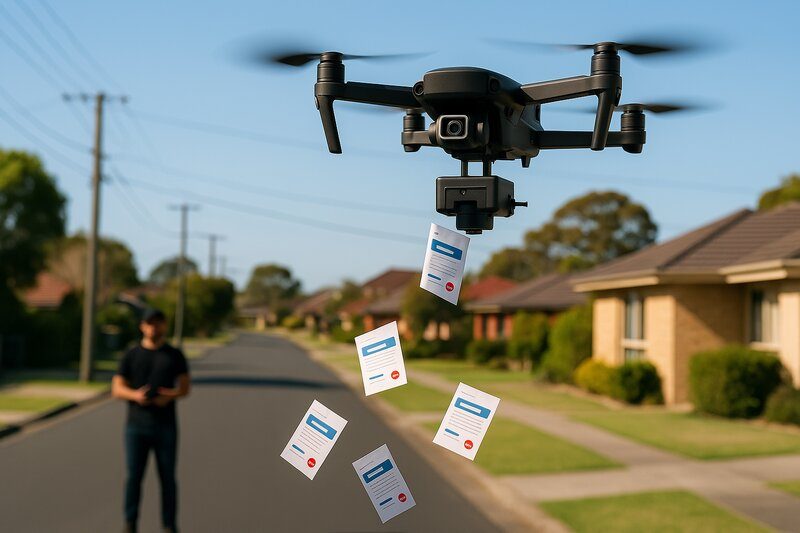
  • Promotional flyers for events.
  • Political campaign material.
  • Awareness campaigns.

Note: Even harmless paper leaflets can cause hazards (e.g., startle people, litter public spaces), requiring CASA and local council approvals.

2. Emergency Equipment Drops

  • Lifejackets, emergency kits to people stranded in remote areas.
  • First-aid supplies during search and rescue missions.

3. Agricultural Applications

  • Seeding operations.
  • Controlled chemical or pesticide dispensing (strict chemical licences required).

4. Promotional Events

  • Dropping confetti, fake snow, or other event materials.

5. Scientific and Environmental Research

  • Deploying sensors or trackers in hard-to-reach areas.

Every use case needs a tailored safety plan and appropriate CASA permission.

For commercial projects requiring a purpose-built release mechanism or specialist payload system, Flying Glass provides professional custom drone payload integration, including prototyping, fabrication, testing and operational planning.


Why Dropping from a Drone is Regulated

  • Risk to People: Even lightweight objects can cause injuries.
  • Risk to Property: Falling items can damage cars, homes, or infrastructure.
  • Airspace Safety: Uncontrolled drops could interfere with manned aircraft.
  • Environmental Protection: Chemical discharges need strict local and national controls.

CASA takes these risks seriously — which is why operations involving dropping from a drone, discharging, and dispensing are carefully monitored.


How to Legally Drop Items from a Drone

  1. Obtain an Aerial Work Certificate
  2. Create a Full Operations Manual
  3. Conduct a Risk Assessment
  4. Prepare a Dispensing Operation Plan
  5. Seek CASA Approval
  6. Obtain OONP Approval
  7. Get Local Council Approvals
  8. Supervised Flight Experience

Flying Glass can guide you through this process or perform the flight legally under our existing certifications.


Risks of Non-Compliance

Attempting to drop or dispense without CASA approval can lead to:

  • Fines of up to $10,000+.
  • Loss of RePL (Remote Pilot Licence).
  • Suspension or cancellation of ReOC (Operator’s Certificate).
  • Public liability lawsuits if injury or damage occurs.
  • Criminal charges in extreme cases.

Do not risk your business, reputation, or safety. Always work with professionals.


Drone Payload Release Systems

Payload release mechanisms are small devices attached to drones, allowing remote dropping of:

  • Packages
  • Life-saving equipment
  • Survey devices

Popular systems include:

  • Servo motor-based hooks
  • Electromagnetic payload releases
  • GPS-triggered release mechanisms

All systems must be assessed for safety and approved by CASA before operational use.
Dropping, Discharging, and Dispensing Operations from a Drone


Flying Glass Consultancy Services

Flying Glass can help you legally achieve your payload deployment goals. We offer:

  • CASA Consultancy: We prepare your applications, risk assessments, and flight plans.
  • Operations Manual Support: Craft procedures that meet CASA requirements.
  • OONP Approvals: Assistance obtaining OONP approvals for flying over or near people.
  • Payload Equipment Advice: Help sourcing approved payload release systems.
  • Professional Drone Operations: Hire us to help with your drone operation.

Ready to deploy safely? Contact Flying Glass today for expert help with CASA approvals and payload operations.


FAQs: Dropping from a Drone

Is it legal to drop something from a drone in Australia?

Only with CASA approval and strict safety protocols in place.

What approvals do I need?

You need CASA approval under Part 138 and an OONP approval if flying over people.

Can I leaflet bomb from a drone?

No, not without specific CASA and local council approvals.

What happens if I drop something illegally from my drone?

You risk major fines, licence suspension, and possible criminal charges.

How can Flying Glass help?

We provide consultancy services to help you legally plan and execute drone dropping operations.


Final Thoughts: Dropping from a Drone in Australia

Dropping, discharging, or dispensing from a drone is a powerful but highly regulated capability. Whether you’re planning a leaflet drop, an emergency equipment deployment, or an agricultural operation, you must operate legally under CASA regulations. Flying Glass offers expert CASA consultancy services to help you navigate the complexities of aerial work approvals, including OONP approvals. Or, if you prefer, we can carry out the operation for you safely and legally. Ready to deploy with confidence? Contact Flying Glass today to start your CASA approval process or book a professional drone operation.

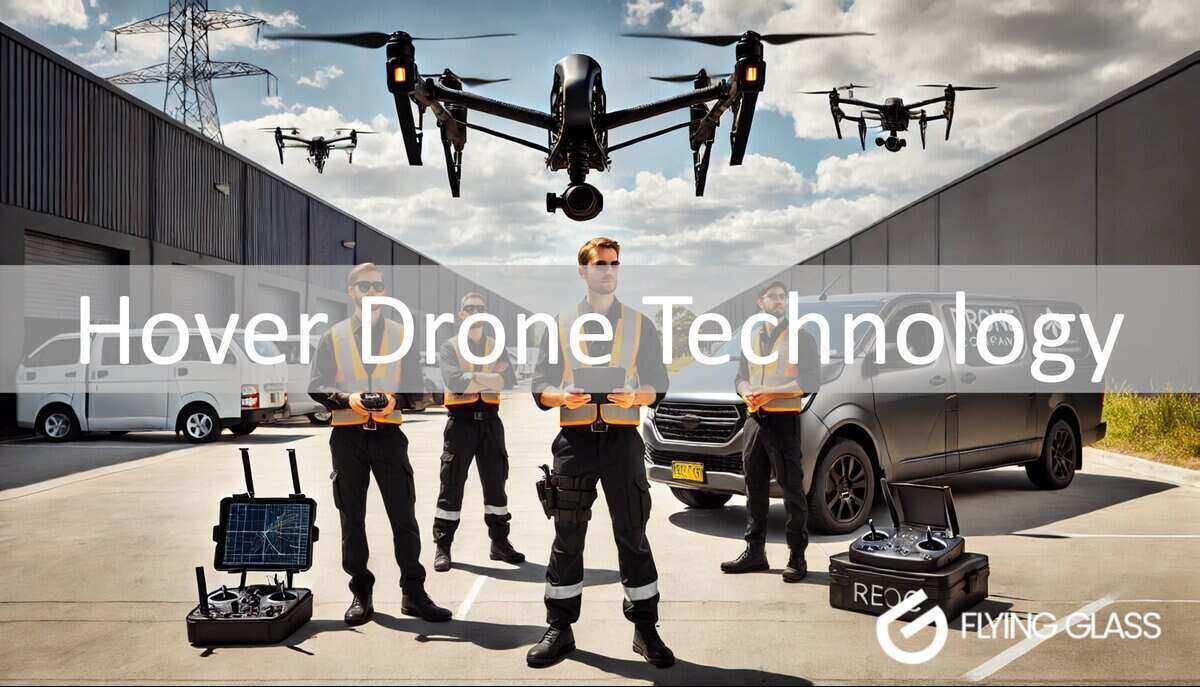
Hover drone hover UAV technology Stabilisation

In recent years, hover drone technology has become one of the most exciting advancements in aerial cinematography. With the ability to remain stable in mid-air, even in challenging conditions, hover drones have unlocked new possibilities for filmmakers seeking smooth, dynamic, and breathtaking footage. This post will explore how hover drones and hover UAVs have evolved, the technological advancements that have improved stability, and why these innovations are so critical for aerial cinematography.


The Importance of Hovering in Aerial Cinematography

One of the most challenging aspects of aerial filming is maintaining stability while in flight. In traditional methods of aerial cinematography, helicopters were often used to capture wide, sweeping shots from above. However, helicopters lack the ability to remain stationary in mid-air without noticeable movement, making it difficult to capture stable, precise footage in certain scenarios. This is where hover drones have revolutionised the field. Hover drones are designed with sophisticated flight control systems that allow them to remain completely still in the air, even in windy or difficult weather conditions. For filmmakers, this means the ability to capture clean, steady shots without the jitter or shake that often comes with less advanced technologies.


Hover Drones and the Evolution of Stabilisation Technology

The evolution of hover drone technology has been driven by advancements in stabilisation. Early drone models often struggled to maintain stability, particularly when dealing with external factors like wind or rapid movements. However, over time, improvements in gyroscopes, sensors, and flight controllers have given hover drones, such as the new DJI Mavic 4, the ability to stabilise with extreme precision.

Gyroscopic Stabilisation

Gyroscopic stabilisers are one of the core components that allow hover drones to maintain their position. These gyroscopes detect changes in the drone’s orientation and adjust the flight controls to counteract unwanted movement. This allows hover drones to remain steady, even when external forces try to push them off course – or when used to drop objects from a drone.

IMU (Inertial Measurement Unit) Sensors

In addition to gyroscopes, modern hover drones are equipped with Inertial Measurement Units (IMUs). IMUs track the drone’s acceleration and rotation, providing real-time data that helps the flight controller make rapid adjustments to maintain stability. This means that even during rapid acceleration or deceleration, the drone can remain stable, providing smooth footage throughout the shoot.

GPS and Vision-Based Systems

Another advancement in hover drone technology is the integration of GPS and vision-based systems. GPS allows the drone to lock onto a specific location, maintaining its position relative to the earth’s surface. Vision-based systems, such as obstacle detection sensors, ensure that the drone can avoid collisions while maintaining its hover. Together, these technologies allow hover UAVs to maintain perfect stability in a variety of conditions, providing filmmakers with the control and precision they need to create flawless cinematic shots.


Why Stability is Key for Filmmakers

For filmmakers, capturing cinematic drone shots with smooth transitions and stable positioning is vital. Whether it’s tracking a moving subject from above or holding a steady shot of a sweeping landscape, the ability to hover in place with minimal shake or drift makes a world of difference.

Dynamic Filming in Complex Environments

One of the greatest challenges for aerial cinematographers is working in environments where conditions can change rapidly. Wind gusts, uneven terrain, and sudden weather changes can all affect the quality of a shot. Traditional drone technology often struggled to deal with these variables, but hover drones have advanced to the point where they can remain steady in all but the most extreme conditions. For example, a hover drone can maintain its altitude and position while flying over rough coastal terrain, allowing the camera to capture stunning ocean shots without any turbulence. This level of stability ensures that filmmakers can shoot in more dynamic, challenging environments without compromising on quality.

Hover Drones in Urban Cinematography

Urban landscapes also present unique challenges for filmmakers. Tall buildings, narrow streets, and crowded areas require precision flying to capture the right shot. In such scenarios, hover UAVs are invaluable, allowing operators to position the drone in difficult-to-reach places and hold the drone perfectly still for extended periods. Whether it’s filming an aerial view of a busy street or capturing the architectural beauty of skyscrapers, hover drones offer the versatility needed for urban shoots.


Hover Drones vs Traditional UAVs for Filmmaking

While all drones have the potential to capture aerial footage, hover drones offer specific advantages that make them the top choice for filmmakers. The ability to hover in place and adjust their position with pinpoint accuracy allows these drones to capture shots that were once only possible with expensive, complex rigging systems or crane setups.

Hover UAVs for Precision Shots

Hover UAVs (Unmanned Aerial Vehicles) are designed to excel in situations where precision is key. For example, when shooting a scene that requires the camera to remain perfectly still while actors move through a landscape, a hover UAV can hold its position without drift, ensuring the shot remains focused and steady. In contrast, traditional UAVs often struggle to remain completely stationary, especially when external forces like wind come into play. This can lead to unwanted camera movement, requiring additional editing to stabilise the footage.


The Impact of Hover Drones on Cinematic Storytelling

In addition to the technical advantages of hover drones, their introduction has had a profound impact on the way stories are told through film. Hover drones have opened up new creative possibilities for filmmakers, allowing them to capture unique angles and perspectives that would have been impossible or impractical with traditional equipment.

Unique Camera Angles

The ability of hover drones to remain stable in mid-air has enabled filmmakers to experiment with new camera angles and movements. For example, hovering above a fast-paced action scene provides a dynamic bird’s-eye view that pulls the audience into the intensity of the moment.

Seamless Transitions

Hover drones also allow for seamless transitions between shots. Instead of cutting from one angle to another, filmmakers can now create fluid transitions by having the drone slowly pan or tilt while maintaining its hover. This adds a level of cinematic smoothness that enhances the storytelling experience.

Hover drone hover UAV technology Stabilisation


Hover Drones in Action: Notable Films Using Hover UAVs

Several high-profile films and television productions have utilised hover UAVs for aerial cinematography, demonstrating the power of this technology in real-world applications. From major action sequences to intimate, character-driven moments, hover drones have become an essential tool in the drone cinematography services arsenal.

Case Study: Urban Chase Scenes

Hover drones have been used extensively in action films to capture high-intensity chase scenes through urban environments. In one notable example, a hover UAV was used to follow a car chase through the narrow streets of a European city. The drone’s ability to hover and track the action while weaving between buildings resulted in breathtaking, fast-paced footage that would have been impossible with a traditional drone or helicopter.

Case Study: Nature Documentaries

Hover drones have also found a home in the world of nature documentaries. The ability to hover silently above wildlife allows filmmakers to capture animals in their natural habitat without disturbing their behaviour. Hover UAVs have been used to film everything from migrating birds to marine life, providing audiences with a closer look at the natural world.


The Future of Hover Drone Technology

The evolution of hover drone technology is far from over. As drone technology continues to advance, we can expect to see even greater improvements in stability, battery life, and AI-assisted flight control. This will further enhance the ability of hover drones to capture cinematic-quality footage in even more challenging environments. Future hover drones may also incorporate more advanced sensors and AI algorithms that allow them to make real-time adjustments for even smoother flight, ensuring that filmmakers can focus entirely on the creative aspects of their projects while the drone handles the technical challenges.


Conclusion: Why Hover Drone Technology is Here to Stay

The evolution of hover drone technology has transformed aerial cinematography. With their ability to hover stably in place and provide filmmakers with precise control, hover UAVs are now an essential tool for capturing dynamic, high-quality footage. As technology continues to advance, hover drones will likely play an even more prominent role in filmmaking, offering new creative possibilities and enhancing the way stories are told on screen.

Anemometers for Drone Operators

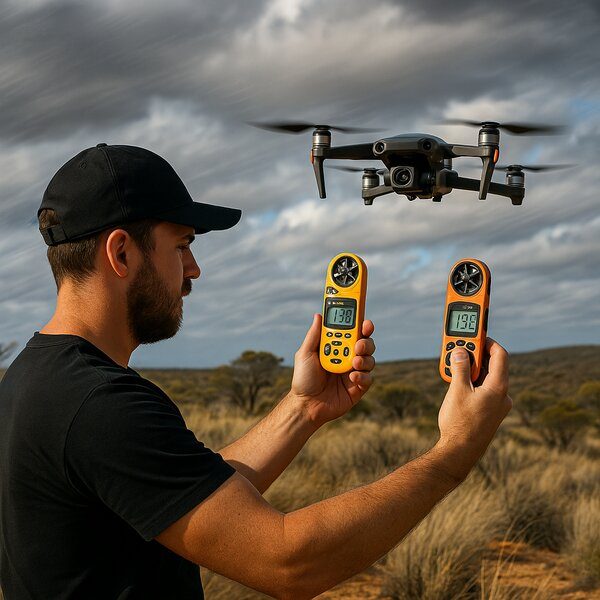
When it comes to drone operations, understanding weather conditions—especially wind speed—is crucial to ensure a safe and successful flight. Anemometers, devices used to measure wind speed, are essential tools for drone operators, helping them make informed decisions before taking off. Whether you’re flying a drone swarm for a live event or operating a single drone for a TV or film production, knowing the exact wind conditions can make or break your project. At Flying Glass, we’ve seen firsthand how unpredictable weather can impact drone operations, particularly wind. In this post, we’ll explore why anemometers for drone operators are so critical, how to use them, and when they’re required. We’ll also discuss where to buy reliable anemometers to ensure you’re always prepared for any flying conditions.


Why Wind Speed Matters: The Role of Anemometers for Drone Operators

Wind can be a drone’s worst enemy. While drones have become more stable and advanced in recent years, strong wind conditions can still pose significant risks. This is where anemometers come in—by providing real-time wind speed data, drone operators can assess whether it’s safe to fly. For projects like drone swarms—where multiple drones must work together in perfect harmony—wind speed is a make-or-break factor. Drone swarms, often used for live events, concerts, or light shows, require optimal weather conditions. Even a slight increase in wind speed can destabilise the entire swarm, leading to a cancelled show. In these cases, anemometers for drone operators are crucial tools that help operators decide whether to proceed or reschedule. On the other hand, for TV and film productions, the stakes are different. The visual quality of aerial footage is a top priority, and flying in strong wind not only jeopardises safety but also affects the stability and smoothness of the shots. In fact, if you’re even thinking about using an anemometer on a TV set due to wind, chances are the conditions are already too harsh for filming. Productions of this nature usually require ideal weather conditions and are unlikely to go ahead in adverse circumstances.


When and Where to Use Anemometers for Drone Operations

Anemometers should be used in various scenarios to ensure safe drone operations. Here are some common situations where anemometers for drone operators are a must:

1. Drone Swarms and Live Events

As mentioned earlier, drone swarms are highly sensitive to wind conditions. When managing a large number of drones, even a small change in wind speed can cause drones to drift off course, risking collisions and failed formations. Before starting a drone swarm show, it’s vital to check the wind speed with an anemometer on-site. Most swarm operations are grounded if wind speeds exceed a certain threshold, which could vary depending on the drones used.

2. TV and Film Productions

While TV and film productions are often rescheduled due to poor weather conditions, anemometers can be used as a secondary measure to assess whether it’s worth attempting to fly in borderline conditions. For film-grade drones carrying heavy payloads like cameras, the operational wind limit is typically lower than for smaller drones. Even a slight breeze can compromise shot stability, making anemometers for drone operators critical for precise decision-making.

3. High-Altitude or Coastal Flights

When flying drones over coastal areas or at high altitudes, wind conditions can be unpredictable and change rapidly. For drone operators working in these environments, an anemometer is essential to gauge wind speed before every flight. Coastal areas, in particular, are prone to sudden gusts of wind that could endanger drone flights, making it important to have accurate, real-time data from an anemometer.


How to Use an Anemometer for Drone Operations

Using an anemometer is fairly straightforward, but there are a few tips to ensure you get the most accurate readings.

1. Turn on the Anemometer Before Setting Up Your Drone

Before setting up your drone for flight, power up the anemometer and let it calibrate. This ensures you have accurate wind speed data before committing to your flight plan. Make sure to hold the device steady and face it into the wind.

2. Take Readings from Multiple Locations

Wind conditions can vary depending on where you’re standing, particularly in areas with complex terrain. To get the most accurate data, take wind speed measurements from different spots around your takeoff area. This is particularly useful if you’re operating in a confined space or near buildings that might block wind flow.

3. Monitor Wind Speed Continuously

Wind conditions can change rapidly, especially during outdoor events or long film shoots. It’s a good idea to check the wind speed at regular intervals using the anemometer, even if conditions seem stable when you first set up.


When to Avoid Flying Based on Wind Speed

Every drone model comes with its own wind tolerance levels. Smaller drones may only handle wind speeds up to 10-15 knots, while larger drones used in film production can operate in winds up to 25 knots. For drone swarms, wind speed limits tend to be even stricter, as the collective operation of multiple drones makes them more susceptible to wind interference. As a general rule of thumb, if the wind speed exceeds the manufacturer’s recommended limit, it’s best to cancel the flight or reschedule. Relying on your anemometer will help you avoid unnecessary risks, protecting your equipment and ensuring the safety of those around you.


Where to Buy Reliable Anemometers for Drone Operators

There are several places where you can purchase anemometers specifically designed for drone operations. When choosing an anemometer, make sure to look for features like accuracy, portability, and durability, as you’ll likely be using it in outdoor conditions. Here are a few reliable options:

  • Kestrel Anemometers: Known for their rugged design and high accuracy, Kestrel anemometers are ideal for drone operators who need dependable wind speed data in various conditions.
  • SkyMate Wind Meters: These compact anemometers are portable and easy to use, making them a great option for on-the-go drone operations.
  • Vaavud Wind Meters: Vaavud offers smartphone-compatible anemometers, which allow you to take wind readings directly on your phone using a dedicated app. This is a convenient option for drone operators who prefer tech-savvy solutions.

Many online retailers, such as Amazon, offer a wide selection of anemometers, so you can easily compare models and prices to find one that suits your needs.

Anemometers for Drone Operators


Consultancy Services and Drone Training at Flying Glass

At Flying Glass, we understand that flying drones—especially in challenging conditions—requires more than just the right equipment. That’s why we offer a range of consultancy services and drone training courses to help operators navigate complex operations. Whether you need guidance on flying in difficult environments or support in understanding weather data, our team of experts is here to assist you. For those looking to take their drone operations to the next level, we also offer Remote Pilot Licence (RePL) courses, which cover all the necessary skills for commercial drone operation, including how to handle adverse weather conditions.


Conclusion: Anemometers are Essential for Drone Operators

Whether you’re flying a drone swarm for a live event or operating a single drone for a TV or film production, having an anemometer on hand is crucial for making informed decisions about weather conditions. Wind can make or break your drone operation, and knowing the wind speed before takeoff can save time, equipment, and even your entire project. At Flying Glass, we not only offer top-tier drone services, but also provide the training and consultancy needed to operate safely and efficiently. To learn more about our services or to discuss your next project, get in touch with us today.

FLYING GLASS - Copyright © 2026