Professional drone filming and aerial cinematography services for film, television, commercials, events, FPV productions, marine filming and specialist camera operations.

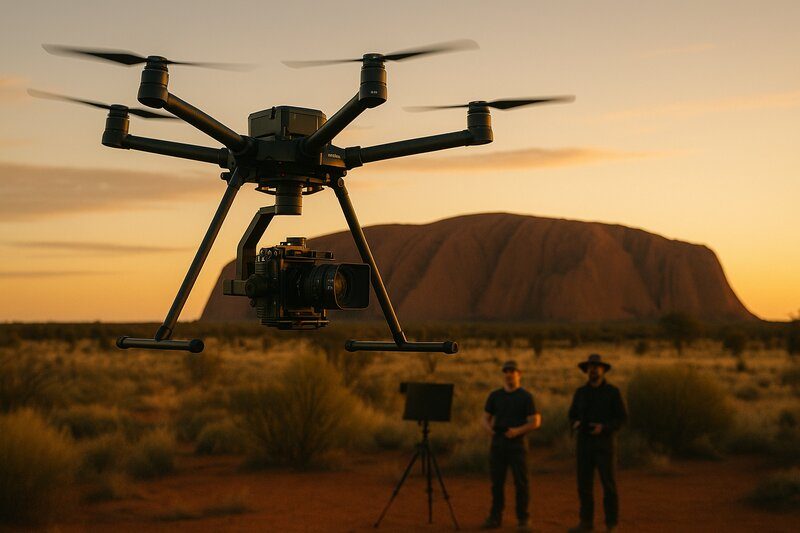
Professional aerial videography services using a DJI Inspire 3 filming a commercial project at sunrise in Australia

Video has become one of the most powerful ways for organisations to communicate. Whether showcasing a major development, promoting a tourism destination, documenting infrastructure, launching a new product or producing content for social media, high-quality video helps audiences understand, engage and remember.

Adding an aerial perspective takes that communication even further.

Professional aerial videography services provide dynamic viewpoints that simply cannot be achieved from the ground. Sweeping establishing shots, smooth tracking sequences and cinematic reveals allow viewers to appreciate the scale, setting and context of a project while creating a far stronger emotional connection.

At Flying Glass, we deliver professional aerial videography services throughout Australia for businesses, government agencies, production companies, developers, tourism organisations and major brands.

From large-scale infrastructure and commercial developments through to television productions, live events and destination marketing campaigns, we combine advanced aviation capability with creative storytelling to produce aerial video that is visually striking, commercially effective and professionally delivered.

Every project begins with a simple question.

What story are you trying to tell?

The answer determines everything from aircraft selection and camera movement through to flight planning, lighting and location choice.

Aerial videography forms part of Flying Glass’ wider filming drone services, covering cinema drones, FPV, television, tourism, live events and specialist production work across Australia.

Professional Aerial Videography Services for Complex Productions

Capturing outstanding aerial video often involves far more than simply flying a drone.

Many commercial productions take place in controlled airspace, busy city centres, major event venues, construction sites or locations where people remain nearby throughout filming.

Flying Glass holds a CASA Operations Over or Near People (OONP) Instrument, allowing us to conduct eligible operations over or near people in accordance with the instrument and our approved procedures.

We have also invested in approved parachute recovery systems on suitable aircraft and have extensive experience obtaining approvals for complex commercial operations throughout Australia.

This gives producers, agencies and commercial clients confidence that their aerial videography project is supported by genuine aviation expertise as well as creative capability.

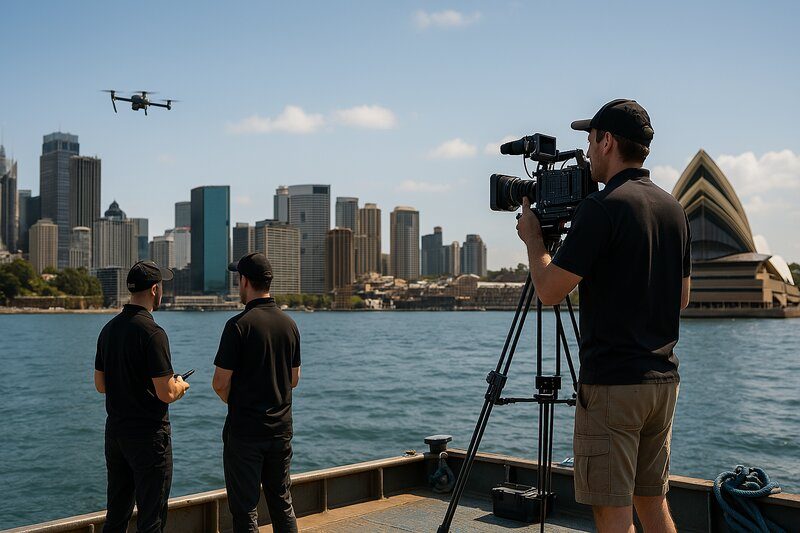
Professional aerial videography services using a DJI Inspire 3 filming a commercial project at sunrise in Australia

Why Aerial Videography Has Become Essential

Modern audiences expect movement.

Whether watching a corporate film, tourism campaign, television commercial or social media video, viewers engage more deeply when the camera moves naturally through a scene.

Professional aerial videography services allow organisations to present locations, projects and experiences from perspectives that immediately capture attention.

Instead of beginning with a static ground-level shot, an aerial sequence can establish an entire precinct, reveal the surrounding landscape or introduce a facility within seconds.

This instantly provides viewers with context while creating a polished, premium first impression.

High-quality aerial video is now used across:

  • Corporate communications.
  • Tourism campaigns.
  • Property marketing.
  • Construction projects.
  • Infrastructure.
  • Government communications.
  • Universities.
  • Industrial facilities.
  • Manufacturing.
  • Major events.
  • Television productions.
  • Commercial advertising.

For many organisations, aerial videography has become an expected part of professional visual communication rather than an optional extra.

Industry Insight

The strongest aerial videos rarely consist entirely of drone footage. The most engaging productions combine ground-based cinematography with carefully planned aerial sequences that provide scale, context and smooth transitions between locations.

Aerial Videography Services That Support Your Objectives

Every client has different goals.

Some want to inspire people to visit a destination.

Others need to demonstrate the scale of a commercial development, explain complex infrastructure or communicate progress to investors.

Professional aerial videography services should always support those objectives rather than simply capture attractive footage.

Flying Glass begins every project by understanding how the finished video will be used.

Depending on the brief, aerial footage may be produced for:

  • Websites.
  • Social media.
  • Broadcast television.
  • Streaming platforms.
  • Corporate presentations.
  • Investor communications.
  • Marketing campaigns.
  • Tourism promotion.
  • Government engagement.
  • Internal communications.

Understanding the final audience allows us to recommend camera movements, shot selection and filming techniques that strengthen the finished production.

Commercial Aerial Videography

Commercial organisations increasingly rely on professional video to explain what they do, showcase their facilities and strengthen their brand.

Professional aerial videography services allow businesses to demonstrate scale and capability in ways that traditional ground cameras simply cannot.

A manufacturing facility, logistics centre, commercial precinct or industrial site immediately becomes easier to understand when viewed from above.

Instead of showing isolated areas, aerial footage reveals how an entire operation fits together.

Commercial aerial videography is commonly used for:

  • Corporate profile videos.
  • Capability statements.
  • Recruitment campaigns.
  • Investor presentations.
  • Manufacturing facilities.
  • Industrial operations.
  • Logistics centres.
  • Corporate websites.
  • Marketing campaigns.
  • Trade exhibitions.

By combining elegant aerial movement with carefully planned ground cinematography, organisations can communicate professionalism while creating content that remains valuable for years.

For advertising productions requiring a specialist aerial crew, our commercial and TVC drone filming service supports agencies, brands and production companies from pre-production planning through to shoot-day capture.

Working Alongside Production Teams

Flying Glass regularly collaborates with directors, producers, marketing agencies, communications teams and corporate clients.

We understand that aerial filming is one component of a much larger production.

Our role is to integrate seamlessly with the broader crew while delivering footage that complements the overall visual style.

Rather than simply capturing random aerial shots, we work collaboratively to identify where aerial sequences will add the greatest value to the final edit.

This approach results in stronger storytelling, smoother editing and significantly more engaging finished productions.

Aerial Videography Services for Tourism and Destination Marketing

Few industries benefit more from professional aerial videography services than tourism.

Travellers increasingly choose destinations based on what they see online long before they book accommodation or purchase flights. Beautiful aerial video allows potential visitors to experience a location before they arrive, creating an emotional connection that still photography often cannot achieve.

Flying Glass has produced aerial video across some of Australia’s most spectacular destinations, working with tourism organisations, government agencies, local councils, resorts and commercial clients to create compelling visual content.

Tourism aerial videography commonly includes:

  • Coastal destinations.
  • National parks.
  • Luxury accommodation.
  • Regional tourism campaigns.
  • Visitor attractions.
  • Cruise destinations.
  • Wine regions.
  • Adventure tourism.
  • Walking trails.
  • Destination marketing.

The objective is not simply to showcase beautiful scenery. Great aerial video helps viewers imagine themselves experiencing the destination, making it a powerful marketing tool for visitor economies throughout Australia.

Property and Development Videography

Developers and commercial property professionals increasingly use aerial videography services to market projects long before construction is complete.

For developers requiring aerial support across planning, construction and marketing, our drone services for property developers bring these capabilities together across the full development lifecycle.

Aerial video demonstrates the location, surrounding amenities and overall scale of a development far more effectively than ground-level footage alone.

Whether promoting a residential community, commercial precinct or mixed-use development, aerial video helps prospective buyers and investors understand the broader context of the project.

Professional aerial video is commonly used for:

  • Development launches.
  • Display villages.
  • Commercial precincts.
  • Luxury residential developments.
  • Apartment projects.
  • Industrial estates.
  • Master-planned communities.
  • Investor updates.
  • Marketing campaigns.
  • Completion showcases.

Because Flying Glass also works extensively with developers throughout Australia, we understand how aerial imagery can support projects from initial planning through to final marketing.

Construction and Infrastructure Video

Professional aerial videography services provide construction companies and infrastructure organisations with a powerful way to communicate progress.

Large projects often involve investors, contractors, government agencies and community stakeholders who cannot regularly visit the site.

Cinematic aerial video makes complex developments easier to understand while creating a permanent visual record of the project.

Applications include:

  • Construction progress videos.
  • Infrastructure documentation.
  • Stakeholder reporting.
  • Community consultation.
  • Project launches.
  • Completion videos.
  • Corporate communications.
  • Award submissions.
  • Media releases.
  • Historical project documentation.

Rather than simply documenting activity, carefully planned aerial sequences help viewers understand how the project fits within its wider environment and how it evolves over time.

Industry Insight

The most effective construction videos often use consistent aerial flight paths throughout the life of a project. Repeating the same camera movements creates compelling before-and-after comparisons while providing stakeholders with a clear understanding of construction progress.

Government and Local Council Projects

Government agencies and councils use professional video to communicate with communities, promote destinations, explain infrastructure projects and showcase public assets.

Professional aerial videography services help government organisations create engaging content that is both informative and visually compelling.

Typical projects include:

  • Regional promotion.
  • Infrastructure announcements.
  • Community engagement.
  • Tourism marketing.
  • Environmental initiatives.
  • Public facilities.
  • Transport projects.
  • Recreation areas.
  • Economic development campaigns.
  • Major events.

Public sector projects often require detailed planning, stakeholder consultation and careful operational management. Flying Glass understands these requirements and works collaboratively with project teams to deliver high-quality aerial content that meets both creative and operational objectives.

Universities, Schools and Education

Educational institutions are increasingly investing in professional aerial video to attract students, communicate with stakeholders and strengthen their brand.

Campus aerial videography showcases facilities, open spaces, sporting grounds, accommodation and surrounding communities in ways that traditional photography cannot.

Professional aerial videography services are commonly used for:

  • Student recruitment.
  • Open day promotions.
  • Campus tours.
  • Fundraising campaigns.
  • Research facilities.
  • Corporate communications.
  • Alumni engagement.
  • International marketing.

Because these projects often involve filming around students, staff and visitors, careful planning and professional aviation capability are essential to achieving successful outcomes.

Experience Matters When Projects Become Complex

Many commercial filming locations involve operational challenges that extend well beyond basic drone flying.

Controlled airspace, active construction sites, universities, busy tourist destinations, public infrastructure and major events all require careful aviation planning before filming begins.

Flying Glass brings extensive experience managing these complexities.

Combined with our CASA Operations Over or Near People (OONP) Instrument, approved parachute recovery systems on suitable aircraft and experience obtaining operational approvals throughout Australia, we help clients achieve ambitious aerial productions safely and professionally.

Major Events and Live Entertainment

Flying Glass has extensive experience capturing aerial video for major concerts, festivals, sporting events and large public gatherings throughout Australia.

These productions require detailed planning, close collaboration with organisers and a thorough understanding of aviation regulations.

Professional aerial videography services help promoters, broadcasters and event organisers create memorable content that extends well beyond the event itself.

Applications include:

  • Concert promotion.
  • Festival marketing.
  • Broadcast support.
  • Sponsor content.
  • Social media campaigns.
  • Future event promotion.
  • Venue showcases.
  • Behind-the-scenes productions.

By combining traditional aerial cinematography with FPV capability where appropriate, Flying Glass provides event organisers with a wide range of creative options that help audiences experience the scale and atmosphere of major live events.

FPV Aerial Videography

While traditional camera drones excel at smooth, cinematic movements, FPV (First Person View) drones offer an entirely different style of aerial storytelling.

Where the brief calls for fast, immersive or indoor-to-outdoor camera movement, our specialist FPV drone services can be integrated with traditional aerial footage on the same production.

Professional aerial videography services increasingly combine both technologies to create productions that feel modern, immersive and visually distinctive.

FPV drones allow the camera to move through buildings, beneath structures, alongside vehicles and around complex environments with remarkable agility. When combined with conventional aerial footage, the result is a production that balances elegance with energy.

Flying Glass has extensive experience delivering both traditional aerial cinematography and professional FPV filming, allowing clients to work with one experienced aerial team rather than multiple specialist suppliers.

FPV aerial videography is particularly effective for:

  • Commercial advertising.
  • Tourism campaigns.
  • Major events.
  • Sports venues.
  • Industrial facilities.
  • Universities.
  • Hotels and resorts.
  • Property walkthroughs.
  • Corporate headquarters.
  • Manufacturing facilities.

The objective is never simply to fly faster. Every movement is designed to strengthen the story and create a more engaging viewing experience.

Planning Every Flight for the Best Results

The quality of professional aerial videography services depends just as much on preparation as it does on the filming itself.

Before cameras begin rolling, Flying Glass carefully plans every aspect of the operation to ensure the finished footage achieves both the creative objectives and the operational requirements of the project.

Planning may include:

  • Location assessments.
  • Shot planning.
  • Sun position and lighting analysis.
  • Weather monitoring.
  • Airspace reviews.
  • Operational approvals.
  • Risk assessments.
  • Coordination with production teams.
  • Selection of the most appropriate aircraft.
  • Scheduling around site activities.

Investing time in pre-production allows filming days to run more efficiently while ensuring every aerial sequence contributes meaningfully to the finished production.

Industry Insight

The best aerial shots often last only a few seconds in the final edit, but achieving those few seconds can involve hours of planning. Careful preparation ensures every camera movement feels natural, purposeful and seamlessly integrated with the broader production.

Why Organisations Choose Flying Glass

Flying Glass combines creative filmmaking with genuine commercial aviation expertise.

While many drone operators focus on a single niche, our experience spans television, advertising, tourism, construction, infrastructure, government, property development, industrial facilities and major live events.

This diversity allows us to adapt quickly to different productions while maintaining consistently high standards of safety, professionalism and image quality.

Clients choose Flying Glass because we provide:

  • More than 12 years of commercial drone operations.
  • More than 30 years of combined aviation experience.
  • Professional aerial videography services throughout Australia.
  • High-end cinema drone capability.
  • Professional FPV drone filming.
  • A CASA ReOC.
  • A CASA Operations Over or Near People (OONP) Instrument.
  • Approved parachute recovery systems on suitable aircraft.
  • Extensive experience operating in controlled airspace.
  • Professional collaboration with agencies, production companies, government and commercial clients.

Whether we’re filming a national television campaign, documenting major infrastructure or producing promotional content for a tourism destination, our goal is always to create aerial video that exceeds expectations.

Frequently Asked Questions

What are aerial videography services?

Aerial videography services involve capturing professional video from drones to showcase locations, projects, events and organisations from perspectives that cannot be achieved using traditional ground-based cameras.

Can you provide both aerial photography and video?

Yes. Flying Glass regularly provides both high-resolution drone photography and professional aerial video as part of the same project.

Do you travel throughout Australia?

Absolutely. We provide professional aerial videography services across Australia for businesses, government agencies, production companies and major brands.

Can you combine FPV with traditional drone filming?

Yes. Many productions benefit from combining traditional cinematic drone footage with dynamic FPV sequences. This creates greater visual variety while maintaining a consistent production style.

Can you film in controlled airspace?

Yes. Flying Glass has extensive experience planning aerial operations in controlled airspace and obtaining the approvals required for complex commercial projects.

Partner With Flying Glass for Professional Aerial Videography Services

Whether you’re producing a corporate profile, promoting a tourism destination, documenting a major construction project, filming a national advertising campaign or creating content for a live event, Flying Glass delivers professional aerial videography services tailored to your objectives.

Our combination of creative storytelling, advanced aviation capability and extensive commercial experience allows us to produce exceptional aerial video across some of Australia’s most challenging and visually spectacular environments.

If you’re looking for professional aerial videography services that combine cinematic quality with industry-leading operational expertise, contact Flying Glass today to discuss your next project.

Every business has a story to tell. Sometimes the most powerful way to tell that story is from above.

Professional drone photography services provide a perspective that simply cannot be achieved from the ground. Whether showcasing a commercial development, documenting construction progress, promoting a tourism destination or capturing a major event, aerial photography helps reveal scale, context and visual impact in a single image.

Today’s organisations need more than attractive photographs. They need images that support marketing campaigns, communicate progress, engage stakeholders and strengthen their brand.

At Flying Glass, we combine professional aviation expertise with high-end commercial photography to produce aerial images that are both visually striking and commercially valuable.

Our work spans television productions, tourism campaigns, commercial property, infrastructure, major events, government projects and national advertising campaigns throughout Australia.

Drone photography is one part of Flying Glass’ broader filming drone services, giving commercial clients access to high-end stills, cinematic aerial video and specialist production capability from the same experienced team.

Beautiful Photography Starts With Safe, Professional Operations

Many of the most valuable aerial photographs are captured in busy commercial environments, around occupied buildings, public spaces, major events or complex infrastructure.

Flying Glass holds a CASA Operations Over or Near People (OONP) Instrument, allowing us to conduct eligible operations over or near people in accordance with the instrument and our approved procedures.

We also operate approved parachute recovery systems on suitable aircraft and have contributed to CASA’s Technical Working Group relating to OONP, giving our clients confidence that their aerial photography is being delivered by a team at the forefront of commercial drone operations in Australia.

Why Drone Photography Has Changed Commercial Photography

For decades, aerial photography required helicopters, fixed-wing aircraft or expensive elevated platforms.

Today, professional drones allow organisations to capture stunning aerial images with remarkable flexibility while significantly reducing cost, complexity and environmental impact with great drone photography services.

More importantly, drones can position a camera exactly where it creates the strongest image.

Rather than simply photographing a building from directly overhead, a skilled drone photographer carefully considers composition, light, perspective and background to create an image that tells a story.

This combination of creative photography and aviation precision has transformed how businesses present themselves.

Professional aerial photography services are now used across almost every major industry, from construction and property to tourism, infrastructure and national advertising campaigns.

Professional drone photography services capturing a spectacular Australian coastline at sunrise using a DJI Inspire 3 drone

More Than Just Flying a Drone

Owning a drone does not automatically make someone a professional photographer.

Great aerial photography requires an understanding of light, composition, timing and storytelling.

Every decision influences the final image.

The time of day affects shadows and reflections. Weather changes colour and atmosphere. Camera angle influences how large or inviting a location appears. Lens selection changes perspective, while careful positioning can simplify a complex scene into a clean, impactful photograph.

These are the same photographic principles used across commercial advertising, architecture and television production.

Flying Glass applies this creative approach to drone photography services on every project, producing imagery that serves a commercial purpose rather than simply showing that a drone was used.

Commercial Property Photography

Commercial property is one of the most common applications for professional drone photography services.

Developers, architects, real estate agencies, investors and property owners all rely on high-quality aerial imagery to showcase projects and communicate scale.

Drone photography can reveal relationships between buildings, surrounding infrastructure, transport links, landscaping and nearby amenities in ways that ground-based photography cannot.

Applications include:

  • Commercial office buildings.
  • Industrial estates.
  • Retail centres.
  • Hotels and resorts.
  • Apartment developments.
  • Mixed-use precincts.
  • Luxury residential properties.
  • Large rural holdings.

Whether the objective is attracting investors, supporting leasing campaigns or documenting a completed development, carefully planned aerial photography provides immediate visual impact.

Tourism and Destination Marketing

Few industries benefit from aerial photography more than tourism.

Visitors choose destinations based on emotion, and emotion is often created through imagery.

Aerial photography allows tourism organisations, councils, resorts and destination marketing agencies to showcase landscapes, coastlines, attractions and experiences from perspectives that inspire travel.

Professional drone photography services can highlight:

  • Coastal destinations.
  • National parks.
  • Regional towns.
  • Luxury accommodation.
  • Adventure experiences.
  • Waterfront precincts.
  • Walking trails.
  • Public spaces.

Flying Glass has worked extensively across Australia’s tourism sector, producing imagery for campaigns that encourage people to discover destinations from a completely new perspective.

For destination campaigns requiring a broader filming package, see our dedicated drone services for tourism, covering aerial photography, cinematic video and FPV content across Australia.

Construction Progress Photography

Construction projects evolve rapidly, making regular visual documentation invaluable.

Professional aerial photography provides developers, builders, consultants and investors with a clear record of progress throughout the life of a project.

Repeat photography captured from consistent viewpoints allows stakeholders to compare milestones over weeks, months or years.

Typical uses include:

  • Monthly progress reporting.
  • Investor updates.
  • Marketing material.
  • Project documentation.
  • Client presentations.
  • Project completion records.

Because aerial photography captures the entire site within its surrounding environment, it often communicates progress far more effectively than ground photography alone.

For builders and developers requiring scheduled aerial coverage throughout a project, our construction drone services combine progress photography, video and specialist aerial capture across the construction lifecycle.

Industrial and Infrastructure Photography

Large industrial sites and infrastructure projects often contain impressive engineering that is difficult to appreciate from ground level.

Professional aerial photography provides valuable visual context while documenting assets in a clear and engaging way.

Flying Glass regularly captures imagery for:

  • Manufacturing facilities.
  • Logistics centres.
  • Warehouses.
  • Ports.
  • Transport infrastructure.
  • Utilities.
  • Renewable energy projects.
  • Government assets.

These images may support annual reports, stakeholder communications, capability statements, websites, tenders, media releases and internal documentation.

For projects where aerial imagery sits alongside inspection, mapping, LiDAR or ongoing monitoring requirements, explore our broader industrial drone services.

Television, Film and Media Photography

Some aerial photographers specialise in property. Others focus on construction or tourism.

Flying Glass has built its reputation working on some of Australia’s most demanding television, film and commercial productions, where every image is expected to meet broadcast standards.

Our experience spans productions for international streaming platforms, broadcasters, advertising agencies and production companies, giving us a deep understanding of both creative storytelling and technical image quality.

This experience carries directly into our commercial photography work.

Whether photographing a corporate headquarters, tourism destination or major infrastructure project, we approach every assignment with the same attention to composition, lighting and detail expected on premium television productions.

Industry Insight

Many commercial drone operators come from an aviation background. Flying Glass combines professional aviation with years of experience producing imagery for television, documentaries, commercials and major productions. That creative experience often makes the difference between an image that simply records a location and one that genuinely captures attention.

Advertising and Brand Photography

Modern brands compete for attention across websites, social media, annual reports, digital advertising and printed marketing material.

Professional commercial drone photography helps businesses create memorable imagery that immediately communicates professionalism, scale and credibility.

Rather than simply photographing a building or facility, aerial photography can reveal the wider story surrounding the business.

It may show the relationship between a manufacturing facility and surrounding transport links, the impressive scale of a distribution centre or the spectacular location of a luxury resort.

These wider perspectives help customers understand not only what a business does, but where it operates and why its location matters.

Professional aerial photography is increasingly used for:

  • Corporate websites.
  • Advertising campaigns.
  • Annual reports.
  • Investor presentations.
  • Capability statements.
  • Tender submissions.
  • Media releases.
  • Digital marketing.
  • Social media campaigns.

Major Events and Live Entertainment

Major public events present an incredible opportunity for aerial photography.

Concerts, festivals, sporting events and public celebrations often create spectacular scenes that can only be fully appreciated from above.

A professionally captured aerial image can reveal the scale of a crowd, the atmosphere surrounding an event and the relationship between performers, venues and audiences.

Flying Glass has extensive experience supporting major concerts and live events throughout Australia, working closely with production teams to capture imagery while operating safely within complex environments.

These photographs are commonly used for:

  • Future event promotion.
  • Media coverage.
  • Sponsor reporting.
  • Tourism campaigns.
  • Social media.
  • Press releases.
  • Historical archives.

Large events often involve crowded environments, temporary infrastructure, controlled access areas and strict operational requirements. Every flight is carefully planned to ensure the required imagery can be captured safely and legally.

Architectural Drone Photography

Architectural photography is about much more than documenting a building.

It is about revealing the design intent behind the project through out drone photography services.

Professional aerial photography services allow architects, developers and designers to showcase how a building interacts with its surrounding environment.

The best aerial architectural photographs consider:

  • Building orientation.
  • Natural light.
  • Urban context.
  • Landscaping.
  • Access roads.
  • Neighbouring development.
  • Scale and proportion.
  • Relationship with the landscape.

Rather than relying on a single overhead image, Flying Glass carefully selects camera positions that complement the architecture while communicating the character of the development.

Why Image Quality Matters

High-quality aerial photography begins long before the drone takes off.

The choice of aircraft, camera system, lens, weather conditions and time of day all influence the final result.

Flying Glass operates professional camera platforms capable of capturing exceptionally detailed imagery suitable for commercial marketing, large-format printing, editorial publication and premium digital campaigns.

However, equipment alone does not create outstanding photographs.

Understanding how light interacts with glass, water, steel, vegetation and architecture often determines whether an image feels ordinary or exceptional.

For this reason, we frequently recommend photographing locations during the early morning or late afternoon, when softer light, longer shadows and warmer colours create more visually engaging results.

Patience, planning and experience often contribute more to the final photograph than simply choosing the latest drone.

Industry Insight

Some of the strongest aerial photographs are captured after waiting for the right weather rather than simply flying on the first available day. Light, atmosphere and cloud can completely transform an otherwise ordinary image into one that becomes the centrepiece of an advertising campaign.

Choosing a Professional Drone Photographer

Not all drone photography services deliver the same standard of imagery.

When selecting an aerial photographer, it is worth asking questions that go beyond the aircraft they own.

Consider:

  • Do they understand professional photography and composition?
  • Have they worked with commercial clients?
  • Can they photograph complex locations safely?
  • Do they have experience in controlled airspace?
  • Can they advise on the best time of day for the shoot?
  • Do they understand marketing objectives as well as aviation?
  • Can they work alongside architects, agencies and production companies?
  • Do they carry the appropriate approvals and insurance?

The right aerial photographer should become part of your creative team, helping you achieve stronger imagery rather than simply operating a drone.

Working Safely in Complex Commercial Environments

Many of the most valuable aerial photographs are captured in locations where safety, planning and legal compliance are just as important as creativity.

Commercial buildings remain occupied. Construction sites continue operating. Infrastructure carries traffic. Major events attract thousands of people. These environments require considerably more than simply launching a drone and taking photographs.

Flying Glass approaches every aerial photography assignment as a professional aviation operation.

Before every drone photography services flight we assess the surrounding airspace, operating environment, nearby people, weather conditions, obstacles, client objectives and the most appropriate aircraft for the task.

Where required, we coordinate with site managers, project teams, event organisers and relevant authorities to ensure the photography can be completed safely, efficiently and with minimal disruption.

Professional Approvals for Complex Drone Photography

Flying Glass holds a CASA Operations Over or Near People (OONP) Instrument, allowing us to conduct eligible operations over or near people in accordance with the instrument and our approved procedures.

We have also invested in approved parachute recovery systems on suitable aircraft, allowing additional risk mitigation where appropriate for complex commercial operations.

Our team has contributed to CASA’s Technical Working Group relating to Operations Over or Near People, helping shape the future of complex drone operations in Australia.

These capabilities provide our clients with greater confidence that challenging aerial photography projects are being managed by an experienced commercial operator with specialist aviation expertise.

Why Businesses Choose Flying Glass

Choosing a drone photographer is about far more than comparing equipment or day rates.

Clients trust Flying Glass because we combine creative photography with extensive commercial aviation experience.

Over more than 12 years of commercial drone operations, we have supported television productions, advertising agencies, tourism organisations, developers, government departments, construction companies, infrastructure operators and major events throughout Australia.

Our team understands that every client has different objectives.

Sometimes the priority is creating striking marketing imagery. Other times it is documenting construction progress, showcasing an industrial facility or capturing aerial photographs that support a national advertising campaign.

Whatever the brief, our focus remains the same: producing outstanding imagery while maintaining the highest standards of safety, professionalism and operational planning.

Clients choose Flying Glass because we provide:

  • More than 12 years of commercial drone operations.
  • Over 30 years of combined aviation experience.
  • Professional aerial photographers with extensive commercial experience.
  • High-resolution aerial photography suitable for print and digital media.
  • Excellent drone photography services
  • Experience across television, film, tourism and advertising.
  • A CASA OONP Instrument for eligible complex operations.
  • Approved parachute recovery systems on suitable aircraft.
  • Experience working in controlled airspace and complex operational environments.
  • Nationwide availability across Australia.
  • Professional planning from initial enquiry through to final image delivery.

Frequently Asked Questions About Drone Photography Services

What industries use drone photography?

Professional drone photography is widely used across commercial property, construction, tourism, government, infrastructure, architecture, hospitality, events, media and industrial sectors.

Can drone photographs be used for marketing?

Absolutely. Many businesses use aerial photography for websites, brochures, annual reports, advertising campaigns, social media, investor presentations and media releases.

Can you photograph occupied buildings?

Many commercial buildings remain occupied during aerial photography. Every project is individually assessed to determine the safest and most appropriate operating method, taking into account the surrounding environment and applicable approvals.

Can Flying Glass operate in city centres?

Many CBD and metropolitan projects can be undertaken, although each location requires assessment of surrounding airspace, buildings, people and operational constraints before flight planning begins.

What time of day is best for aerial photography?

Early morning and late afternoon often provide the most attractive lighting, producing softer shadows, richer colours and more three-dimensional images. However, the ideal timing depends on the location, orientation of the subject and the intended use of the photographs.

Do you travel throughout Australia?

Yes. Flying Glass regularly undertakes commercial aerial photography assignments throughout Australia for corporate, government, construction, tourism and media clients.

Elevate Your Brand with Professional Drone Photography Services

Professional drone photography services provide organisations with a powerful way to showcase their projects, assets and locations from perspectives that simply cannot be achieved from the ground.

Whether you need commercial property photography, construction progress images, tourism marketing, architectural photography, industrial documentation or premium aerial imagery for advertising, Flying Glass combines creative excellence with professional aviation expertise.

Our extensive experience across television, major events, tourism, infrastructure and commercial projects enables us to deliver aerial photographs that are both visually compelling and commercially effective.

Combined with our CASA OONP Instrument, specialist operational approvals and commitment to safe, professional operations, we help clients capture exceptional imagery in environments where experience truly matters.

If you’re planning your next marketing campaign, development, construction project or commercial photography assignment, contact Flying Glass to discuss how our professional drone photography services can help showcase your business from a completely new perspective.

FPV drone services capturing a major outdoor concert with an immersive first-person aerial perspective in Australia

Modern audiences expect movement. Whether they’re watching a television commercial, live concert, tourism campaign, sporting event or branded film, viewers are increasingly drawn to immersive camera movements that place them at the centre of the action.

Professional FPV drone services have transformed aerial filmmaking by making those shots possible. Unlike conventional camera drones, FPV (First Person View) drones can fly complex, flowing flight paths through buildings, around performers, alongside vehicles and across challenging environments with remarkable precision.

The result is footage that feels energetic, immersive and cinematic.

At Flying Glass, we combine experienced FPV pilots with traditional cinema drone operations, allowing clients to achieve the best of both worlds. Elegant aerial establishing shots can seamlessly transition into fast-moving FPV sequences, creating productions that feel polished, modern and visually engaging.

From national television productions and tourism campaigns to major concerts, live events, advertising campaigns and branded content, our FPV drone services help producers capture moments that simply cannot be achieved using conventional camera systems.

FPV is one specialist capability within Flying Glass’ broader filming drone services, allowing productions to combine immersive FPV movement with traditional cinema-drone coverage using one aerial team.

Work With an Operator Who Can Legally Deliver Complex Productions

Many of the productions that benefit most from FPV Drone Services filming involve operating close to performers, presenters, talent, infrastructure or members of the public. These environments often require approvals and operational capabilities that many drone operators simply don’t have.

Flying Glass holds a CASA Operations Over or Near People (OONP) Instrument, allowing us to conduct eligible operations over or near people in accordance with the instrument and our approved procedures.

We also own and operate approved parachute recovery systems on suitable aircraft, giving producers greater flexibility when planning complex aerial sequences while maintaining the highest standards of safety and legal compliance.

What Makes FPV Drone Filming Different?

Traditional camera drones are exceptional at capturing smooth, stable aerial footage from above. They excel at sweeping landscape shots, slow reveals and cinematic establishing sequences.

FPV drones are designed for something different.

Because the pilot flies from a real-time first-person view, these aircraft can perform complex camera movements with exceptional agility. They can move through narrow spaces, accelerate rapidly, descend dramatically and follow subjects in ways that feel far more immersive than traditional aerial filming.

Professional FPV drone filming creates the sensation that the audience is flying through the scene rather than simply watching it from above.

When used thoughtfully, this creates emotional engagement rather than simply visual excitement.

FPV drone services capturing a major outdoor concert with an immersive first-person aerial perspective in Australia

When FPV Drone Services Deliver the Greatest Impact

Not every production requires FPV.

One of the biggest misconceptions is that FPV should replace traditional aerial cinematography. In reality, the strongest productions combine both techniques.

A conventional cinema drone may establish the location before an FPV drone takes viewers directly into the action. This combination provides visual contrast while maintaining a coherent cinematic style.

Professional FPV drone services are particularly effective for:

  • Television productions.
  • Commercial advertising.
  • Tourism campaigns.
  • Major concerts.
  • Music festivals.
  • Sporting events.
  • Large public events.
  • Luxury property walkthroughs.
  • Industrial facilities.
  • Construction projects.
  • Hospitality venues.
  • Universities and schools.

The objective is never simply to fly quickly.

Instead, FPV should strengthen the story by taking audiences somewhere they have never been before.

Combining Traditional Cinema Drones with FPV

One of Flying Glass’s greatest strengths is our ability to provide both traditional aerial cinematography and FPV drone videography on the same production.

This gives directors significantly greater creative flexibility.

A production might begin with a beautifully composed sunrise establishing shot before transitioning into a dynamic FPV sequence that travels through a venue, follows performers backstage or moves effortlessly between indoor and outdoor environments.

Because both aerial styles are delivered by the same experienced team, camera movement, pacing and visual style remain consistent throughout the production.

This integrated approach also simplifies production planning by reducing the number of specialist suppliers required on set.

Industry Insight

FPV works best when audiences don’t consciously notice the technology. The most memorable sequences feel completely natural, drawing viewers into the story rather than distracting them with flashy flying. Good FPV serves the production. Great FPV becomes invisible.

FPV Drone Services for Television and Streaming Productions

Television producers are constantly searching for fresh ways to engage audiences. For broadcast and series work requiring a complete aerial department, see our drone services for television, covering traditional cinematography, FPV, approvals and production integration. FPV has opened entirely new creative possibilities.

Instead of relying solely on cranes, dollies or Steadicams, productions can now create continuous camera movements that transition effortlessly through large environments while maintaining cinematic quality.

Professional FPV drone cinematography is increasingly being used across:

  • Reality television.
  • Lifestyle programs.
  • Travel series.
  • Documentaries.
  • Competition shows.
  • Entertainment specials.
  • Streaming productions.
  • Behind-the-scenes content.

Whether revealing an entire filming location in one uninterrupted shot or following presenters through a complex environment, FPV creates movement that feels both immersive and intentional.

Concerts, Festivals and Live Entertainment

Few environments showcase the power of FPV drone services better than live entertainment.

Major concerts, music festivals and large public events are designed to create atmosphere, energy and emotion. Traditional cameras capture many of these moments beautifully, but FPV introduces an entirely different perspective.

A carefully planned FPV sequence can move through an event precinct, reveal the scale of the audience, transition towards the stage and capture the excitement of a live performance in one continuous movement.

For promoters, broadcasters and production companies, this creates visually striking content suitable for television, social media, event promotion and future marketing campaigns.

Flying Glass has extensive experience supporting major concerts and live events across Australia, understanding both the creative opportunities and the careful planning required when operating in complex, fast-moving environments.

Large concerts and live events are some of the most demanding environments for drone operations. Productions often involve performers, crew, staging, lighting towers and large crowds, making careful planning essential. Flying Glass’s CASA OONP Instrument, specialist operational procedures and approved parachute systems on suitable aircraft provide significantly greater flexibility for many complex productions where standard drone operations may not be possible with our FPV Drone Services.

For productions requiring aerial imagery in real time, Flying Glass can integrate FPV alongside stabilised cinema drones through our drone live broadcast services.

Commercial Advertising That Demands Attention

Advertising is becoming increasingly competitive, with brands needing to capture attention within the first few seconds.

Professional FPV drone services help agencies and production companies create memorable opening sequences that immediately engage viewers.

Rather than beginning with a static wide shot, an FPV drone can introduce a location through continuous movement, weaving naturally through architecture, people and activity before arriving at the hero subject.

This style of filmmaking creates a sense of anticipation that traditional camera systems often cannot replicate.

FPV is particularly effective for:

  • Automotive campaigns.
  • Tourism advertising.
  • Retail brands.
  • Hospitality venues.
  • Universities.
  • Sporting brands.
  • Government campaigns.
  • Destination marketing.
  • Corporate brand films.

Rather than feeling like an aerial shot, the footage feels as though the viewer has become part of the story.

FPV is frequently combined with traditional cinema-drone coverage on advertising productions. See our drone filming for commercials and TVCs service for integrated aerial production using both approaches.

Tourism Campaigns That Inspire Travel

Tourism is one of the industries where FPV drone videography has made the biggest creative impact.

Instead of simply showing a destination from above, FPV Drone Services allows audiences to experience it.

A single continuous shot might begin above the coastline before diving towards the beach, travelling along a walking trail, passing through an outdoor dining precinct and finishing overlooking the ocean at sunset.

This creates an emotional connection with the destination that encourages viewers to imagine themselves there.

For tourism organisations, local councils, resorts and destination marketing bodies, FPV has become an incredibly powerful storytelling tool.

Combined with traditional aerial cinematography, these productions balance spectacular landscape imagery with immersive movement that keeps audiences engaged.

Industry Insight

Many of the most successful tourism films combine three distinct perspectives: traditional ground cinematography for personal moments, conventional aerial footage for scale and context, and FPV for immersive movement. Each style complements the others, creating a richer viewing experience.

Property Walkthroughs That Feel Different

Luxury real estate has embraced FPV because it offers buyers an entirely new way to experience a property.

Rather than presenting a sequence of disconnected rooms, an indoor FPV drone can travel naturally through the home, connecting indoor and outdoor spaces in one elegant movement.

This allows prospective buyers to better understand the flow of the property while creating highly engaging marketing content.

Developers and real estate agencies increasingly use FPV for:

  • Luxury residences.
  • Display homes.
  • Apartment developments.
  • Hotels and resorts.
  • Lifestyle precincts.
  • Commercial buildings.

Because viewers experience the property as though they are walking through it themselves, engagement is often significantly higher than with traditional walkthrough videos.

Industrial and Construction Facilities

FPV isn’t only about entertainment and advertising.

Industrial organisations are increasingly using commercial FPV drone operations to showcase large, complex facilities.

Warehouses, manufacturing plants, logistics centres, construction sites and infrastructure projects all benefit from immersive aerial footage that demonstrates scale while helping viewers understand how different parts of a facility connect.

For example, an FPV sequence may begin outside a warehouse before entering through a loading dock, travelling above operational areas and exiting through another section of the facility without interruption.

This style of filmmaking is particularly valuable for:

  • Corporate capability videos.
  • Recruitment campaigns.
  • Investor presentations.
  • Trade exhibitions.
  • Marketing campaigns.
  • Internal communications.

Major Sporting Events

Sport is built on movement, making it a natural fit for FPV aerial filming.

Whether documenting elite competition, community events or large participation festivals, FPV adds an energy that audiences immediately connect with.

Professional aerial sequences can reveal the scale of a venue, follow athletes through challenging courses or provide exciting transitions between different parts of an event.

For broadcasters and production companies, these dynamic sequences create memorable opening titles, promotional content and social media highlights.

As with all aerial operations, every sporting event is carefully planned to ensure drone activities align with venue requirements, aviation regulations and event safety procedures.

One Team, Multiple Camera Perspectives

One of the biggest advantages of working with Flying Glass is that clients don’t need to choose between traditional aerial cinematography and FPV.

We regularly combine both styles on the same production, creating a consistent visual language across the entire project.

This means your production can include:

  • High-end cinema drone establishing shots.
  • Dynamic FPV transitions.
  • Low-level tracking sequences.
  • Traditional aerial photography.
  • Cinematic aerial video.
  • Immersive indoor and outdoor FPV flights.

By planning these shots together during pre-production, directors gain significantly more creative flexibility while simplifying the logistics of the filming day.

Planning and Safety Are Just as Important as Creativity

The most impressive FPV sequence in the world isn’t worth much if it cannot be delivered safely and professionally.

Professional FPV drone services require considerably more than advanced flying skills. Every operation begins with careful planning to ensure the creative vision can be achieved while maintaining the highest operational standards. Our planning extends well beyond standard risk assessments. Flying Glass operates under a CASA OONP Instrument and has invested heavily in specialist risk mitigation measures, including approved parachute recovery systems on suitable aircraft. These capabilities allow us to legally and safely undertake many productions that require significantly more than a standard commercial drone operator.

Depending on the production, this may involve:

  • Location assessments.
  • Risk assessments.
  • Coordination with producers and event organisers.
  • Liaison with venue management.
  • Shot planning and rehearsals.
  • Weather assessments.
  • Selection of the most appropriate aircraft.

Whether filming inside a stadium, around a concert venue, at a tourism destination or within a large commercial facility, every project presents different operational challenges. Our role is to solve those challenges before filming begins, allowing the production team to focus on creating exceptional content.

Choosing the Right FPV Drone Company

FPV has grown rapidly in popularity, but not every FPV pilot has experience working on professional productions.

When selecting an FPV drone services company, it’s worth looking beyond social media highlight reels.

Ask questions such as:

  • Have they worked on broadcast television or commercial productions?
  • Can they collaborate effectively with directors and producers?
  • Do they understand cinematic storytelling rather than simply flying fast?
  • Can they provide both FPV and traditional aerial cinematography?
  • Do they have experience working on major live events?
  • Can they safely operate in complex environments?
  • Do they hold the appropriate approvals and insurances?

The right aerial partner should enhance the production, not become another logistical challenge for the crew.

Industry Insight

The best FPV shots are usually the ones that look effortless. Achieving that level of precision often involves multiple planning discussions, rehearsals and close collaboration between the FPV pilot, director, camera department and production team.

Why Productions Choose Flying Glass

Flying Glass has built a reputation for delivering premium aerial content for some of Australia’s most demanding productions with our FPV Drone Services.

Our experience spans television, streaming productions, national advertising campaigns, tourism marketing, branded content, major sporting events, live entertainment and large-scale public events.

We understand that every production has different creative objectives, timelines and operational constraints. That’s why we tailor our approach to suit the project rather than relying on a standard filming package.

Clients choose Flying Glass because we offer:

  • Experienced FPV drone pilots and traditional aerial cinematographers.
  • The ability to combine multiple aerial platforms on the same production.
  • Extensive experience supporting television and commercial productions.
  • Professional collaboration with directors, producers and agencies.
  • Nationwide availability throughout Australia.
  • CASA OONP Instrument for eligible operations over or near people.
  • High-quality footage ready for broadcast, streaming and commercial delivery.

Our objective is simple: create aerial content that strengthens the production and exceeds expectations.

For productions in Victoria requiring both conventional aerial cinematography and FPV, our local crews provide complete drone filming Melbourne capability across film, TV, commercials and live productions.

Frequently Asked Questions About FPV Drone Services

What does FPV stand for?

FPV stands for First Person View. The pilot flies the aircraft using a real-time video feed, allowing precise and highly dynamic camera movements.

Can FPV drones fly indoors?

Yes. Depending on the location and project requirements, an indoor FPV drone can safely capture continuous walkthroughs of venues, hotels, offices, entertainment spaces and other large indoor environments.

Can FPV be combined with traditional drone filming?

Absolutely. In fact, this is often the most effective approach. Traditional cinema drones establish scale and location, while FPV Drone Services provides immersive movement that draws viewers into the action.

Is FPV suitable for live events and concerts?

Yes, provided the operation is carefully planned and conducted in accordance with all relevant aviation requirements, venue procedures and event-specific safety measures. FPV has become an increasingly valuable tool for concerts, festivals and major entertainment productions.

Can Flying Glass travel anywhere in Australia?

Yes. We regularly support productions across Australia and are experienced in travelling for television productions, commercial campaigns, tourism projects, sporting events and live entertainment.

As well as our Sydney based FPV crew, Flying Glass has local Victorian capability for FPV drone Melbourne projects including concerts, festivals, TVCs, sport, automotive filming and complex event environments.

Bring Your Production to Life with Professional FPV Drone Services

Modern productions demand more than beautiful images. They need movement, energy and camera work that helps audiences feel part of the story.

Professional FPV drone services deliver exactly that, creating immersive aerial sequences that capture attention and leave a lasting impression.

Whether you’re producing a television series, commercial, tourism campaign, concert film, sporting event, corporate video or branded content, Flying Glass combines creative storytelling with aviation expertise to deliver exceptional aerial footage.

By offering both traditional aerial cinematography and FPV under one roof, we provide directors and producers with greater creative freedom, streamlined production planning and a consistently high standard of aerial filmmaking.

If you’re planning your next production and want to create aerial footage that audiences genuinely remember, contact Flying Glass to discuss how our professional FPV drone services can help bring your vision to life.

Drone cinematography services capturing cinematic aerial footage for a television production in Australia

Whether you’re producing a television commercial, feature film, streaming series, tourism campaign, corporate brand film or luxury property showcase, exceptional aerial footage has become an essential part of visual storytelling. Modern audiences expect sweeping establishing shots, dynamic tracking sequences and perspectives that simply weren’t possible a decade ago.

Professional drone cinematography services combine experienced pilots, high-end cinema equipment and creative collaboration to capture these moments safely and efficiently. At Flying Glass, we work alongside directors, producers, cinematographers, agencies and production companies throughout Australia to deliver cinematic aerial footage that enhances the story rather than distracting from it.

From remote landscapes and bustling city centres to controlled airspace, sporting events, tourism campaigns and major television productions, our team understands that every aerial shot has to serve a purpose. Great aerial cinematography isn’t about flying a drone. It’s about understanding composition, movement, lighting, timing and how aerial sequences fit into the wider production.

Our experience spans television, feature documentaries, premium advertising campaigns, live events, tourism marketing, government productions and branded content. Whether you require elegant, slow-moving cinema shots or fast-paced FPV sequences weaving through complex environments, Flying Glass provides professional drone cinematography services tailored to your production.

For advertising agencies and production companies planning TVCs, branded campaigns or promotional productions, see our dedicated drone filming for commercials service.

Drone cinematography sits at the heart of Flying Glass’ broader filming drone services, covering film, television, commercials, FPV, live events and specialist aerial productions across Australia.

Drone Cinematography Services Are About Storytelling, Not Flying Drones

The biggest misconception about drone filming is that anyone who owns a drone can create cinematic footage. While consumer drones have become remarkably capable, creating compelling aerial cinematography requires an entirely different skill set.

A professional drone cinematographer understands how camera movement influences emotion. Every flight should support the director’s vision, complement the edit and strengthen the narrative.

Sometimes the most effective shot is a slow reveal over a ridgeline at sunrise. Other times it’s a precise orbit around a subject, a carefully timed pull-back revealing an enormous landscape or a perfectly synchronised tracking shot following fast-moving action.

These sequences require planning, rehearsals, communication with the ground crew and the ability to adapt quickly as conditions change.

Rather than thinking about drones first, experienced productions begin by asking questions such as:

  • What emotion should this scene create?
  • What information should the audience learn?
  • Where should the camera begin and finish?
  • How does the aerial shot transition into surrounding scenes?
  • Would FPV or traditional aerial cinematography better tell this story?

Answering these questions before the drone even leaves the ground is often what separates memorable aerial sequences from footage that simply looks impressive.

Why Productions Choose Professional Drone Cinematography

Over the last decade, drones have transformed modern filmmaking. Helicopters still have an important place on very large productions, but advances in stabilisation, camera technology and aviation approvals now allow productions to achieve spectacular cinematic results far more efficiently.

Professional drone cinematography offers a combination of flexibility, image quality and creative freedom that was previously impossible within many production budgets.

Some of the advantages include:

  • High-resolution cinema cameras capable of broadcast and theatrical delivery.
  • Smooth, stabilised camera movement.
  • Rapid repositioning between shots.
  • Access to locations where cranes or helicopters aren’t practical.
  • Lower operating costs compared with traditional aerial platforms.
  • Reduced environmental impact.
  • Greater flexibility when changing creative direction during filming.

Just as importantly, drone filming enables directors and cinematographers to explore camera movements that simply cannot be replicated using conventional equipment.

Long continuous tracking shots, low-level landscape reveals and dynamic transitions have become defining characteristics of modern cinematography.

Drone cinematography services capturing cinematic aerial footage for a television production in Australia

Aerial Cinematography Services for Television Productions

Television production often operates under tight schedules, changing weather and demanding editorial requirements. Producers need aerial crews who can integrate seamlessly with the wider production rather than slowing it down.

Flying Glass regularly works alongside production companies delivering aerial cinematography services for a wide variety of television formats.

These include:

  • Documentaries
  • Lifestyle programs
  • Travel series
  • Reality television
  • Sporting broadcasts
  • Competition programs
  • Current affairs
  • Television commercials
  • Streaming productions

Every production has different creative and operational requirements.

A documentary crew filming wildlife in remote Australia has vastly different needs to a television commercial being filmed in Sydney’s CBD or a reality television series moving rapidly between multiple locations.

Our role is to adapt our equipment, approvals and workflows to suit the production while ensuring aerial filming remains safe and efficient.

We understand that aerial footage rarely exists in isolation. It must match the visual language established by the director of photography, fit naturally within the edit and maintain consistency across the wider production.

Where a production requires a larger external cinema camera or specialist lens package, Flying Glass also provides heavy lift cinema drone filming for high-end film, television and advertising projects.

Drone Cinematography for Commercial Advertising

Advertising agencies increasingly rely on aerial footage to communicate scale, aspiration and emotion.

A beautifully executed aerial sequence can transform the way audiences perceive a destination, product, property or brand.

Professional drone cinematography services are commonly used across:

  • National advertising campaigns
  • Automotive commercials
  • Tourism promotions
  • Retail campaigns
  • Government advertising
  • Corporate branding films
  • Lifestyle marketing
  • Luxury accommodation
  • Destination marketing

Unlike traditional advertising photography, aerial cinematography introduces movement that creates emotion. Slow cinematic reveals build anticipation, while energetic tracking shots communicate excitement and momentum.

Working closely with directors and agencies allows aerial sequences to become an integrated part of the creative concept rather than an afterthought.

Planning often begins during pre-production, identifying opportunities where aerial footage will add the greatest storytelling value and ensuring appropriate aviation approvals can be secured well before filming begins.

Feature Films and Premium Drama Productions

Film productions demand precision.

Every shot contributes to the director’s creative vision, meaning aerial filming must achieve the same production values as every other department on set.

A skilled drone cinematographer works collaboratively with directors, cinematographers, first assistant directors and location managers to ensure aerial sequences integrate seamlessly into the overall production.

Rather than simply providing spectacular scenery, aerial cinematography can establish geography, reveal scale, follow characters, introduce locations and create visual transitions that move audiences effortlessly through a story.

Modern cinema drones equipped with professional camera systems provide exceptional dynamic range, colour depth and image quality suitable for theatrical release, broadcast television and premium streaming platforms.

These systems can also work alongside traditional cinema cameras, making colour grading and post-production considerably more straightforward.

Choosing the Right Drone Cinematography Company

When searching for a drone cinematography company, it’s tempting to focus on equipment alone.

However, the aircraft is only one part of the equation.

The real value comes from working with experienced professionals who understand filmmaking, aviation, logistics and production.

Questions worth asking include:

  • Have they worked on broadcast and commercial productions?
  • Can they collaborate effectively with directors and DOPs?
  • Do they understand cinematic camera movement?
  • Can they operate safely in complex environments?
  • Do they hold the necessary aviation approvals?
  • Can they advise during pre-production?
  • Are they experienced with both traditional cinema drones and professional FPV drone services?

Choosing experienced professional aerial cinematography isn’t simply about reducing risk. It often results in better footage, smoother production days and fewer compromises once filming begins.

FPV Drone Cinematography Opens New Creative Possibilities

While traditional cinema drones remain the first choice for many productions, FPV drone cinematography has rapidly become one of the most exciting developments in aerial filmmaking.

Unlike conventional camera drones that excel at smooth, floating movements, FPV drones are designed to fly dynamic flight paths through spaces that would otherwise be impossible to capture. They can accelerate rapidly, fly close to subjects, transition seamlessly between indoor and outdoor environments and create immersive one-shot sequences that place viewers directly in the action.

When used thoughtfully, FPV is not simply about speed. It is another storytelling tool.

Some productions call for graceful, cinematic movements that slowly reveal a landscape. Others require viewers to feel as though they are moving alongside an athlete, travelling through a building or following a vehicle from only a few metres away. Choosing the right aerial platform is ultimately about choosing the right visual language for the story.

Flying Glass regularly combines traditional cinema drones with cinematic FPV drone services on the same production, allowing directors to capture both elegant establishing shots and energetic action sequences without changing aerial crews.

Traditional Cinema Drones Versus FPV Drone Cinematography

One question we are often asked is whether productions should choose a conventional cinema drone or FPV.

The answer is usually both.

Each platform has distinct strengths, and experienced aerial crews know when each one should be used.

Traditional Cinema Drone FPV Drone
Smooth cinematic camera movement Fast, dynamic movement
Excellent for landscapes and establishing shots Ideal for action and immersive sequences
Longer flight times Highly agile flight characteristics
Large cinema camera systems Compact cameras capable of travelling through confined spaces
Controlled, elegant movement High-energy visual storytelling

The best productions don’t necessarily choose one over the other. They use both techniques strategically to create visual variety throughout the final edit.

Drone Cinematography for Tourism Campaigns

Tourism marketing is built on aspiration.

Whether promoting a coastal destination, luxury resort, regional town or national park, audiences want to imagine themselves experiencing the location. Few filmmaking techniques communicate that emotional connection more effectively than aerial cinematography.

Professional aerial cinematography services allow tourism organisations to showcase destinations from perspectives that immediately establish scale and atmosphere.

A sunrise flight over an untouched beach, a slow reveal of dramatic cliffs or a sweeping approach towards a luxury retreat instantly provides context that would otherwise require multiple ground-based shots.

Drone cinematography also creates continuity between locations, helping tourism campaigns tell a coherent story across an entire region rather than presenting disconnected scenes.

Combined with carefully planned ground cinematography, aerial footage helps viewers understand not only what a destination looks like, but what it feels like to experience it.

This is particularly important for:

  • Destination marketing organisations
  • Regional tourism boards
  • Luxury accommodation providers
  • Adventure tourism operators
  • Cruise companies
  • National tourism campaigns
  • Local councils
  • Visitor economy initiatives

Rather than simply flying over a landscape, an experienced aerial cinematographer considers how movement, lighting and camera direction reinforce the broader creative message.

For destination marketing organisations, resorts, councils and visitor attractions, explore our dedicated drone services for tourism for integrated aerial photography, cinematic video and FPV production.

Luxury Property and Architectural Cinematography

High-end residential developments and prestige property projects increasingly rely on aerial filmmaking to demonstrate context as well as architecture.

Buyers are rarely purchasing only the building itself. They are investing in the surrounding lifestyle, neighbourhood, coastline, views and accessibility.

Professional drone cinematography helps communicate these attributes in a way that traditional photography simply cannot.

A carefully planned aerial sequence can reveal proximity to beaches, parkland, transport infrastructure and surrounding amenities while also showcasing architectural design from flattering perspectives.

Developers also use aerial cinematography throughout construction to document progress, produce investor updates and create launch campaigns before projects are completed.

These productions often combine:

  • Cinematic establishing shots
  • Low-altitude architectural reveals
  • Orbiting building sequences
  • Sunrise and sunset filming
  • Neighbourhood context
  • Interior-to-exterior FPV transitions

The result is marketing material that communicates scale and quality while giving prospective purchasers a genuine understanding of the location.

Sporting Events and Live Productions

Live sport presents unique opportunities for drone cinematography services, but it also demands meticulous planning.

Every event has different operational requirements, aviation considerations and safety obligations.

Experienced aerial crews work closely with event organisers, production companies and relevant authorities to determine where aerial filming can safely occur while maintaining broadcast-quality results.

Depending on approvals and operational requirements, aerial cinematography can provide:

  • Venue establishing shots
  • Athlete tracking sequences
  • Crowd atmosphere
  • Course overviews
  • Infrastructure coverage
  • Sponsor integration
  • Broadcast opening sequences

These shots often become some of the defining visuals of the final production because they immediately establish the scale and excitement of the event.

Commercial Brands Want Authentic Movement

Modern audiences have become remarkably good at recognising generic stock footage.

Brands increasingly commission bespoke aerial cinematography because authentic footage creates stronger emotional engagement and better represents their products, people and locations.

Whether filming an automotive campaign, premium resort, infrastructure project or national advertising campaign, bespoke aerial drone cinematography services ensure every shot has been created specifically for the story being told.

This allows directors to match camera movement precisely with music, talent performance, lighting conditions and editorial pacing.

The result feels intentional rather than generic.

Why Experience Matters More Than Equipment

Technology continues to improve every year.

Today’s drones are more capable than ever, but owning professional equipment does not automatically produce cinematic footage.

Successful drone cinematography services rely on the experience of the people operating the aircraft.

That includes understanding:

  • Visual storytelling
  • Camera composition
  • Lens selection
  • Natural light
  • Weather conditions
  • Shot continuity
  • Production workflows
  • Risk management
  • Aviation regulations

These disciplines come together every time a drone takes off.

An experienced drone cinematographer is constantly balancing creative objectives with operational safety, changing environmental conditions and the practical realities of filming on busy production sets.

That ability to make informed decisions quickly is often what keeps productions moving efficiently while still delivering exceptional cinematic results.

Planning Makes Better Aerial Cinematography

The best aerial footage rarely happens by chance.

Successful drone cinematography services begin long before filming starts. Careful planning allows the aerial crew to understand the creative vision, identify operational challenges and ensure every planned movement contributes to the finished production.

On larger productions, aerial planning may begin weeks in advance. This often includes reviewing storyboards, shot lists, location photographs, sun paths, weather forecasts and aviation requirements. For smaller productions, planning may simply involve a creative discussion with the producer or director before arriving on location.

Either way, investing time in pre-production almost always results in stronger footage, fewer delays and a more efficient filming day.

Questions commonly discussed during planning include:

  • What story should each aerial shot tell?
  • What time of day provides the best light?
  • Should the camera reveal or conceal information?
  • Will the sequence be filmed with a traditional cinema drone or FPV?
  • How will aerial footage transition into the surrounding edit?
  • Are aviation approvals required before filming?
  • Are there weather or environmental factors that could affect filming?

Thinking through these questions early allows productions to maximise every opportunity once cameras begin rolling.

Filming Safely Without Compromising Creativity

Professional aerial cinematography is built on the principle that creativity and safety work together.

Many of Australia’s most visually impressive filming locations are also operationally complex. Busy city centres, active construction sites, public events, airports, waterways and remote environments all require careful planning before any drone can be flown.

Experienced professional aerial cinematography teams understand how to identify potential risks while still achieving ambitious creative outcomes.

This often involves:

  • Detailed location assessments.
  • Risk assessments and operational planning.
  • Coordination with production managers.
  • Communication with property owners and stakeholders.
  • Obtaining relevant approvals where required.
  • Selecting the most appropriate aircraft for the environment.
  • Monitoring weather and changing site conditions throughout the day.

Rather than treating safety as an obstacle, experienced crews integrate it into the production process so that directors can concentrate on creating outstanding content.

Working Alongside Directors and Cinematographers

One of the most valuable qualities an aerial crew can bring to a production is collaboration.

A drone should never feel like a separate department working independently of the rest of the crew. Instead, the aerial team should become an extension of the production’s creative vision.

Flying Glass enjoys working closely with directors, directors of photography, camera operators and producers to ensure every aerial sequence feels consistent with the overall visual style of the project.

Sometimes that means suggesting alternative camera movements that better support the story. At other times, it means faithfully reproducing a storyboard down to the smallest detail.

Our goal is never to show what the drone can do.

Our goal is to create footage that audiences remember because it strengthens the story.

For overseas film, television and advertising teams shooting locally, Flying Glass can also act as the Australian aerial department through our drone filming support for international productions in Australia.

Choosing the Right Aircraft for the Production

There is no single drone that suits every production.

An experienced drone cinematography company selects equipment based on the creative brief rather than forcing every project to suit one aircraft.

Factors that influence equipment selection include:

  • Required image quality.
  • Camera and lens requirements.
  • Flight environment.
  • Wind conditions.
  • Subject movement.
  • Required flight duration.
  • Whether the production requires traditional aerial cinematography or FPV.

This flexibility allows productions to achieve the highest possible production values without unnecessary compromise.

Productions We Regularly Support

Every project is different, but professional drone cinematography services are increasingly being used across almost every sector of the screen industry.

Our clients include organisations involved in:

  • Television productions.
  • Streaming platforms.
  • Advertising agencies.
  • Film production.
  • Corporate communications.
  • Tourism marketing.
  • Government campaigns.
  • Luxury property marketing.
  • Sporting events.
  • Construction and infrastructure projects.
  • Destination branding.
  • Major public events.

Although every project has unique creative objectives, they all share one requirement. They need reliable aerial footage captured professionally, safely and efficiently.

Frequently Asked Questions About Drone Cinematography Services

What is the difference between drone filming and drone cinematography?

Drone filming simply refers to recording video from a drone. Drone cinematography goes much further by focusing on storytelling, camera movement, lighting, composition and how aerial footage supports the finished production.

Can drone cinematography be used for television and streaming productions?

Absolutely. Professional aerial cinematography is now widely used across documentaries, television commercials, drama, reality television, travel programs and premium streaming productions.

What weather is suitable for aerial filming?

Every project is assessed individually. Wind, rain, visibility and lighting conditions all influence whether filming can proceed safely and whether conditions will achieve the creative outcome expected by the production.

Can FPV and traditional drones be used on the same production?

Yes. Many of the strongest productions combine traditional cinema drones with FPV drone cinematography. Traditional drones provide elegant establishing shots, while FPV delivers immersive action sequences that create energy and movement.

How early should we engage an aerial crew?

The earlier, the better. Involving your drone cinematographer during pre-production often leads to better shot planning, smoother approvals and a more efficient filming schedule.

Your Story Deserves More Than Spectacular Footage

Beautiful aerial images alone do not create memorable productions.

The most effective aerial cinematography supports the narrative, strengthens emotion and helps audiences connect with the people, places and stories on screen.

Whether you’re producing a national advertising campaign, a premium television series, a tourism campaign, a corporate brand film or a feature documentary, Flying Glass provides drone cinematography services designed to integrate seamlessly into your production.

Our team combines aviation expertise with an understanding of filmmaking, allowing us to collaborate confidently with producers, directors, cinematographers and agencies throughout Australia.

If you’re looking for experienced aerial professionals who understand both creative storytelling and operational excellence, we’d love to discuss your next production and explore how aerial cinematography can help bring your vision to life.

Why Flying Glass?

Choosing an aerial crew is about far more than hiring someone who owns a drone. The right team becomes an extension of your production, understands the pressures of filming and contributes positively to the creative process from the first conversation through to the final flight.

Flying Glass has built a reputation for delivering high-end drone cinematography services on productions ranging from television and streaming content to tourism campaigns, government projects, live events and major commercial productions.

Our clients value more than the footage we capture. They appreciate our ability to work efficiently with production teams, communicate clearly on set and solve challenges as they arise without slowing the day’s schedule.

We understand that every minute on location has value. Talent, crew, equipment and locations all come at a cost, so our objective is always to arrive prepared, operate professionally and capture the required shots as efficiently as possible.

Because we regularly work alongside producers, directors and directors of photography, we understand the pace of professional productions and the importance of fitting seamlessly into established workflows.

Our Approach to Every Production

No two productions are identical, which is why we avoid a one-size-fits-all approach to aerial filming.

Instead, every project begins with understanding the creative brief.

We want to know:

  • Who is the audience?
  • What story are you trying to tell?
  • What emotion should the aerial footage create?
  • How will the footage be used after production?
  • Are there any operational or logistical constraints?

From there we can recommend the most appropriate aircraft, discuss potential shot ideas, identify any approvals that may be required and work with your production team to ensure everything is ready before cameras begin rolling.

This collaborative approach helps eliminate surprises on filming day and gives directors confidence that aerial sequences will integrate naturally with the rest of the production.

Supporting Productions Across Australia

Australia offers some of the world’s most spectacular filming locations, from vibrant cities and dramatic coastlines to alpine regions, deserts, rainforests and remote outback landscapes.

Each location brings its own creative opportunities and operational considerations.

Whether filming in a busy metropolitan environment or a remote regional location, our goal remains the same: deliver exceptional drone cinematography services while maintaining the highest professional standards.

Our team regularly travels for productions throughout Australia and is experienced in adapting to different environments, production schedules and client requirements.

From single-day commercial shoots through to complex multi-day productions, we welcome enquiries from organisations looking for reliable aerial filming specialists.

Let’s Create Something Memorable

Great aerial cinematography stays with audiences long after the credits roll. A perfectly timed reveal, an elegant tracking shot or an immersive FPV sequence can become one of the defining moments of an entire production.

Achieving those moments requires far more than advanced technology. It requires planning, creativity, technical skill and an aerial crew that understands the bigger picture.

If you’re looking for a trusted drone cinematography company to support your next television production, commercial, tourism campaign, documentary, branded content project or feature film, Flying Glass would love to be involved.

Whether you already have a detailed storyboard or you’re still developing creative concepts, we’re happy to discuss your project, explore aerial possibilities and recommend the most effective approach.

Our team is passionate about helping clients create visually compelling productions through professional drone cinematography services, combining cinematic creativity with safe, efficient and reliable operations.

To discuss your next project, contact Flying Glass and discover how professional aerial cinematography can help elevate your story.

Aerial drone footage of Allianz Stadium in Sydney during Dom Dolla’s live concert filmed over a large audience

Need concert drone filming over a live audience?

Flying Glass specialises in concert drone filming for stadiums, festivals, live music events and broadcast productions across Australia. We hold the specialist OONP approval required for legal over-crowd drone operations, allowing us to capture aerial footage at concerts where standard drone operators cannot legally fly.

From FPV drones and cinematic aerial coverage to multi-drone stadium operations and broadcast-ready footage, Flying Glass provides experienced concert drone filming crews for promoters, artists, venues, production companies and live event teams.

Discuss Concert Drone Filming

Concert and live-event aerial coverage forms part of Flying Glass’ broader filming drone services, combining traditional aerial cinematography, FPV, broadcast integration and specialist aviation capability for complex productions.

Concert Drone Filming Australia for Stadiums, Festivals and Live Events

Concert drone filming in Australia has rapidly evolved from a novelty into a powerful part of how major live events, concerts, festivals and broadcasts are captured. Audiences now expect immersive coverage that shows the scale, energy and atmosphere of the event. Aerial cinematography plays a critical role in telling that story.

For major concerts, drone footage can show what ground cameras cannot. It can reveal the size of the crowd, the design of the stage, the lighting environment, the energy of the audience and the scale of the venue in a single shot. For artists, promoters and broadcasters, professional concert drone filming creates moments that help the live event live far beyond the night itself.

However, concert drone filming is not simple drone work. Live music environments involve dense crowds, changing lighting, pyrotechnics, RF congestion, tight broadcast timelines, venue restrictions and strict safety obligations. In many cases, legal concert drone filming requires a specialist Operations Over or Near People approval, commonly known as OONP.

This is where Flying Glass stands apart. We specialise in concert drone filming that requires advanced approvals, over-crowd capability, experienced pilots and detailed planning. We can support live concerts, stadium shows, festivals, televised music events and major one-off performances across Australia.

Specialist OONP Approval for Concert Drone Filming

The most important issue in professional concert drone filming is not the camera. It is approval. In Australia, drones cannot simply fly over live audiences because a production team wants a dramatic shot. Standard drone operations are not sufficient for over-crowd concert environments.

Flying Glass operates under an approved Operations Over or Near People instrument, commonly referred to as OONP. This CASA authorisation allows certain over-crowd drone operations when specific aircraft, procedures, safety systems and operating conditions are in place.

For concert drone filming, OONP approval is often the difference between a legal aerial operation and an idea that cannot proceed. Stadiums, festivals and large live music events usually involve thousands of people below or near the operating area. Without the correct approval, drone filming over audiences is not legally possible in Australia.

Flying Glass uses its OONP capability to support productions where the drone needs to operate above or near live crowds. This is a highly specialised area of concert drone filming, and it requires more than a licensed pilot. It requires the right instrument, the right aircraft, the right crew, the right documentation and the right live event experience.

Most Drone Operators Cannot Legally Film Over Concert Crowds

Concert drone filming over a live audience usually requires specialist OONP approval. Flying Glass holds this capability and has experience integrating over-crowd drone operations into major live event environments.

If your concert, festival or broadcast needs legal drone filming over or near the audience, bring us in early so we can assess the approval pathway, venue requirements, aircraft options and safety controls.

Ask About OONP Concert Drone Filming

Dom Dolla Stadium Concert Drone Filming at Allianz Stadium

In December, Flying Glass was proud to deliver concert drone filming Australia services for Dom Dolla’s historic live show in Sydney. The event marked a major milestone for Australian electronic music and showcased what is possible when experienced crews, advanced approvals and robust safety systems come together.

The show took place at Allianz Stadium with more than 40,000 people in attendance. Capturing drone footage at this scale required stadium-specific planning, over-crowd approval, multiple drone teams and close coordination across production, broadcast, venue and safety stakeholders.

This was not standard event filming. It was large-scale concert drone filming inside a sold-out stadium environment, with live audiences, lighting infrastructure, broadcast requirements and strict operational controls. The project demonstrated the level of planning required when drones are integrated into major live music productions.

Flying Glass deployed three drone teams to support the live capture. This included traditional cinematic drones for wide establishing shots and scale, as well as FPV drone capability to capture movement, energy and immersive transitions that ground-based cameras could not achieve.

Watch the full Dom Dolla stadium set here.

Why Concert Drone Filming Requires More Than a Standard Drone Crew

Concert drone filming is a specialist discipline because live events are dynamic, high-pressure and unforgiving. There are no second takes during a live show. A drone crew must understand not only aviation, but also production timing, venue rules, director language and live music workflows.

Professional concert drone filming may involve:

  • OONP over-crowd approval
  • Stadium or venue approval
  • CASA compliance
  • Multiple drone teams
  • FPV drone operations
  • Broadcast coordination
  • Stage and lighting awareness
  • RF and signal management
  • Emergency procedures
  • Safety briefings and rehearsals
  • Coordination with production, security, venue and medical teams

Flying Glass brings this experience into every concert drone filming project. We understand that the aerial component must support the show, not disrupt it. The best drone footage feels exciting on screen and controlled behind the scenes.

Drone Filming Over Concert Crowds

Drone filming over concert crowds is one of the most powerful ways to show the scale of a live event. It can capture the full audience, stage, lighting, lasers, screens and atmosphere in a way that no ground camera can replicate.

However, drone filming over crowds is also one of the most heavily controlled forms of drone operation. For concerts, the crowd is often dense, excited, moving and focused on the performance rather than the aircraft. This creates a very different risk environment from a normal drone shoot.

Flying Glass uses structured systems for over-crowd concert drone filming. These may include approved aircraft, defined flight areas, pre-planned routes, pilot briefings, spotters, emergency procedures, redundancy planning and coordination with venue control.

For promoters and production teams, this means the creative benefits of concert drone filming can be achieved without treating safety as an afterthought.

Concert Drone Filming Australia for Large-Scale Live Events

At its core, concert drone filming Australia is about far more than flying a drone near a stage. Live music environments are complex and constantly changing. A drone team must consider the stage design, crowd layout, rigging, lighting towers, screens, pyrotechnics, audio systems, roof structures, venue access and audience movement.

For Dom Dolla’s Sydney show, multi-drone concert filming allowed the production to capture different types of coverage across the event. Wide aerials showed the stadium and crowd scale. FPV shots added motion and intensity. Broadcast-focused aerial footage supported the overall live capture.

Multi-drone concert filming allows directors and producers to cut between different perspectives, creating a stronger sense of scale and immersion. However, operating multiple drones in a concert environment requires careful coordination, safe separation, disciplined communication and experienced crews who can operate within a wider production system.

FPV Drone Filming for Concerts and Live Music

FPV drone filming has become a powerful tool for concerts, festivals and live music coverage. Unlike traditional stabilised drones, FPV drones are manually flown and can capture rapid movement, tight transitions and immersive angles that feel energetic and immediate.

Our dedicated FPV drone services can be integrated with traditional cinema drones to give live productions both immersive movement and polished wide aerial coverage.

In concert drone filming, FPV drones can be used for:

  • Opening reveals
  • Stage-to-crowd transitions
  • Artist entrances
  • Venue fly-throughs
  • Rehearsed passes
  • Festival site coverage
  • Dynamic social media content
  • High-energy edit moments

FPV drone filming for concerts requires specialist pilots, careful planning and defined safety corridors. In live environments, FPV operations should not be improvised. They must be rehearsed, risk assessed and integrated into the production schedule.

At Flying Glass, FPV is treated as a complementary tool within a complete concert drone filming package. By combining FPV drones with stabilised cinematic platforms, we can provide both high-energy movement and polished broadcast-ready aerial coverage.

For festivals, concerts and live productions in Victoria, Flying Glass also provides dedicated FPV drone Melbourne services with specialist OONP capability and event-focused operational planning.

Stadium Drone Filming for Live Music

Stadium drone filming adds another layer of complexity to concert drone filming. Stadiums are highly structured environments with fixed infrastructure, strict access rules, complex emergency systems and large audiences. Drone operations must fit within the venue’s safety framework.

For the Dom Dolla show at Allianz Stadium, Flying Glass worked within a major stadium environment that required defined flight zones, coordination with stadium infrastructure and strict separation from lighting rigs, audio systems and broadcast equipment.

Stadium concert drone filming requires attention to:

  • Venue approval
  • Stadium rooflines and structures
  • Lighting and screen infrastructure
  • Broadcast camera positions
  • Emergency access routes
  • Crowd density
  • RF conditions
  • Take-off and landing zones
  • Pilot and spotter positioning
  • Coordination with venue operations

Flying Glass understands that stadium drone filming must be planned well before show day. Early engagement allows the aerial plan to be reviewed, adjusted and integrated into the event’s wider safety and production systems.

Festival Drone Filming and Outdoor Live Music Events

Concert drone filming is not limited to stadiums. Festivals, outdoor concerts and touring live music events can also benefit from professional drone coverage. Festival drone filming can capture crowd scale, stage locations, site layout, artist moments, sponsor areas and the overall atmosphere of the event.

Festival environments can be just as complex as stadiums. They may involve multiple stages, temporary structures, public access areas, changing weather, moving crowds, vehicles, security zones and live broadcast requirements.

Flying Glass can support festival drone filming with:

  • Over-crowd OONP planning
  • Traditional aerial cinematography
  • FPV drone filming
  • Broadcast drone services
  • Social media content capture
  • Site overview footage
  • Artist and crowd coverage
  • Event safety coordination

For promoters and festival producers, concert drone filming provides a way to show the full scale of the event and create content that can support future ticket sales, sponsor reporting, media coverage and artist promotion.

Broadcast Drone Services for Concerts and Live Events

Concert drone filming Australia is increasingly integrated into broadcast and streaming workflows. Broadcasters and production companies expect aerial footage that meets technical standards for colour, stability, reliability and timing.

For productions requiring broader broadcast or series support beyond the live event itself, see our drone services for television.

Flying Glass provides broadcast-ready drone services for concerts, working closely with directors, DOPs, camera supervisors and OB teams. Our drone feeds are designed to support live switching environments or post-production pipelines, depending on the project requirements.

Broadcast concert drone filming may require:

  • Matching camera profiles
  • Coordinating with director cues
  • Maintaining reliable video links
  • Delivering stable, usable framing
  • Understanding live show timing
  • Providing redundancy where required
  • Coordinating with ground cameras and cable paths

For touring productions, consistency is often essential. Flying Glass can support repeatable concert drone filming workflows that help productions maintain a consistent look and operating standard across multiple Australian shows.

Multi-Drone Concert Filming and Crew Coordination

Large-scale concert drone filming often requires multiple drone teams operating in parallel. This approach allows coverage of different zones, angles and moments without overloading a single pilot or aircraft.

For the Dom Dolla show, Flying Glass deployed three drone teams with clearly defined roles and responsibilities. Each team operated under a coordinated plan, ensuring safe separation and consistent communication with the wider production.

Multi-drone concert filming can be valuable when a production needs:

  • Wide stadium establishing shots
  • Stage and artist coverage
  • Crowd scale shots
  • FPV motion sequences
  • Broadcast aerials
  • Social media capture
  • Redundancy across aircraft and crews

Coordination is critical. Each drone team must understand its flight zones, communications, timings, emergency procedures and relationship with the wider production. Flying Glass crews are experienced in working within these multi-layered live event environments.

Local Sydney and Melbourne Concert Drone Crews

Flying Glass provides concert drone filming crews in key Australian production hubs, including Sydney and Melbourne. This allows us to support touring artists, promoters, production companies and venues with experienced local crews.

Local concert drone filming crews can reduce travel complexity, improve venue familiarity and simplify production planning. This is especially valuable when rehearsal windows are short, venue access is limited or the production schedule is tightly controlled.

Our Sydney and Melbourne concert drone crews regularly work across live events, broadcast television, commercial shoots and complex production environments. This means we understand how to integrate with production teams quickly and professionally.

Working With Venues, Promoters and Event Stakeholders

Successful concert drone filming depends on close collaboration with venues, promoters and event stakeholders. Drone operations must align with venue safety policies, emergency procedures, production schedules and existing risk frameworks.

At Allianz Stadium, Flying Glass worked closely with Venues NSW to align drone operations with stadium safety systems, emergency planning and live event protocols. This collaboration was essential to ensuring the drone operation supported the show safely and professionally.

For future concert drone filming projects, Flying Glass can work with:

  • Promoters
  • Tour managers
  • Artists and artist management
  • Production companies
  • Broadcast teams
  • Venue operators
  • Safety managers
  • Security teams
  • Local councils and authorities

Early engagement allows drone plans to be refined before they become difficult to change. It also gives venues and safety teams confidence that the operation has been properly considered.

Safety Systems Behind Over-Crowd Concert Drone Filming

Safety is the foundation of professional concert drone filming. Operating over or near live audiences requires multiple layers of protection, not a single control measure.

Flying Glass safety systems may include:

  • OONP-approved operating frameworks
  • Aircraft selection suited to the environment
  • Defined flight paths
  • Defined take-off and landing areas
  • Separation from structures and equipment
  • Redundancy planning
  • Pilot briefings
  • Spotters and ground crew where required
  • Emergency response procedures
  • Coordination with venue operations
  • Weather and wind monitoring
  • Continuous risk assessment during the show

Pre-event planning includes risk assessments, emergency response planning, site review, crew allocation and coordination with production and venue stakeholders. During the event, the operation is continuously assessed against real conditions, including crowd movement, technical performance, weather and production timing.

These systems are what enable legal, safe and repeatable concert drone filming at scale.

Concert drone filming Australia capturing Dom Dolla performing to over 40,000 people at Allianz Stadium in Sydney
Live concert drone filming Australia showing the crowd and stage during Dom Dolla’s historic stadium show
Concert drone filming Australia capturing Dom Dolla on stage during a sold-out stadium performance
Drone filming of Dom Dolla’s live concert at Allianz Stadium showing large-scale stage and lighting design
Concert drone filming Australia capturing Dom Dolla performing to over 40,000 people at Allianz Stadium in Sydney
Aerial drone footage of Allianz Stadium in Sydney during Dom Dolla’s live concert filmed over a large audience

Creative Benefits of Concert Drone Filming

Concert drone filming is valuable because it gives productions shots that cannot be achieved from the pit, stage, crowd platforms or fixed cameras. A drone can move through space, reveal scale and connect the artist, audience and venue in a single visual sequence.

Concert drone filming can capture:

  • The full scale of a sold-out stadium
  • Audience energy and crowd movement
  • Stage design and lighting architecture
  • Artist entrances and key performance moments
  • Pyrotechnics, lasers and visual effects from above
  • Venue context and city location
  • Festival site layout
  • Dynamic movement for social edits
  • Broadcast establishing shots

For artists and promoters, these images can become valuable marketing assets. They can be used in tour recaps, ticket campaigns, artist reels, broadcast packages, social media content and sponsor reporting.

Planning Concert Drone Filming for Future Productions

For artists, promoters and producers considering concert drone filming in Australia, early planning is essential. Drone operations should be discussed during initial production planning, not added at the last minute.

Key planning considerations include:

  • Whether the drone needs to operate over or near the audience
  • Whether OONP approval is required
  • Venue rules and approval timelines
  • CASA requirements
  • Rehearsal access
  • Artist and stage timing
  • Broadcast requirements
  • FPV or traditional drone requirements
  • Weather and wind exposure
  • Take-off and landing locations
  • Safety documentation

Flying Glass regularly supports productions at the planning stage, advising on feasibility, approvals and creative options. This collaborative approach leads to smoother delivery and stronger results.

Concert Drone Filming for Touring Artists

Touring artists often need a reliable drone provider who can work across multiple venues, adapt to changing conditions and maintain a consistent standard of footage. Concert drone filming for touring productions requires flexibility and strong communication.

Flying Glass can support touring artists and promoters with concert drone filming for:

  • Single major stadium shows
  • Multi-city Australian tours
  • Festival headline sets
  • Artist documentary content
  • Tour recap videos
  • Broadcast specials
  • Social media campaigns
  • Promoter and sponsor deliverables

With experienced crews and national capability, Flying Glass can help production teams plan a realistic drone approach across different venues and cities.

Why Experience Matters in Concert Drone Filming

Live concerts are one of the most demanding environments for drone operations. They combine technical complexity, regulatory oversight, creative pressure and immovable timing.

Experience allows drone crews to anticipate issues before they affect the show. It helps pilots communicate clearly with production teams, adapt to live conditions and deliver footage that enhances the final product rather than distracting from it.

Flying Glass has built its reputation by operating at the intersection of safety, compliance and cinematic quality. Our focus on concert drone filming reflects a long-term commitment to live events as a specialised discipline.

We understand that concert drone filming is not about showing off the drone. It is about supporting the artist, the audience, the director and the story of the event.

Why Choose Flying Glass for Concert Drone Filming?

Flying Glass is one of Australia’s most experienced providers of advanced drone operations for live events, television, film, commercials and major productions. Concert drone filming sits naturally within that expertise because it requires creative aerial cinematography and serious operational control.

Productions choose Flying Glass for concert drone filming because we offer:

  • Specialist OONP approval for over-crowd drone operations
  • Experience filming major live events and concerts
  • FPV and traditional cinematic drone capability
  • Multi-drone team coordination
  • Broadcast-ready workflows
  • Sydney and Melbourne concert drone crews
  • National pilot capability
  • CASA compliance and safety planning
  • Experience working with venues and production stakeholders
  • High-end aerial cinematography experience

If your concert, festival or live broadcast requires drone filming over a crowd, Flying Glass can help you assess what is possible and build the right plan from the start.

Planning a Concert, Festival or Stadium Show?

Bring Flying Glass in early. Concert drone filming over a live audience requires specialist approval, careful planning and experienced crews.

We can advise on OONP requirements, venue coordination, FPV options, broadcast integration, safety planning and the most effective way to capture the scale of the event.

Talk to Flying Glass About Your Event

Delivering Concert Drone Filming Australia at the Highest Level

The Dom Dolla live show demonstrated what is possible when concert drone filming is executed with experience, planning and trust. Three drone teams, authorised operations over people, FPV capability and close collaboration with venue and production partners combined to deliver aerial footage that elevated the entire capture.

As live events continue to grow in scale and ambition, professional concert drone filming will remain a critical tool for storytelling and audience engagement. Drone footage can show the audience what the event felt like at scale, while giving artists, promoters and broadcasters powerful visual assets for future campaigns.

With local crews in Sydney and Melbourne, deep regulatory expertise, specialist OONP approval and proven live event experience, Flying Glass is positioned to support the next generation of concerts, festivals and live broadcasts across Australia.

Concert drone filming is not just about flying drones. It is about systems, approvals, experience, safety and collaboration. When done properly, it creates moments that simply cannot be achieved any other way.

Flying Glass also provides drone live broadcast services for concerts and festivals where aerial imagery needs to feed directly into the live production, venue screens or broadcast workflow.

Book Concert Drone Filming With Flying Glass

Flying Glass provides specialist concert drone filming for live music events, stadium shows, festivals and broadcast productions across Australia.

If you need over-crowd drone filming, FPV concert footage, broadcast-ready aerial coverage or a multi-drone crew for a major live event, speak to Flying Glass early in the planning process.

Contact Flying Glass

Flemington Drone filming at Flemington Racecourse with CASA-approved operator
If you have just discovered that your next shoot involves Flemington drone work at or near Flemington Racecourse in Melbourne, you may also have discovered a problem: the racecourse sits in complex controlled airspace near Essendon Airport. You cannot simply turn up with a drone and start flying. However, Flying Glass now holds blanket CASA authorisation to operate at Flemington Racecourse, which means we can fly there legally, safely, and often at short notice.For producers, agencies, broadcasters, and racing authorities, this approval removes one of the biggest barriers to delivering aerial shots from this iconic location. Instead of waiting months for an individual CASA Area Approval, you can work with a team that already has the paperwork in place and understands Flemington’s operational environment.Flemington is one of the specialist locations supported through our broader filming drone services, giving productions access to experienced aerial crews, cinema drones, FPV capability and advanced aviation approvals across Australia.Flemington Drone filming at Flemington Racecourse with CASA-approved operator

Why Flemington Is Not Just Another Drone Location

Flemington Racecourse is one of Australia’s most recognisable sporting venues, home to the Melbourne Cup and a packed calendar of racing and events. From a drone perspective, though, it is anything but straightforward. The racecourse sits only a short distance from Essendon Fields Airport, which is a controlled aerodrome with regular jet, turboprop, and helicopter movements.

CASA regulations place strict limits on drone operations in and around controlled airspace. In practice, this means you cannot carry out a Flemington drone shoot unless:

  • You hold a current CASA RePL (Remote Pilot Licence).
  • You are operating under a CASA-issued Operator’s Certificate (OC).
  • You have a specific CASA Area Approval that covers Flemington Racecourse for the dates and times you intend to fly.

For most productions, securing that Area Approval requires a detailed application, coordination with air traffic control, risk assessments, and often a lead time measured in weeks or months. When you are already juggling talent availability, race dates, broadcast windows, weather, and live audiences, that kind of delay can easily derail a project.

What CASA Restrictions Apply Around Essendon Airport?

Any Flemington drone work must respect the controlled airspace associated with Essendon Fields Airport. In simple terms:

  • You cannot fly a drone within 5.5 km of a controlled aerodrome without explicit approval.
  • Essendon handles regular scheduled flights, business jets, training aircraft, and emergency services operations.
  • Helicopter routes and holding patterns can bring aircraft overhead or very close to the racecourse.
  • Even low-level drone operations can create conflicts with arrival and departure paths if not carefully coordinated.

It is not enough to simply fly low, use a smaller drone, or argue that you are “only over the infield”. CASA treats safety around airports extremely seriously, and Essendon is no exception. To operate a Flemington drone safely and legally, you must have the right approvals and a pilot who understands aeronautical procedures, radio calls, and airspace structure.

Legal And Financial Risks Of Flying Without Approval

Flying a drone illegally near an airport is never worth the risk, and Flemington is especially sensitive given its visibility and the number of people present on race days. Breaching CASA regulations can result in:

  • Substantial fines per offence.
  • Suspension or cancellation of licences and approvals.
  • Prosecution if operations endanger aircraft or people on the ground.
  • Insurance policies being voided due to non-compliance.
  • Serious damage to your brand or broadcaster reputation if footage of unlawful flying surfaces online.

Even where no incident occurs, CASA can act on evidence from radar data, complaint reports, mobile phone footage, or the drone footage itself. For a high-profile venue like Flemington, it is safe to assume that both regulators and the public are paying close attention.

By partnering with Flying Glass for your Flemington drone work, you protect your production, your client, and your crew. Our blanket approval and structured processes mean compliance is baked into every shoot, rather than added as an afterthought.

Flying Glass: CASA Blanket Approval For Flemington Drone Operations

Flying Glass is a specialist drone cinematography company with deep experience in complex, high-risk environments. We already hold a range of CASA Area Approvals for sensitive locations around Australia, and Cameron, our chief pilot, now has the same blanket CASA approval for Flemington Racecourse in Melbourne, Victoria.

This Flemington drone approval allows us to operate within defined parameters at the racecourse without needing to start a new approval application each time a client calls. Instead, we can focus on the creative and logistical details of your shoot while ensuring that every flight remains fully compliant with CASA and local requirements.

Our Flemington approval is backed by:

  • A current CASA Operator’s Certificate (OC) covering commercial drone operations across Australia.
  • Experienced RePL pilots with aviation backgrounds, not just hobby flying experience.
  • Documented risk assessments and safety cases specific to Flemington Racecourse.
  • Established procedures for coordinating with air traffic services when required.

In other words, the hard work has already been done. When you contact us for a Flemington drone booking, we are not starting from scratch – we are activating an approval that is already in place.

What We Film At Flemington Racecourse

With blanket approval in hand, we can support a wide variety of Flemington drone projects, including:

  • Broadcast coverage for racing events, capturing opening sequences, establishing shots and cutaways.
  • Television commercials for sponsors, bookmakers, and major brands that want iconic aerial views.
  • Branded content and social campaigns built around race day experiences, hospitality, and behind-the-scenes access.
  • Event recaps and highlight reels for corporate functions, concerts, and festival-style activations held at the racecourse.
  • Property and infrastructure visuals for architects, engineers, or venue operators who need elevated views for planning or reporting.

Because we operate nationally, we are used to integrating Flemington drone shots into larger campaigns that also involve Sydney, Brisbane, or regional locations. Our work spans traditional broadcast, streaming platforms, social-first campaigns, and everything in between.

For productions outside Flemington, Flying Glass also provides professional drone filming Melbourne services across the CBD, metropolitan Melbourne and regional Victoria.

Our Drone Fleet For Flemington Shoots

Flemington Racecourse deserves cameras and lenses that can do it justice. Our fleet includes:

  • Inspire 3 with an 8K full-frame sensor, recording in RAW, ProRes RAW, and ProRes, paired with cinema lenses from 18 mm through to 75 mm.
  • Mavic 3 Pro Cine with a Micro Four Thirds sensor, 5K recording and ProRes options, perfect for nimble repositioning and quicker setups.
  • Custom FPV drones for dynamic, immersive racing shots that flow through the grandstands, hospitality suites and trackside brand activations.

For each Flemington drone shoot, we match the aircraft and payload to your creative brief and delivery format. Whether you are shooting a glossy TVC for national broadcast or high-volume social content in vertical formats, we can supply the right combination of image quality and agility.

Real-World Scenario: Last-Minute Flemington Drone Rescue

A familiar pattern is already emerging with our Flemington work. A producer or line producer rings us late in the schedule, having only just discovered that the racecourse sits in controlled airspace. Their original drone operator has realised that they cannot legally fly near Essendon without a CASA Area Approval, and the shoot is days away.

In one recent case, a national TVC campaign had built its entire concept around elegant aerial moves tracking across the Flemington lawns and grandstands. Location, crew, cast, and catering were locked in. However, no one had considered that a Flemington drone would trigger CASA requirements. When those restrictions came to light, the production was at serious risk of losing the location and completely reworking the storyboard.

Because Flying Glass already held Flemington approval, we were able to slot in as the replacement drone team. We reviewed the schedule, checked the shot list against the approval conditions, and provided advice on how to stage movements to keep everything compliant. On the day, we coordinated closely with the production team and completed the entire aerial shot list without a single regulatory issue.

The end result was a polished campaign that looked exactly as the director had imagined, with the added reassurance that every Flemington drone flight had been fully authorised and documented. From the client’s perspective, the change of operator was almost invisible. For us, it was another example of why blanket approvals matter.

How We Plan A Safe Flemington Drone Shoot

Even with blanket approval in place, we treat every Flemington drone booking as a fresh project. Our process typically includes:

  1. Pre-production briefing
    We review your storyboard, schedule, and any existing location recce notes. If you are not familiar with Flemington’s layout, we can suggest vantage points and flight paths that work well on camera.
  2. Approval and airspace check
    We confirm that your requested dates and times sit within the scope of our Flemington approval and cross-check against any temporary restrictions or NOTAMs.
  3. Risk assessment and safety planning
    We identify ground risks such as grandstands, marquees, crowd areas, and site traffic, then design mitigations to keep everyone safe and within CASA regulations.
  4. On-site coordination
    On the day, our team liaises with your 1st AD or production manager, as well as any venue or safety representatives. We manage the drone operations so your crew can focus on performances and timing.
  5. Post-flight documentation
    We retain flight logs and records as required under our OC, which helps protect you and your client if questions ever arise later.

This structured approach means your Flemington drone work is never a gamble. It becomes one more well-managed element of a complex production, instead of an unpredictable risk.

Why Choose Flying Glass For Flemington Drone Work?

There are many drone operators who can handle simple, uncontrolled locations. There are far fewer who can operate confidently in controlled airspace at high-profile venues like Flemington. Flying Glass combines:

  • Over 30 years of aviation experience from our chief pilot, Cameron.
  • A strong track record across TV, film, streaming, and commercial campaigns.
  • National coverage, with crews available across Australia.
  • CASA-compliant systems, record-keeping, and safety culture.
  • Proven experience working with racecourses, stadiums, and live events.

When your schedule is tight and your client expects perfection, having a Flemington drone team that can simply turn up and fly legally is invaluable. You avoid the stress of last-minute regulatory surprises and keep your focus where it belongs – on the creative.

Book Your Flemington Drone Today

If you have a shoot coming up at Flemington Racecourse or nearby locations affected by Essendon Airport’s controlled airspace, get in touch with Flying Glass as early as possible. We will confirm whether your concept fits within our blanket approval, advise on any adjustments needed, and provide a clear, no-nonsense quote.

You can contact us directly, or explore our latest work in our showreel to see the calibre of aerial cinematography we deliver around Australia.

With our CASA blanket approval for Flemington drone operations, you do not need to choose between safety, legality, and stunning images. Flying Glass gives you all three.

Drone operator Coogee flying DJI Mavic 3 Pro over Coogee Beach with legal CASA approval near Port Botany

If you’ve just discovered your next shoot is within Sydney Airport’s controlled zone – and that drones can’t legally fly in Coogee or Port Botany without CASA approval – don’t panic. Flying Glass, an Australian drone company, has blanket CASA authorisation for both areas, meaning we can fly right now without the usual 3-month approval delay.

Coogee and Port Botany are two of the complex Sydney locations supported through our broader filming drone services, combining professional aerial cinematography with the aviation approvals required for challenging production environments.

Why You Can’t Just Fly a Drone in Coogee or Port Botany

Many producers and agencies are caught off guard by Sydney’s complex airspace restrictions. Coogee, Port Botany, Maroubra, and other nearby locations fall within the controlled airspace of Sydney Kingsford Smith Airport. This means you can’t legally operate a drone in these areas unless:

  • You hold a CASA RePL (Remote Pilot Licence) and your organisation has an Operator’s Certificate (OC),
  • You submit a detailed RPAS Area Approval application to CASA,
  • And you wait up to 3 months for approval – sometimes longer.

That delay can derail tight production schedules, especially when location availability, weather, and talent are already locked in. Unfortunately, there’s no shortcut – unless you work with a team that already has approval in place.

What Are the Drone Restrictions Near Sydney Airport?

Flying a drone anywhere near Sydney (Mascot) Airport involves several strict CASA rules. According to CASA regulations:

  • You cannot fly a drone within 5.5 km (3 nautical miles) of a controlled aerodrome without explicit permission.
  • Sydney International (YSSY) is a controlled aerodrome with constant traffic – passenger jets, private planes, and helicopters all fly through this airspace.
  • Even if you’re flying over water – such as at Coogee Beach or around Port Botany – you’re still within the controlled zone.
  • It is illegal to operate without CASA approval, even at low altitudes or with small drones.

This includes recreational drones and commercial RPAs. Even holding a RePL is not enough – you must also have an Operator’s Certificate and have received CASA approval for the specific time and location.

What Are the Penalties for Flying Illegally?

CASA takes unauthorised drone flights near airports extremely seriously. Operators who breach these restrictions can face:

  • Fines of up to $15,650 AUD per offence
  • Loss of licences and approvals
  • Prosecution for endangering aircraft safety
  • Potential civil claims if an incident causes injury, delays, or damage

Even if no accident occurs, CASA can and does issue penalties based on drone flight data, photographic evidence, or reports from the public, air traffic controllers, or law enforcement.

It’s simply not worth the risk – for your shoot, your brand reputation, or your production insurance. Working with a licensed, CASA-compliant team like Flying Glass ensures everything is done by the book – and you won’t need to worry about compliance later.

The Solution: Flying Glass Has CASA Blanket Approval

Flying Glass is a Sydney-based drone cinematography company that holds standing CASA approvals (also known as RPA Area Approvals) for drone operations in Port Botany, Coogee, and other suburbs within Sydney’s controlled airspace.

Our CASA authorisation covers coastal areas and industrial zones that most operators are barred from flying in – including:

  • Coogee Beach and surrounds
  • Port Botany container terminals and shipping yards
  • Malabar Headland and coastal cliff zones
  • Eastern beaches within 5.5km of YSSY

We’re one of the few drone operators in Sydney able to fly legally and safely in these high-demand locations without the wait. If your crew has just realised you can’t legally fly in Coogee or Port Botany, we can help – today.

Drone operator Coogee flying DJI Mavic 3 Pro over Coogee Beach with legal CASA approval near Port Botany

Drone Shoots We Support in These Locations

We regularly film in Sydney’s airspace-controlled locations for clients across television, branded content, and commercial sectors. Some of the common projects we support include:

  • TV and film productions capturing dramatic cliff line footage in Coogee and Malabar
  • Tourism and council campaigns promoting Sydney’s eastern beaches
  • Property developers and architects seeking aerial progress or promotional shots in restricted suburbs
  • Logistics, infrastructure, and shipping content filmed across the Port Botany terminals
  • Influencer, social, and branded video shoots with tight turnarounds and creative demands

We understand the pace of commercial production and the risk delays can create. That’s why clients call us the moment they realise they’re operating near the airport – because we already have clearance to get it done.

Meet Flying Glass: Your CASA-Approved Drone Team

Flying Glass is led by Cameron, a veteran pilot with over 30 years of aviation experience and a long list of credits in TV, film, and advertising. Our operations are fully compliant with CASA regulations and backed by an Operator’s Certificate (OC), giving us the legal framework to conduct complex shoots that others can’t touch.

Our drone fleet includes:

    • Inspire 3 – 8K RAW, full-frame sensor, cinema-grade imaging
    • Mavic 3 Pro Cine – Compact but powerful, with ProRes and Micro 4/3 sensor
    • Custom FPV drones – For dynamic, immersive shots in tight locations

When legal approvals and reputation are on the line, we’re the team you want.

A Real-World Scenario: Last-Minute Save in Coogee

Just last month, we received a panicked call from a production manager at 5pm on a Thursday. Their weekend TVC shoot involved drone footage at Coogee Beach, and they’d only just found out they were inside Sydney’s airport control zone. Their original drone operator Coogee had to pull out – no CASA approval.

We had a pilot and gear on-site by 6:30am Saturday morning, legally cleared, fully insured, and ready to fly. The footage made the final cut, and the client avoided major delays or penalties. That’s the benefit of having a team with blanket approvals: we get you flying without red tape.

drone operator Port Botany flying DJI Mavic 3 Pro over Coogee Beach with legal CASA approval near Port Botany

For agencies and production companies planning advertising shoots in Sydney or elsewhere in Australia, Flying Glass provides specialist drone filming for commercials and TVCs, including pre-production airspace assessment, cinema-drone filming, FPV and complex approval support.

Book a Drone Operator in Coogee or Port Botany Today

If your production is shooting near Coogee, Port Botany, or any eastern suburb of Sydney inside the airport control zone, get in touch immediately. We’ll confirm if your exact location is covered under our blanket CASA approvals and give you a fast, no-fuss quote.

Contact us here or check out our showreel to see recent work.

Because so few operators have this approval in place, we’re often booked out quickly when last-minute requests arise. Don’t delay – reach out now and we’ll help you film legally, professionally, and on schedule.

Ready To Film Legally? Let’s Talk

Whether you’re capturing sunrise at Coogee Beach or tracking container ships along the Port Botany docks, Flying Glass has the gear, experience, and approvals to fly where others can’t.

Don’t risk your shoot with an unlicensed drone operator Coogee or time-consuming applications. Work with Sydney’s trusted drone team – fast, legal, and cinematic.

Drone vs helicopter aerial filming comparison in Australia

In the evolving world of aerial cinematography, the debate of drone vs helicopter continues to take centre stage. At Flying Glass, we work regularly alongside helicopters on many of our drone shoots, especially in high-end film and TV productions. While drones have revolutionised aerial filming, helicopters still play a vital role. If you’re unsure whether to use a drone or helicopter, or even both, this guide will help you decide based on cost, capabilities, regulations, and production needs.

If you’re comparing aircraft for a film, television or commercial production, explore our filming drone services for cinema-drone, FPV and specialist aerial production capability.

Drone vs Helicopter: Key Differences

The most apparent difference between a drone and a helicopter is scale. Helicopters are manned aircraft, while drones are remotely piloted. But there’s much more to it. Let’s compare:

Feature Drone Helicopter
Cost Low to moderate (AUD $1,500–$3,000/day) High (AUD $5,000–$20,000+/day)
Altitude Up to 120m AGL (CASA limit without exemption) Thousands of metres
Flight Duration 20–40 mins per battery 2–4 hours
Agility Extremely agile in tight spaces Requires large area for manoeuvres
Safety No onboard crew Manned operation with greater risk

Drone vs Plane: Why Helicopters Are the Closer Competitor

When comparing drone vs plane, the gap is even wider. Planes require airstrips, travel at higher speeds, and are best for surveying or long-distance flights. Drones and helicopters, by contrast, offer hovering capability and precision shots ideal for professional drone cinematography.

Quads in Focus: Quadcopter vs Helicopter

So what about quadcopter vs helicopter? Quadcopters (a common drone design) provide unmatched stability and manoeuvrability at low altitudes. They’re ideal for complex camera moves and can fly closer to subjects. Helicopters excel at altitude, load capacity, and long-distance travel but come at a far greater cost.

Why quadcopter is better than helicopter in many commercial filming scenarios comes down to simplicity, budget, and control. You don’t need a helipad, a pilot licence, or huge insurance policies to use a drone – just a RePL and the appropriate CASA approvals.

Aerial Photography: Helicopter or Drone?

Historically, aerial photography helicopters were the only way to capture sweeping cinematic shots. Now, drones offer similar quality for a fraction of the cost. However, there are times where helicopters remain essential, such as:

  • High-altitude filming (mountains, cityscapes)
  • Car-to-helicopter transitions in film scenes
  • Filming over water for extended periods
  • Carrying heavy cinema cameras like the ARRI ALEXA

We frequently work alongside helicopters, capturing lower angles while the chopper gets the wide aerial sweep. If your shoot requires both, Flying Glass can coordinate with helicopter crews and ensure all airspace and timing logistics are managed seamlessly.

Are Drones Better Than Helicopters?

Are drones better than helicopters? The answer depends on the job. For most commercial, TV, and documentary projects, drones are quicker, cheaper, and safer. They’re also easier to reposition, can film in urban areas (with approval), and require fewer crew.

What are the advantages of drones over helicopters?

  • Reduced cost and risk
  • Low-noise operation
  • Rapid deployment and flexibility
  • Perfect for close-ups, reveals, and tracking shots

Drones have also enabled a wave of independent and small-scale creators to access aerial content. Before drones, aerial filming was almost exclusively for large-scale productions. Now, real estate agents, tourism boards, event planners, and even social media creators can achieve stunning shots without the high price tag.

Moreover, the technological advancements in drone camera systems mean quality is no longer sacrificed. Many drone platforms support 4K, 6K, or even 8K resolution, with stabilised gimbals and interchangeable lenses. Paired with creative piloting, drones can outperform helicopters in many creative scenarios.

CASA Rules: Drones and Helicopters in Shared Airspace

In Australia, CASA enforces strict rules about how close you can fly a drone to a helicopter. The key rule: you must never fly your drone in a way that creates a collision hazard. If you’re operating near a known helicopter landing site (HLS), you must:

  • Maintain a safe distance (at least 30 metres from people and property)
  • Cease operations immediately if a helicopter approaches
  • Avoid operating within 3 nautical miles of a controlled aerodrome unless exempted

Flying Glass holds a full Operator’s Certificate (OC) and routinely obtains area approvals to work safely alongside helicopters. We follow CASA protocols to ensure full deconfliction between drone and helicopter operations.

Will Helicopters Be Replaced by Drones?

Will helicopters be replaced by drones? Not entirely. While drones are replacing helicopters for many low-altitude and medium-budget applications, helicopters still dominate long-range and heavy-lift filming. However, in terms of volume and accessibility, drones are absolutely taking over. They’ve democratised aerial filming and opened it up to a much wider range of productions.

Hybrid operations are becoming increasingly popular. Productions are choosing to blend the strengths of both drones and helicopters to tell richer visual stories. This collaborative future makes it essential to work with experienced teams who understand both platforms.

Drone vs helicopter aerial filming comparison in Australia

Safety Concerns: Drone Collisions and Airspace Incidents

Has a drone ever hit a helicopter? Globally, there have been isolated incidents, mostly due to hobbyist use near emergency aircraft. CASA and other regulators treat this very seriously. Professional drone operators like Flying Glass mitigate risk through planning, radio communication with helicopters, and airspace approval protocols.

Can a drone bring down a helicopter? It’s unlikely, but possible. A mid-air collision at speed could damage a rotor or engine, especially in smaller helicopters. That’s why safety and separation are so critical on dual operations. Our team ensures constant awareness of all airborne assets during every shoot.

Are Drones the Future of Aviation?

Are drones the future of aviation? In many ways, yes. Drones are already transforming logistics, mapping, cinematography, and inspection services. As autonomous flight and extended BVLOS (Beyond Visual Line of Sight) operations mature, we’ll see drones used in more airspace, more frequently, and with less intervention. The future of aviation will be shared between manned aircraft and highly capable RPAs (Remotely Piloted Aircraft).

In fact, emergency services and large infrastructure companies are already integrating drones into their workflow. From inspecting bridges and transmission lines to searching for lost bushwalkers in the outback, drones are delivering rapid, detailed insights that helicopters cannot always provide efficiently or affordably.

Australia continues to be at the forefront of drone regulation and innovation. CASA’s frameworks ensure that professional operators like Flying Glass can offer drone solutions that are both safe and effective. As airspace becomes more integrated, expect to see drones and helicopters operating in tighter harmony than ever before.

Need Drone or Helicopter? Let Us Help

If you’re unsure whether to use drone or helicopter for your next production, contact us. We’ll guide you through the best option for your shoot, your budget, and your location. We can also arrange helicopter filming through our trusted aviation partners.

View our cinematic aerial work in action via our showreel and discover why Flying Glass is one of Australia’s most trusted drone operators in film, TV, and commercial production.

Filming Drone Services Film drones

At Flying Glass, we live and breathe aerial cinematography. Whether it’s the cinematic glide of a drone chasing a speeding car, the sweeping reveal of a pristine landscape, or a perfectly timed shot rising through the cityscape at golden hour, filming with drones has redefined how visual stories are told. This post will explore exactly what a filming drone is, how Flying Glass brings expertise, creativity and technical capability to every production, and why we’re the go-to drone cinematography partner for major productions across Australia.

What Is a Filming Drone?

A filming drone is an advanced remote piloted aircraft (RPA) equipped with high-end camera gear, used specifically to capture motion picture-quality footage from the air. These drones are not toys – they are cinematic tools operated by professionals with licensing, accreditation, and years of flight and filming experience. Flying drones for TV, film, and commercial production demands more than just piloting skill. It requires:

  • Cinematic understanding: Composition, movement, light, and timing.
  • Technical know-how: Camera systems, lenses, codecs, and flight control.
  • Safety and compliance: Working under CASA rules, navigating controlled airspace, and managing risks during complex shoots.

At Flying Glass, we specialise exclusively in this high-stakes, high-skill world of aerial cinematography. It’s not a side gig – it’s our core business.

Why Aerial Footage Matters

There’s a reason drones have become an essential part of film and television production. Aerial footage creates:

  • Perspective: Drone shots provide visual context, making even simple scenes more epic.
  • Emotion: Movement and height can stir wonder, excitement, or calm.
  • Production value: Viewers associate aerial shots with quality. A well-planned drone sequence signals budget and professionalism.

Filming drones give directors the ability to achieve shots that would have previously required helicopters, jibs, or elaborate rigs – but with far greater agility, less cost, and more creative freedom.

Specialist Drone Filming Services

Flying Glass provides specialist aerial production capability across a wide range of creative and commercial briefs:

Meet the Fleet: Our Filming Drones

At Flying Glass, we operate a top-tier fleet of drones designed for professional drone cinematography services. We don’t shoot weddings. We don’t shoot real estate. We shoot scenes. Big ones. On location. With credits.

Inspire 3: The Cinematic Workhorse

The DJI Inspire 3 is the heart of our filming drone fleet. Designed specifically for cinema applications, it features:

  • Full-frame 8K sensor with 14+ stops of dynamic range
  • RAW and ProRes workflows
  • Interchangeable DL-mount lenses (18mm, 24mm, 35mm, 50mm, 75mm)
  • RTK precision positioning
  • Advanced obstacle avoidance and gimbal stabilisation

We typically fly Inspire 3 with dual operators – one pilot and one camera op – so we can precisely frame shots while maintaining safe, steady flight paths.

Heavy-Lift Drones

For productions that demand something bigger – such as REDs, Alexa Minis, or other cinema cameras – our heavy-lift drones are purpose-built to carry custom payloads. These rigs offer:

  • Payload capacity up to 12 kg
  • Modular camera mounting
  • Dual or triple redundancy systems for enhanced safety

If your DOP says “can we rig this to a drone?” – the answer is often yes. Our heavy-lift options are trusted by industry veterans across high-budget features and TVCs.

FPV Drones: Adrenaline Meets Control

We also offer fully customised FPV drone options – including both naked and full GoPro builds – for shots where energy and proximity are key. Think:

  • High-speed car sequences
  • Chase shots through tight spaces
  • Immersive scene openers

Our FPV drone pilots are CASA-certified and work with creative directors to pre-visualise complex sequences safely and legally. We also integrate emerging 3D workflows such as Gaussian Splatting, using drone imagery to create cinematic, photoreal 3D scenes that enhance pre-visualisation and virtual production.

CASA-Compliant, Always

Flying in Australia – especially in cities like Sydney – requires careful compliance with CASA (the Civil Aviation Safety Authority) regulations. At Flying Glass, we hold a CASA Operator’s Certificate (OC) and multiple exemptions that allow us to legally perform complex operations, including:

We take safety seriously. Every shoot is preceded by a risk assessment and flight plan. We liaise with air traffic control and local authorities as needed. Our team is highly experienced in navigating restrictions around airports, national landmarks and high-traffic public areas.

Our specialist filming capability also includes complex locations such as Sydney Harbour, Sydney Harbour boat shoots, controlled-airspace filming in Coogee and Port Botany, and Flemington Racecourse.

Our Role on Set

We’re more than just drone pilots. We’re part of your crew. From early-stage pre-production through to shoot day, we work closely with DOPs, 1st ADs, location managers, and production coordinators to make sure the drone shots are not only stunning, but safe and seamless. Typical Flying Glass roles on set include:

  • Location scouting and pre-vis for aerial feasibility
  • Camera and lens matching to main units
  • Aerial DP consultation
  • Flight execution with live director feeds
  • Playback for continuity and review

Where a project requires ground filming as well as aerial coverage, we can also coordinate a complete Sydney videography team with aerial and ground crews working as one production unit.

We understand the pressures of production. We show up early, stay flexible, and don’t need our hands held.

For live television, sport, concerts and major events, Flying Glass also provides drone live broadcast services, integrating professional aerial cameras and FPV into broadcast and event production workflows.

Real Work, Not Stock Footage

When we say we’ve filmed for some of the biggest shows in Australia, we mean it. We’ve worked across drama series, documentaries, travel shows, TVCs, and feature films. Our footage has appeared on major networks and platforms – but we let our showreel do the talking. Watch our latest showreel It features scenes filmed using Inspire 3, heavy-lift drones, FPV rigs and more. Every shot has a story behind it, and we’d love to be part of your next one.

Filming Drone FAQs

Here are some of the most common questions we get about drone filming:

How much does a filming drone shoot cost?

Pricing depends on location, complexity, drone type, and whether we’re working as a single or dual operator team. Our day rates are competitive for high-end work. Contact us for a custom quote.

Can you fly in the CBD or near airports?

Yes, we hold the necessary CASA permissions to fly in controlled airspace, subject to risk assessments and coordination. We frequently operate in Sydney CBD, over the Harbour, and in other sensitive locations.

Filming Drone Services Film drones

Do you work with overseas productions filming in Australia?

Absolutely. Flying Glass regularly supports overseas teams filming in Australia. See our dedicated drone filming Australia for international productions service for information about local drone crews, CASA requirements, location support and Australian production assistance.

Can you help with storyboarding or shot planning?

Yes. We often assist with pre-production planning to ensure aerial shots are both feasible and impactful. We can also recommend ideal times of day for lighting, and run location scouts.

Book Your Drone Cinematographer in Sydney

We’re based in Sydney, but we work across Australia and internationally. From the bustle of Circular Quay to the cliffs of the Blue Mountains, we know how to position a drone for maximum effect. Whether you’re filming a feature film, commercial, TV series or documentary, Flying Glass has the expertise, airspace access, and equipment to deliver cinematic drone footage that elevates your production. Contact us to discuss your shoot, request a quote, or ask us anything about drone filming.

Flying Glass also has experienced local crews providing drone filming Melbourne services for film, television, TVCs, advertising and major productions throughout Victoria.

Videographer Sydney Drone Operator

If you’re searching for a videographer Sydney clients trust for cinematic results, you’re in the right place.

At Flying Glass, we specialise in drone filming and aerial cinematography — but that’s just the start.

We work hand-in-hand with some of Sydney’s best ground videographers to offer a full filming solution: aerial and ground, seamlessly integrated.

Whether you need a promotional video, event coverage, TV commercial, or cinematic brand film, we deliver breathtaking visuals that combine the best of both worlds — all with one point of contact and a professional team that understands the entire production workflow.

Here’s why Flying Glass is the perfect choice for your next Videographer Sydney project.


Why Choose Flying Glass for Your Videographer Sydney Needs?

Most production companies specialise in either ground filming or drones — but rarely both.
Flying Glass is different.

We partner with expert ground videographers to provide a complete video service, covering everything from detailed interviews to stunning cinematic flyovers.
Our teams are carefully curated to match your style, budget, and project goals.

When you work with Flying Glass, you get:

  • One team: Aerial and ground operators working together, no communication gaps.
  • One contract: Simplified project management and pricing.
  • One vision: Unified creative direction from concept to final cut.

Our approach guarantees consistent quality, efficient shoots, and better storytelling.


What We Offer: Ground and Aerial Videography Sydney Services

Flying Glass offers a full range of video production services, including:

Aerial Videography

  • High-resolution drone footage (up to 6K RAW).
  • Smooth cinematic movements (or FPV-style flying if you want it edgy).
  • CASA-certified pilots with full insurance and approvals.
  • Drone filming for real estate, events, film, TV, construction, tourism, and more.

Ground Videography

  • Corporate interviews and promo videos.
  • Product videos and branded content.
  • Events, weddings, and live streaming.
  • Social media video content.

Our ground videographers are highly experienced with gimbals, cinema cameras, lighting setups, and sound recording — ensuring the finished product is polished from every angle.


Sydney Locations We Cover

As a team based in Sydney, we know the city like the back of our hands.
We regularly film in:

  • Sydney CBD: Skyscrapers, parks, rooftops.
  • Eastern Suburbs: Bondi Beach, Bronte, Coogee.
  • North Shore: Balmoral, Mosman, Lane Cove.
  • Inner West: Newtown, Marrickville, Glebe.
  • Western Sydney: Parramatta, Penrith, and beyond.
  • Greater Sydney: Blue Mountains, Central Coast, Southern Highlands.

No matter where you need us, our teams are ready to deliver — safely and legally, with all the right local council permits if needed.


Industries We Serve

Flying Glass and our ground videography partners work across a huge range of industries, including:

  • Corporate and Business: Brand videos, promotional films, corporate training.
  • Real Estate: Property showcases, agent profile videos, construction updates.
  • Tourism and Hospitality: Destination marketing, hotel and resort videos.
  • Events: Festivals, conferences, brand activations, weddings and live events.
  • Construction and Infrastructure: Progress tracking, promotional footage, compliance videos.
  • Film and TV: Aerial establishing shots, action sequences, TV commercials.

Our teams adapt to any environment — urban, industrial, natural, or event-based — and deliver content that’s tailored to your audience.


Why Aerial and Ground Videography Work Best Together

Anyone can hire a drone operator or a videographer separately — but combining both is where the magic happens.

Storytelling Power

Switching from sweeping aerials to tight ground-level shots gives your video a dynamic, cinematic feel.
It makes your story more immersive and visually exciting.

Consistent Visual Style

When the same team handles both aerial and ground footage, your video will have a consistent look and feel, from lighting and colour grading to pacing and composition.

Efficiency

Coordinating separate drone and ground teams often leads to duplicated costs, miscommunications, and delays.
With Flying Glass, everything is streamlined — we plan flights and ground shots together for maximum efficiency.


CASA-Certified Drone Operations in Sydney

At Flying Glass, we don’t just fly drones — we fly them legally and safely.

Our pilots hold full Remote Pilot Licences (RePL) and operate under a Remote Operator’s Certificate (ReOC).

We’re insured, approved for operations over people (OONP), and trained for complex environments including:

  • Urban filming (near buildings and crowds)
  • Night operations
  • Restricted airspace (with CASA approvals)

When you hire a videographer Sydney team through Flying Glass, you know every part of the shoot is compliant — no surprises, no shutdowns.


Example Projects: What We’ve Filmed

Here are just a few examples of the kind of video work Flying Glass delivers:

  • Real Estate Showcase: Luxury Sydney home filmed from the driveway to the rooftop with combined drone and gimbal shots.
  • Tourism Campaign: Destination NSW project highlighting beaches, coastal walks, and city skylines.
  • Corporate Launch Event: Ground interviews, event highlights, and aerial shots of the venue.
  • Film Production: Aerial establishing shots over Sydney Harbour for a Netflix mini-series.
  • Construction Project: Timelapse and aerial progress filming for a major Sydney infrastructure build.

You can view our latest highlights in the Flying Glass Showreel.


Equipment We Use

We believe in matching the right tools to the job. Our kit includes:

For Drones:

  • DJI Inspire 3
  • DJI Mavic 3 Cine
  • DJI Matrice 300 RTK (for heavy-lift and specialist work)

For Ground Videography Sydney-wide:

  • Sony FX6 and FX3 Cinema Cameras
  • Canon C70
  • Blackmagic URSA Mini Pro 12K
  • Ronin 4D Gimbals
  • Wireless audio kits
  • Full lighting setups (Aputure, Godox)

Need RAW footage? ProRes? High frame rates for slow motion? Engage our Drone services Sydney and we’ve got it covered.


Pricing: What to Expect

We know that every project is different, but here’s a general guide:

  • Basic Ground + Aerial Videography Package: From $2,200 + GST
  • Corporate Video Package: From $3,500 + GST
  • Event Coverage Package: From $2,800 + GST
  • High-End Commercial Production: Custom quoted

We’re transparent about costs and will always work to your budget without cutting corners on quality.

Videographer Sydney Drone Operator


How We Work: Step-by-Step

  1. Consultation
    Tell us about your project, vision, and goals.
  2. Proposal
    We’ll recommend the best package and creative approach.
  3. Planning
    We handle permits, flight approvals, scheduling, and shot lists.
  4. Filming
    Our drone and ground teams capture everything you need — working seamlessly together.
  5. Editing (if required)
    Optional full post-production including colour grading, sound design, and delivery.
  6. Delivery
    Final assets delivered in your preferred formats, ready to publish.

Why Sydney Clients Choose Flying Glass

Here’s what sets us apart from other videographer Sydney companies:

  • Aerial + Ground Experts: We don’t just add drone shots as an afterthought — we integrate them from the start.
  • Real Experience: CASA-certified pilots, cinema-trained videographers, commercial-grade results.
  • Safety First: Full insurance, proper permits, and an unblemished safety record.
  • Creative Collaboration: We work with you, not just for you. Your vision matters.
  • Clear Communication: One project manager from start to finish. No crossed wires.
  • Proven Results: We’ve filmed for major brands, real estate developers, tourism boards, and TV networks.

Our passion shows in every frame we capture.


Ready to Book Your Videographer Sydney?

If you need a professional videographer Sydney team that delivers both ground and aerial excellence, Flying Glass is ready to roll.

Whether you’re planning a brand campaign, event coverage, real estate showcase, or TV commercial, we’ll craft a tailored filming solution that hits the mark.

Contact Flying Glass today to book your full-service videography team.
Or check out our Drone Services Videography Sydney page for more about what we can do from the air.

Let’s create something extraordinary together.